Division of Thoracic Surgery, Latner Thoracic Surgery Laboratories, University Health Network, Toronto, ON, Canada.
Princess Margaret Cancer Centre, University Health Network, Toronto, ON, Canada.
BMC Cancer. 2018 Apr 27;18(1):471. doi: 10.1186/s12885-018-4354-1.
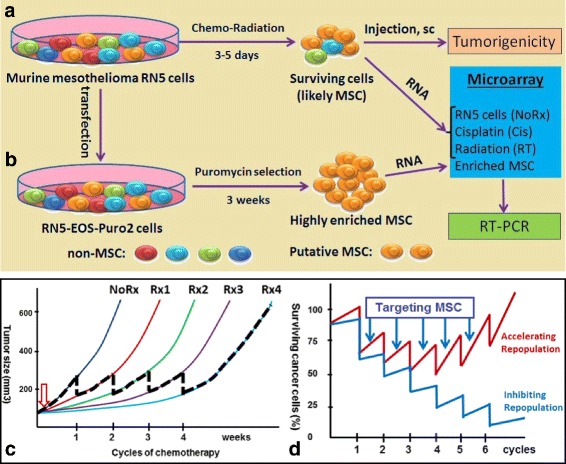
Cancer cell repopulation during chemotherapy or radiotherapy is a major factor limiting the efficacy of treatment. Cancer stem cells (CSC) may play critical roles during this process. We aim to demonstrate the role of mesothelioma stem cells (MSC) in treatment failure and eventually to design specific target therapies against MSC to improve the efficacy of treatment in malignant mesothelioma.
Murine mesothelioma AB12 and RN5 cells were used to compare tumorigenicity in mice. The expression of CSC-associated genes was evaluated by quantitative real-time PCR in both cell lines treated with chemo-radiation. Stemness properties of MSC-enriched RN5-EOS-Puro2 cells were characterized with flow cytometry and immunostaining. A MSC-specific gene profile was screened by microarray assay and confirmed thereafter. Gene Ontology analysis of the selected genes was performed by GOMiner.
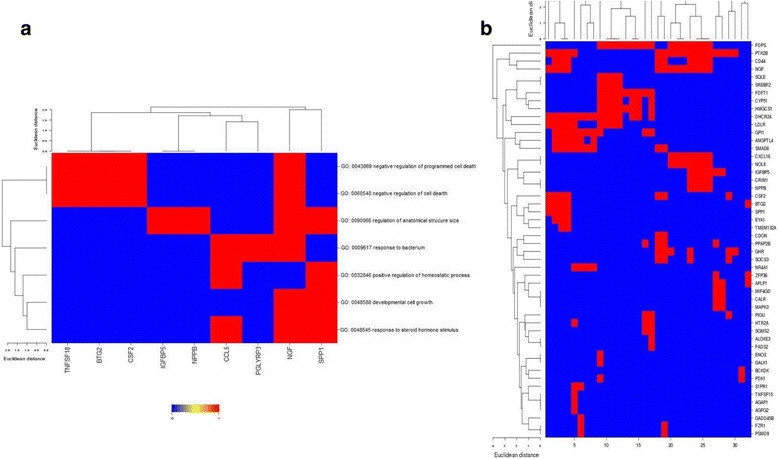
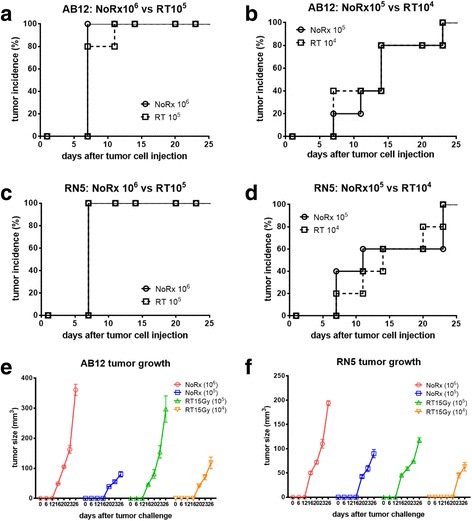
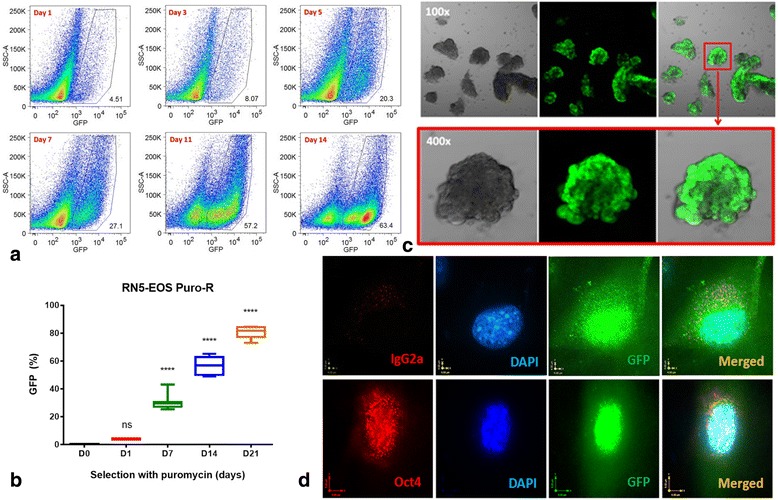
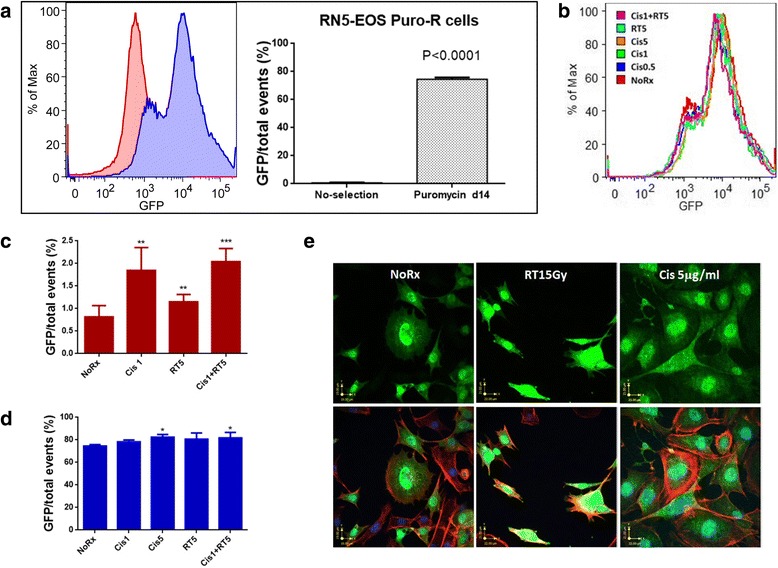
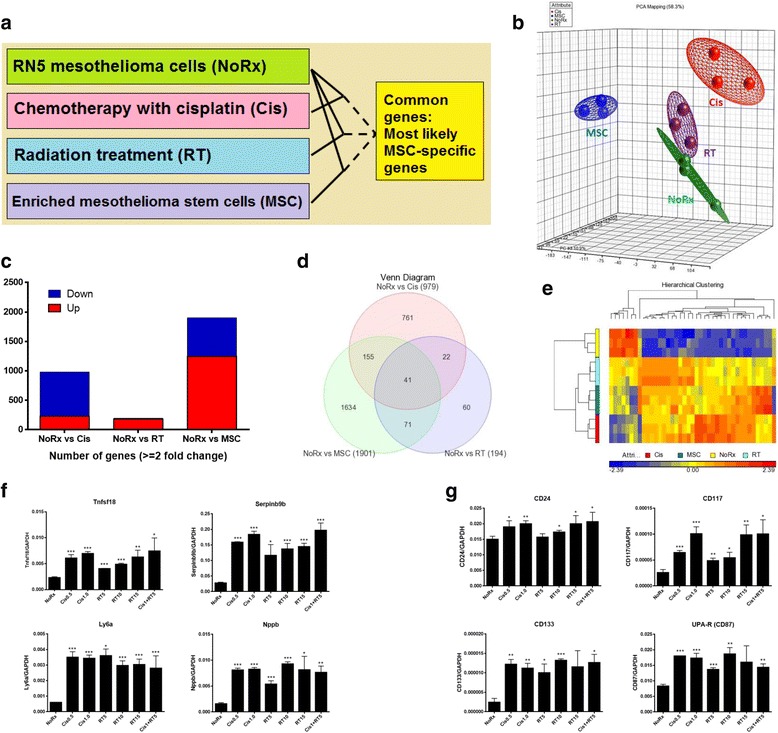
Tumor growth delay of murine mesothelioma AB12 cells was achieved after each cycle of cisplatin treatment, however, tumors grew back rapidly due to cancer cell repopulation between courses of chemotherapy. Strikingly, a 10-times lower number of irradiated cells in both cell lines led to a similar tumor incidence and growth rate as with untreated cells. The expression of CSC-associated genes such as CD24, CD133, CD90 and uPAR was dramatically up-regulated, while others did not change significantly after chemoradiation. Highly enriched MSC after selection with puromycin displayed an increasing GFP-positive population and showed typical properties of stemness. Comparatively, the proportion of MSC significantly increased after RN5-EOS parental cells were treated with either chemotherapy, γ-ray radiation, or a combination of the two, while MSC showed more resistance to the above treatments. A group of identified genes are most likely MSC-specific, and major pathways related to regulation of cell growth or apoptosis are involved. Upregulation of the gene transcripts Tnfsf18, Serpinb9b, Ly6a, and Nppb were confirmed.
Putative MSC possess the property of stemness showing more resistance to chemoradiation, suggesting that MSC may play critical roles in cancer cell repopulation. Further identification of selected genes may be used to design novel target therapies against MSC, so as to eliminate cancer cell repopulation in mesothelioma.
化疗或放疗期间癌细胞的再增殖是限制治疗效果的主要因素。癌症干细胞(CSC)在这个过程中可能起着关键作用。我们旨在证明间皮瘤干细胞(MSC)在治疗失败中的作用,并最终设计针对 MSC 的特定靶向治疗方法,以提高恶性间皮瘤的治疗效果。
使用鼠间皮瘤 AB12 和 RN5 细胞比较其在小鼠中的致瘤性。通过定量实时 PCR 评估两种细胞系在接受化疗和放疗后的 CSC 相关基因表达。通过流式细胞术和免疫染色对 MSC 富集的 RN5-EOS-Puro2 细胞的干细胞特性进行表征。通过微阵列检测筛选 MSC 特异性基因谱,并随后进行验证。通过 GOMiner 对选定基因进行基因本体论分析。
鼠间皮瘤 AB12 细胞的每个顺铂治疗周期后肿瘤生长均出现延迟,但由于化疗期间癌细胞再增殖,肿瘤迅速复发。引人注目的是,两种细胞系中经照射的细胞数量减少 10 倍,导致肿瘤的发生率和生长速度与未经处理的细胞相似。CSC 相关基因如 CD24、CD133、CD90 和 uPAR 的表达显著上调,而其他基因在化疗后变化不明显。经嘌呤霉素选择后高度富集的 MSC 显示出 GFP 阳性细胞群体增加,并表现出典型的干性特征。相比之下,RN5-EOS 亲本细胞经化疗、γ射线辐射或两者联合处理后,MSC 的比例显著增加,而 MSC 对上述治疗的抵抗力更强。一组鉴定的基因很可能是 MSC 特异性的,涉及细胞生长或凋亡调节的主要途径。Tnfsf18、Serpinb9b、Ly6a 和 Nppb 基因转录本的上调得到了证实。
推测 MSC 具有干性特性,对放化疗具有更强的抵抗力,表明 MSC 可能在癌细胞再增殖中起关键作用。进一步鉴定选定的基因可能用于设计针对 MSC 的新型靶向治疗方法,从而消除间皮瘤中的癌细胞再增殖。