
基于磁力计的连续人体接触监测的有效感应频率的经验确定。
Empirical Determination of Efficient Sensing Frequencies for Magnetometer-Based Continuous Human Contact Monitoring.
机构信息
Department of Computer Science and Engineering, Korea University, Anam-Dong, Sungbuk-Gu, Seoul 02841, Korea.
出版信息
Sensors (Basel). 2018 Apr 27;18(5):1358. doi: 10.3390/s18051358.
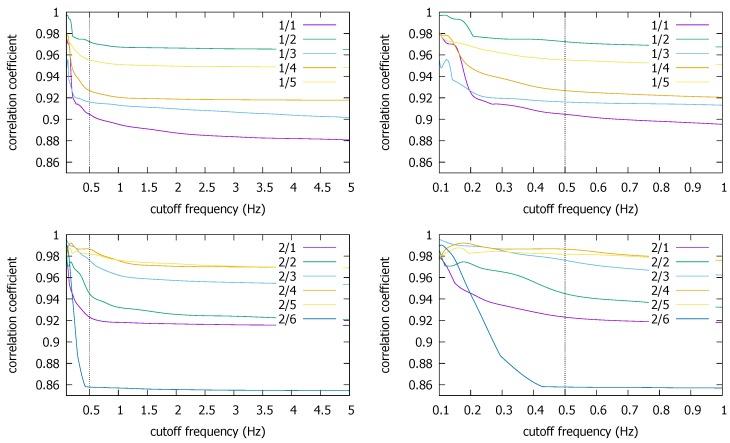
The high linear correlation between the smartphone magnetometer readings in close proximity can be exploited for physical human contact detection, which could be useful for such applications as infectious disease contact tracing or social behavior monitoring. Alternative approaches using other capabilities in smartphones have aspects that do not fit well with the human contact detection. Using Wi-Fi or cellular fingerprints have larger localization errors than close human contact distances. Bluetooth beacons could reveal the identity of the transmitter, threatening the privacy of the user. Also, using sensors such as GPS does not work for indoor contacts. However, the magnetometer correlation check works best in human contact distances that matter in infectious disease transmissions or social interactions. The omni-present geomagnetism makes it work both indoors and outdoors, and the measured magnetometer values do not easily reveal the identity and the location of the smartphone. One issue with the magnetometer-based contact detection, however, is the energy consumption. Since the contacts can take place anytime, the magnetometer sensing and recording should be running continuously. Therefore, how we address the energy requirement for the extended and continuous operation can decide the viability of the whole idea. However, then, we note that almost all existing magnetometer-based applications such as indoor location and navigation have used high sensing frequencies, ranging from 10 Hz to 200 Hz. At these frequencies, we measure that the time to complete battery drain in a typical smartphone is shortened by three to twelve hours. The heavy toll raises the question as to whether the magnetometer-based contact detection can avoid such high sensing rates while not losing the contact detection accuracy. In order to answer the question, we conduct a measurement-based study using independently produced magnetometer traces from three different countries. Specifically, we gradually remove high frequency components in the traces, while observing the correlation changes. As a result, we find that the human coexistence detection indeed tends to be no less, if not more, effective at the sampling frequency of 1 Hz or even less. This is because unlike the other applications that require centimeter-level precision, the human contacts detected anywhere within a couple of meters are valid for our purpose. With the typical smartphone battery capacity and at the 1 Hz sensing, the battery consumption is well below an hour, which is smaller by more than two hours compared with 10 Hz sampling and by almost eleven hours compared with 200 Hz sampling. With other tasks running simultaneously on smartphones, the energy saving aspect will only become more critical. Therefore, we conclude that sensing the ambient magnetic field at 1 Hz is sufficient for the human contact monitoring purpose. We expect that this finding will have a significant practicability implication in the smartphone magnetometer-based contact monitoring applications in general.
智能手机磁力计读数之间的高度线性相关性可用于检测物理接触,这对于传染病接触追踪或社交行为监测等应用非常有用。使用智能手机其他功能的替代方法在某些方面与人体接触检测不匹配。使用 Wi-Fi 或蜂窝网络指纹识别的定位误差比近距离人体接触的距离要大。蓝牙信标可能会泄露发射器的身份,从而威胁到用户的隐私。此外,使用 GPS 等传感器不适用于室内接触。然而,磁力计相关性检查在传染病传播或社交互动中重要的近距离人体接触距离内效果最佳。普遍存在的地磁使其在室内和室外都能正常工作,并且测量的磁力计值不易揭示智能手机的身份和位置。然而,基于磁力计的接触检测存在一个问题,那就是能耗。由于接触可能随时发生,因此磁力计感应和记录应该持续运行。因此,我们如何解决扩展和连续运行的能耗问题,可以决定整个想法的可行性。然而,我们注意到,几乎所有现有的基于磁力计的应用程序,如室内定位和导航,都使用了较高的感应频率,范围从 10 Hz 到 200 Hz。在这些频率下,我们测量到典型智能手机的电池耗尽时间缩短了三到十二小时。高昂的代价引发了一个问题,即基于磁力计的接触检测是否可以在不降低接触检测准确性的情况下避免这种高感应率。为了回答这个问题,我们使用来自三个不同国家的独立产生的磁力计跟踪数据进行了基于测量的研究。具体来说,我们逐渐去除跟踪数据中的高频分量,同时观察相关性的变化。结果表明,人类共存检测确实在 1 Hz 甚至更低的采样频率下同样有效,如果不是更有效,则保持不变。这是因为与其他需要厘米级精度的应用不同,在几米范围内检测到的人体接触对于我们的目的是有效的。使用典型的智能手机电池容量和 1 Hz 的感应,电池消耗远低于一小时,与 10 Hz 采样相比减少了两个多小时,与 200 Hz 采样相比减少了近 11 小时。随着智能手机上同时运行其他任务,节能方面将变得更加关键。因此,我们得出结论,以 1 Hz 的速率感应环境磁场足以满足人体接触监测的目的。我们预计,这一发现将对一般基于智能手机磁力计的接触监测应用具有重要的实际意义。




 Zotero 插件