Chapple Christopher R, Cardozo Linda, Snijder Robert, Siddiqui Emad, Herschorn Sender
Department of Urology, Royal Hallamshire Hospital, Glossop Rd, Sheffield, South Yorkshire S10 2JF, UK.
King's College Hospital, Denmark Hill, London, SE5 9RS, UK.
Contemp Clin Trials Commun. 2016 Oct 15;4:199-207. doi: 10.1016/j.conctc.2016.10.003. eCollection 2016 Dec 15.
Patient-level data are available for 11 randomized, controlled, Phase III/Phase IV solifenacin clinical trials.
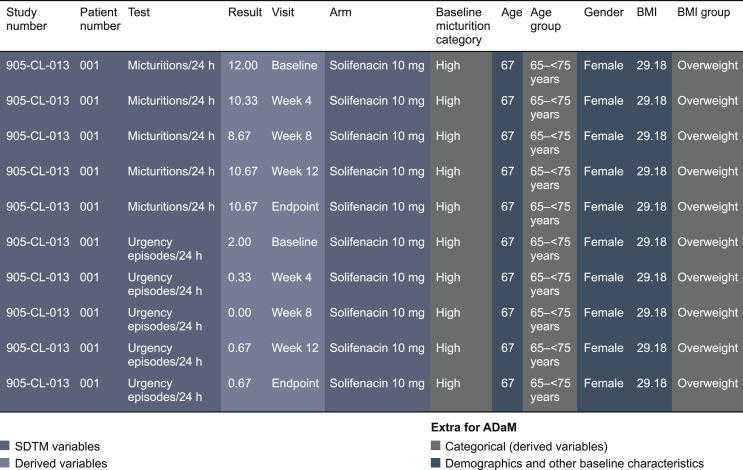
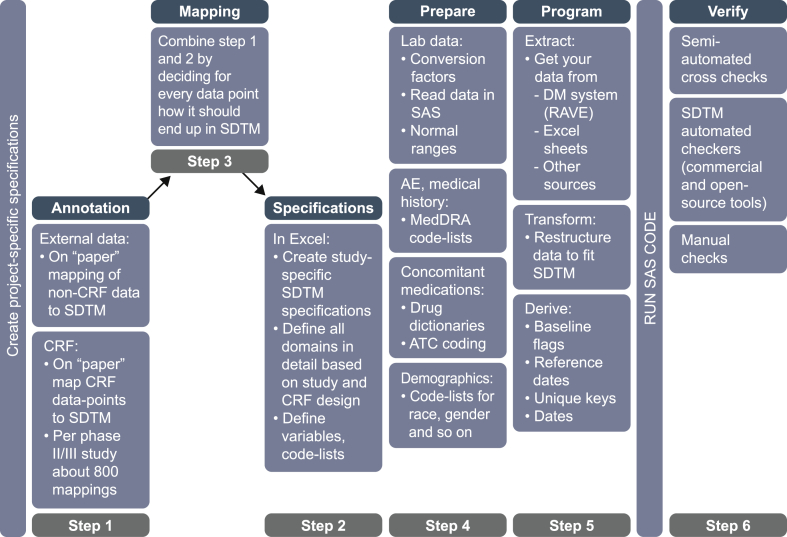
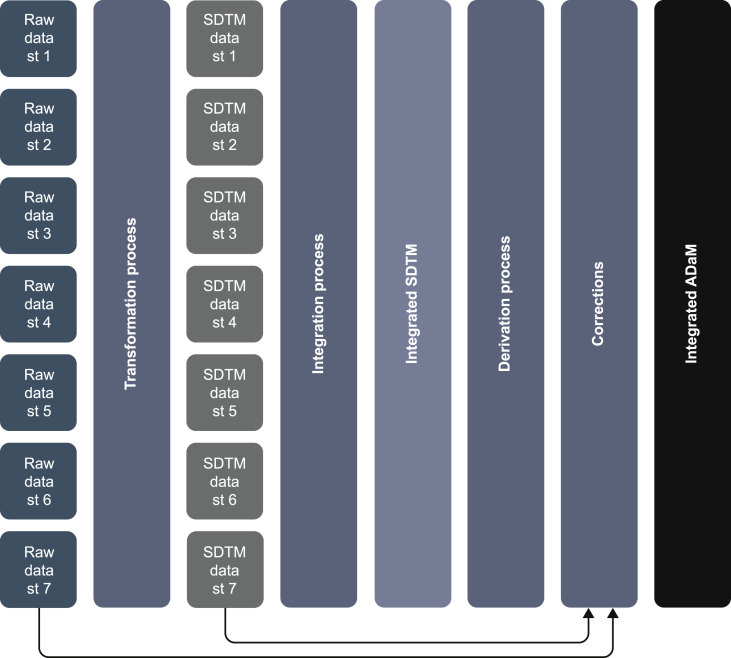
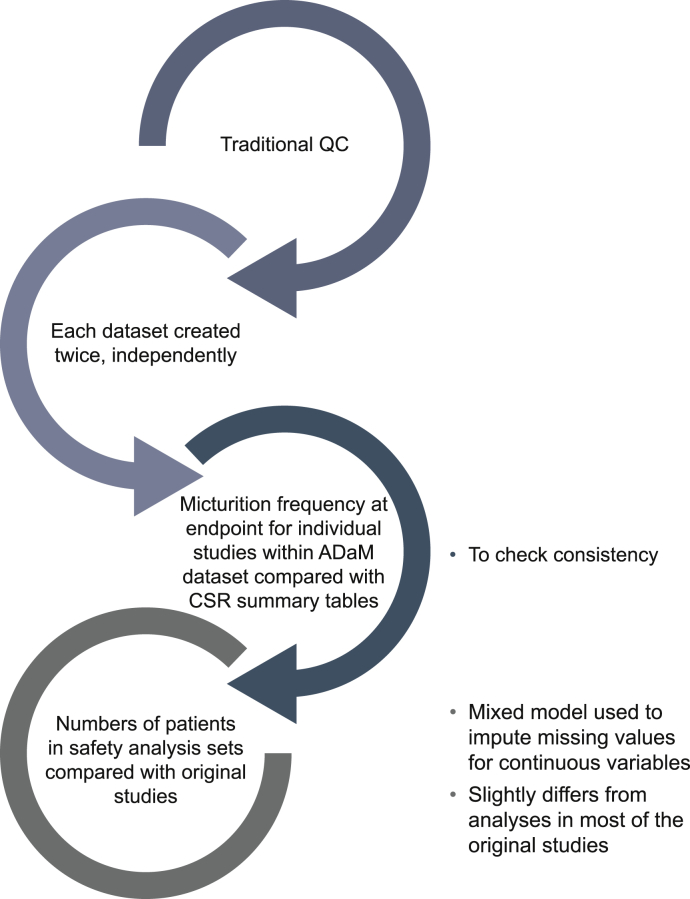
Meta-analyses were conducted to interrogate the data, to broaden knowledge about solifenacin and overactive bladder (OAB) in general. Before integrating data, datasets from individual studies were mapped to a single format using methodology developed by the Clinical Data Interchange Standards Consortium (CDISC). Initially, the data structure was harmonized, to ensure identical categorization, using the CDISC Study Data Tabulation Model (SDTM). To allow for patient level meta-analysis, data were integrated and mapped to analysis datasets. Mapping included adding derived and categorical variables and followed standards described as the Analysis Data Model (ADaM). Mapping to both SDTM and ADaM was performed twice by two independent programming teams, results compared, and inconsistencies corrected in the final output. ADaM analysis sets included assignments of patients to the Safety Analysis Set and the Full Analysis Set.
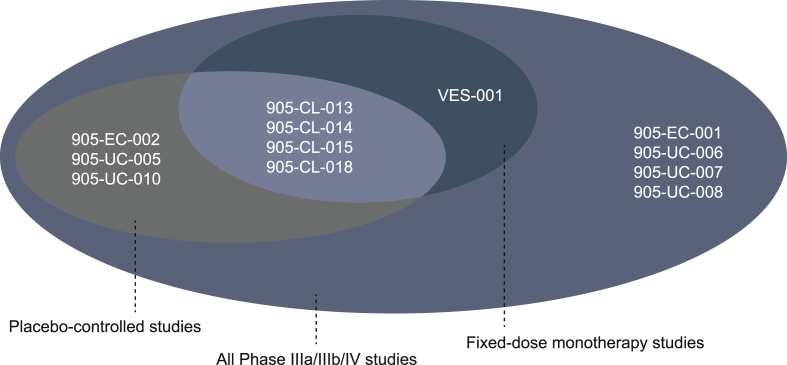
There were three analysis groupings: Analysis group 1 (placebo-controlled, monotherapy, fixed-dose studies, n = 3011); Analysis group 2 (placebo-controlled, monotherapy, pooled, fixed- and flexible-dose, n = 5379); Analysis group 3 (all solifenacin monotherapy-treated patients, n = 6539). Treatment groups were: solifenacin 5 mg fixed dose, solifenacin 5/10 mg flexible dose, solifenacin 10 mg fixed dose and overall solifenacin. Patient were similar enough for data pooling to be acceptable.
Creating ADaM datasets provided significant information about individual studies and the derivation decisions made in each study; validated ADaM datasets now exist for medical history, efficacy and AEs. Results from these meta-analyses were similar over time.
有11项随机对照III期/IV期索利那新临床试验的患者层面数据可用。
进行荟萃分析以审视这些数据,从而总体上拓宽对索利那新和膀胱过度活动症(OAB)的认识。在整合数据之前,使用临床数据交换标准协会(CDISC)开发的方法将各个研究的数据集映射为单一格式。最初,使用CDISC研究数据列表模型(SDTM)对数据结构进行协调,以确保分类相同。为了进行患者层面的荟萃分析,对数据进行整合并映射到分析数据集。映射包括添加派生变量和分类变量,并遵循分析数据模型(ADaM)中描述的标准。由两个独立的编程团队对SDTM和ADaM进行两次映射,比较结果,并在最终输出中纠正不一致之处。ADaM分析集包括将患者分配到安全性分析集和全分析集。
有三个分析分组:分析组1(安慰剂对照、单药治疗、固定剂量研究,n = 3011);分析组2(安慰剂对照、单药治疗、汇总的固定和灵活剂量研究,n = 5379);分析组3(所有接受索利那新单药治疗的患者,n = 6539)。治疗组包括:索利那新5 mg固定剂量、索利那新5/10 mg灵活剂量、索利那新10 mg固定剂量以及总体索利那新。患者情况相似,足以接受数据合并。
创建ADaM数据集提供了有关各个研究以及每项研究中推导决策的重要信息;现在存在经过验证的关于病史、疗效和不良事件的ADaM数据集。这些荟萃分析的结果随时间推移相似。