Singh Abhishek A, Petraglia Francesca, Nebbioso Angela, Yi Guoqiang, Conte Mariarosaria, Valente Sergio, Mandoli Amit, Scisciola Lucia, Lindeboom Rik, Kerstens Hinri, Janssen-Megens Eva M, Pourfarzad Farzin, Habibi Ehsan, Berentsen Kim, Kim Bowon, Logie Colin, Heath Simon, Wierenga Albertus T J, Clarke Laura, Flicek Paul, Jansen Joop H, Kuijpers Taco, Yaspo Marie Laure, Valle Veronique Della, Bernard Olivier, Gut Ivo, Vellenga Edo, Stunnenberg Hendrik G, Mai Antonello, Altucci Lucia, Martens Joost H A
Department of Molecular Biology, Radboud University, Nijmegen, Netherlands.
Dipartimento di Biochimica Biofisica e Patologia Generale, Università degli Studi della Campania Luigi Vanvitelli, Napoli, Italy.
Oncotarget. 2018 May 22;9(39):25647-25660. doi: 10.18632/oncotarget.25429.
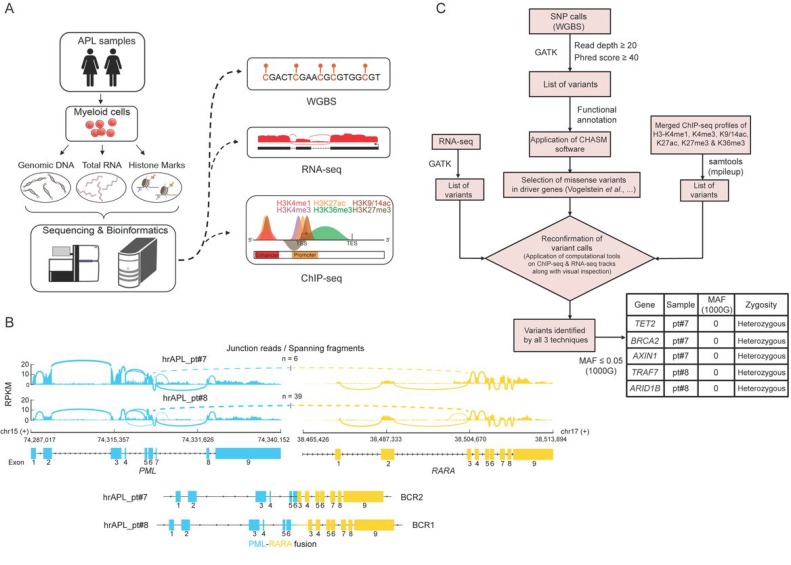
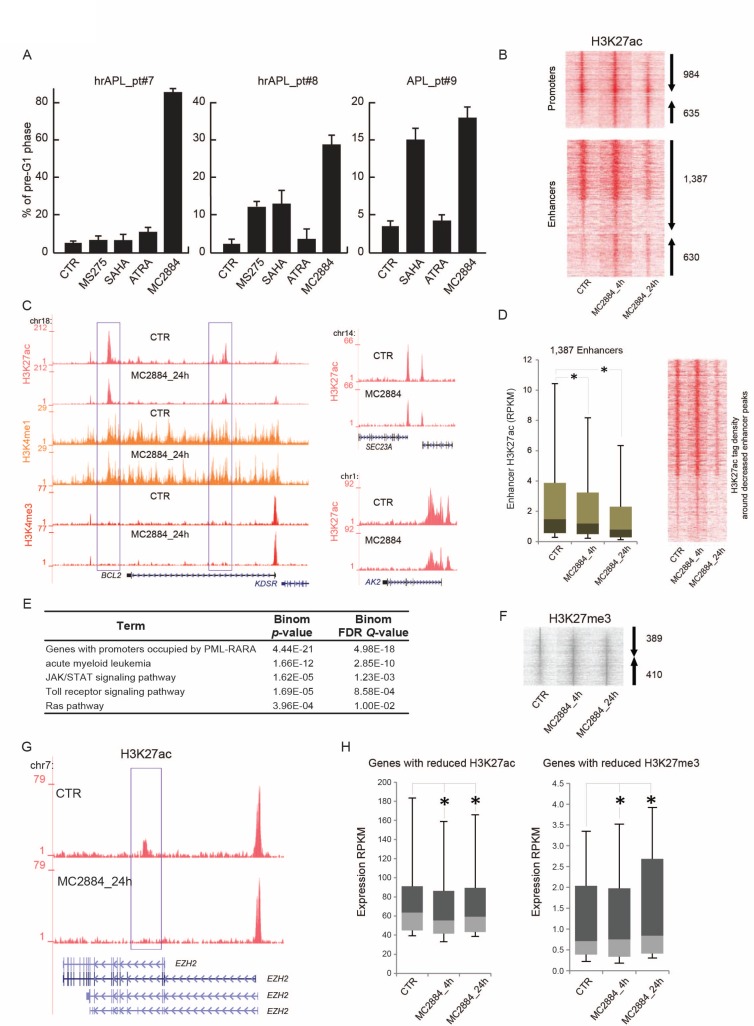
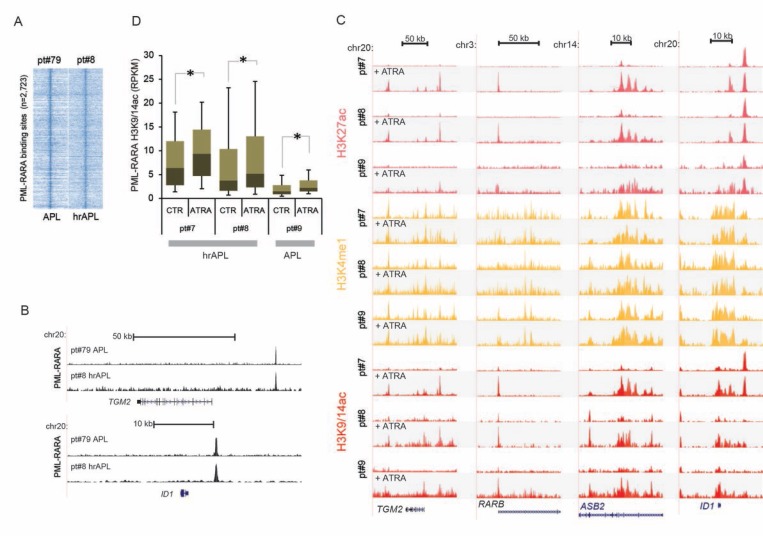
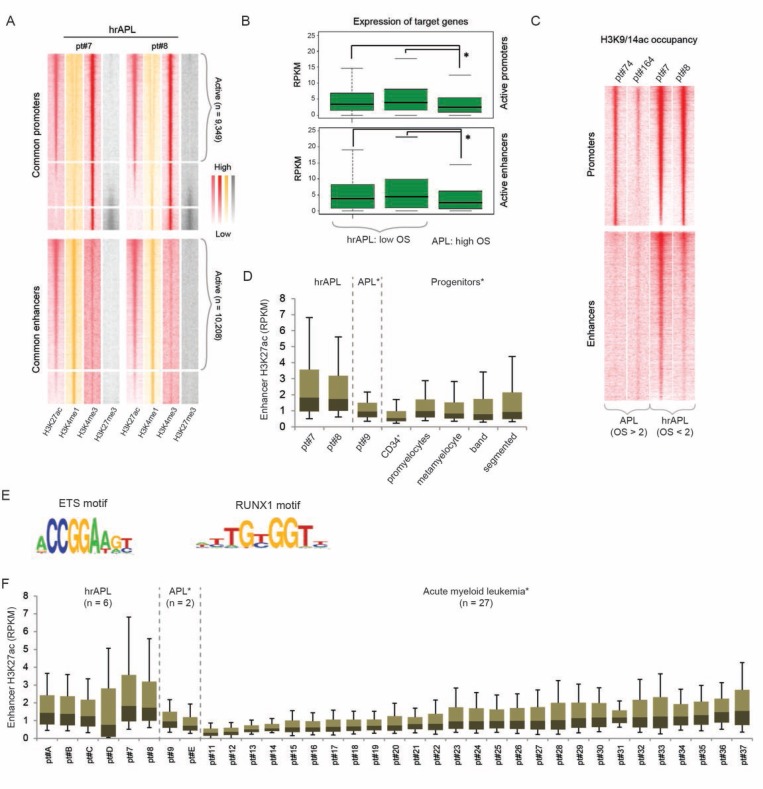
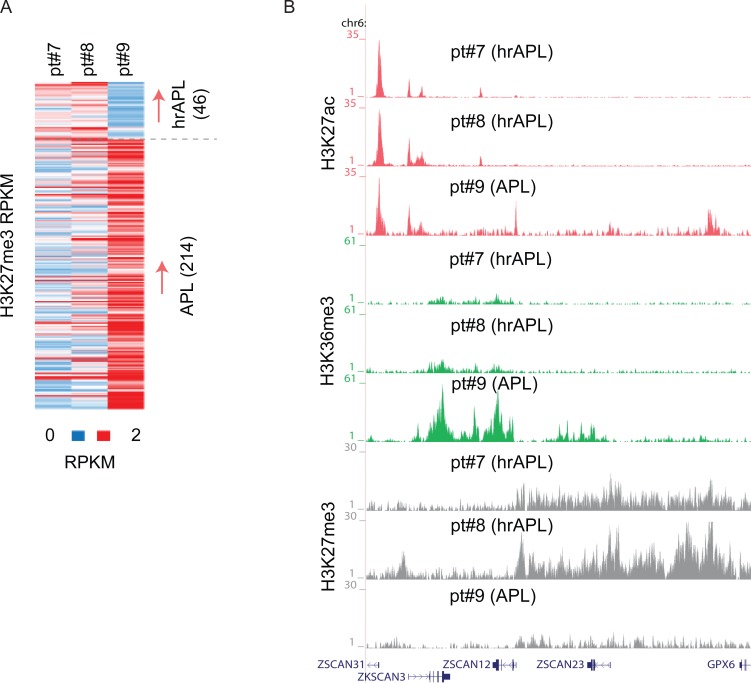
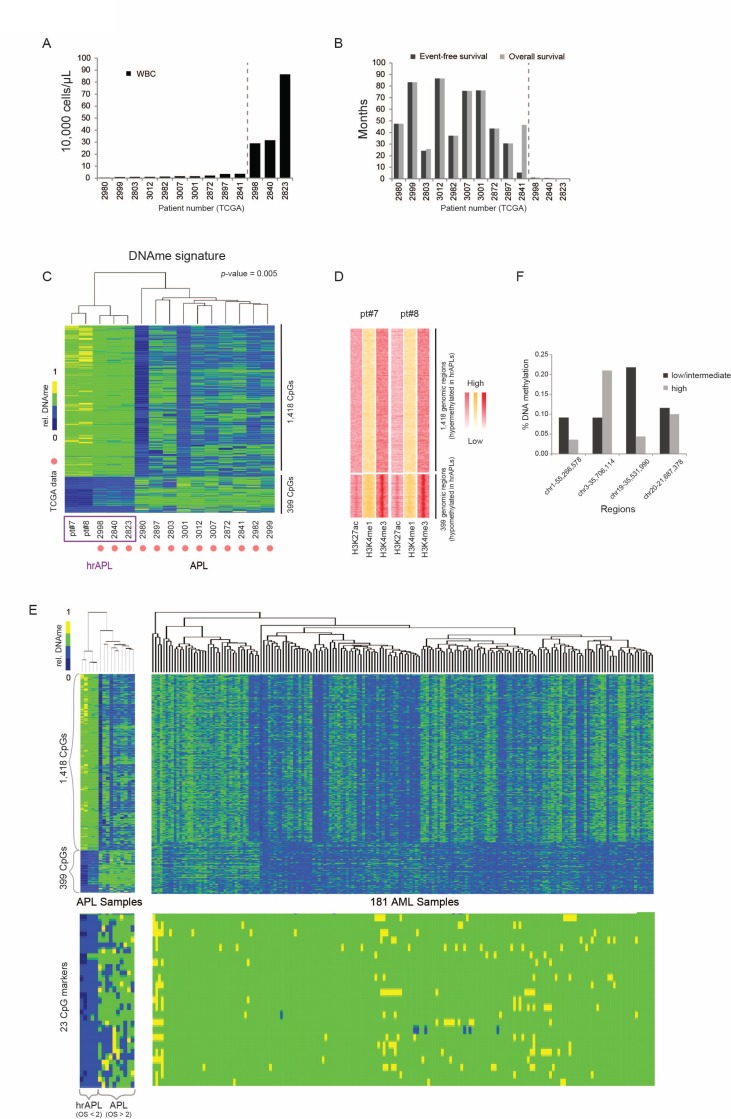
Epigenomic alterations have been associated with both pathogenesis and progression of cancer. Here, we analyzed the epigenome of two high-risk APL (hrAPL) patients and compared it to non-high-risk APL cases. Despite the lack of common genetic signatures, we found that human hrAPL blasts from patients with extremely poor prognosis display specific patterns of histone H3 acetylation, specifically hyperacetylation at a common set of enhancer regions. In addition, unique profiles of the repressive marks H3K27me3 and DNA methylation were exposed in high-risk APLs. Epigenetic comparison with low/intermediate-risk APLs and AMLs revealed hrAPL-specific patterns of histone acetylation and DNA methylation, suggesting these could be further developed into markers for clinical identification. The epigenetic drug MC2884, a newly generated general HAT/EZH2 inhibitor, induces apoptosis of high-risk APL blasts and reshapes their epigenomes by targeting both active and repressive marks. Together, our analysis uncovers distinctive epigenome signatures of hrAPL patients, and provides proof of concept for use of epigenome profiling coupled to epigenetic drugs to 'personalize' precision medicine.
表观基因组改变与癌症的发病机制和进展均有关联。在此,我们分析了两名高危急性早幼粒细胞白血病(hrAPL)患者的表观基因组,并将其与非高危APL病例进行比较。尽管缺乏共同的基因特征,但我们发现,预后极差的患者的人hrAPL原始细胞表现出组蛋白H3乙酰化的特定模式,特别是在一组共同的增强子区域出现高乙酰化。此外,在高危APL中还发现了抑制性标记H3K27me3和DNA甲基化的独特图谱。与低/中危APL和急性髓系白血病(AML)的表观遗传学比较揭示了hrAPL特异性的组蛋白乙酰化和DNA甲基化模式,表明这些模式可进一步发展成为临床识别的标志物。表观遗传药物MC2884是一种新生成的通用组蛋白乙酰转移酶/增强子结合蛋白2(HAT/EZH2)抑制剂,可诱导高危APL原始细胞凋亡,并通过靶向活性和抑制性标记重塑其表观基因组。总之,我们的分析揭示了hrAPL患者独特的表观基因组特征,并为使用表观基因组分析结合表观遗传药物来实现精准医学的“个性化”提供了概念验证。