Center of Cognition and Brain Science, Beijing Institute of Medical Sciences, Beijing, 100000, People's Republic of China.
National Clinical Research Center for Aging and Medicine, Huashan Hospital, Fudan University, 12 Middle Wulumuqi Road, Shanghai, 200040, People's Republic of China.
J Neuroinflammation. 2018 Jun 15;15(1):184. doi: 10.1186/s12974-018-1218-1.
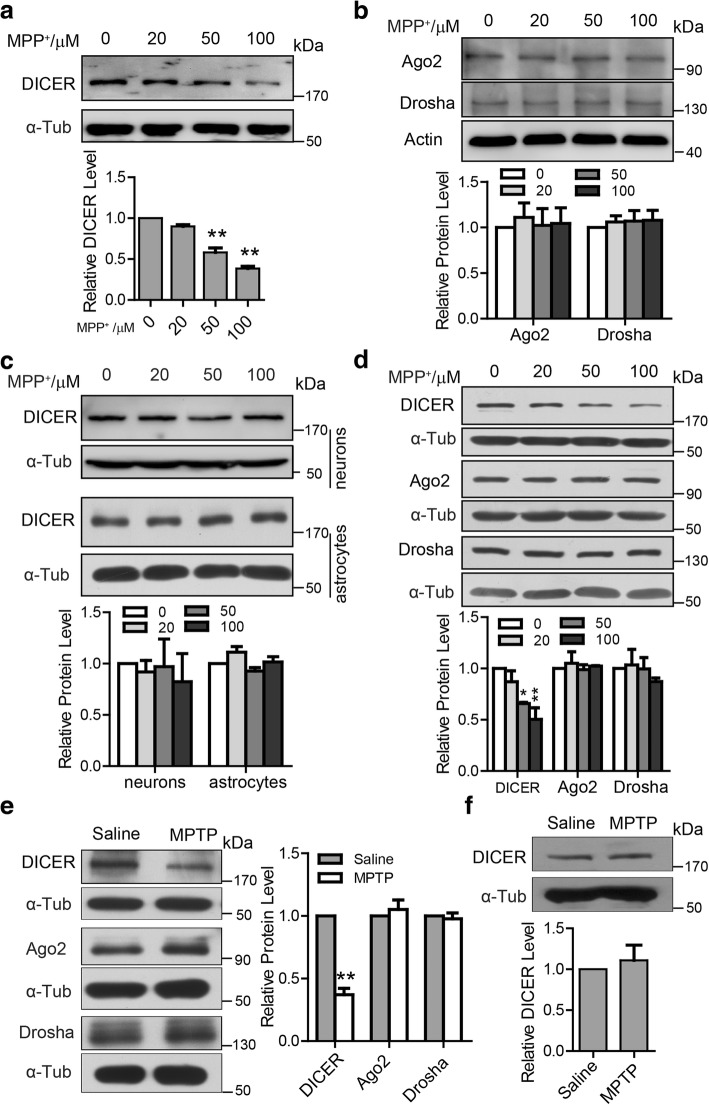
Amplified inflammation is important for the progression of Parkinson's disease (PD). However, how this enhanced inflammation is regulated remains largely unknown. Deletion of DICER leads to progressive dopamine neuronal loss and induces gliosis. We hypothesized that the homeostasis of microglial DICER would be responsible for the amplified inflammation in the mouse model of PD.
The microglia or C57BL/6 mice were treated or injected with l-methyl-4-phenyl-l,2,3,6-tetrahydropyridine (MPTP) or 1-methyl-4-phenylpyridinium (MPP), respectively, for the model establishment. Microglia and astrocytes sorted by fluorescence-activated cell sorter (FACS) were assayed by quantitative real-time PCR, Western blotting, immunoprecipitation, enzyme-linked immunosorbent assay (ELISA), immunohistofluorescence, and mass spectrometry.
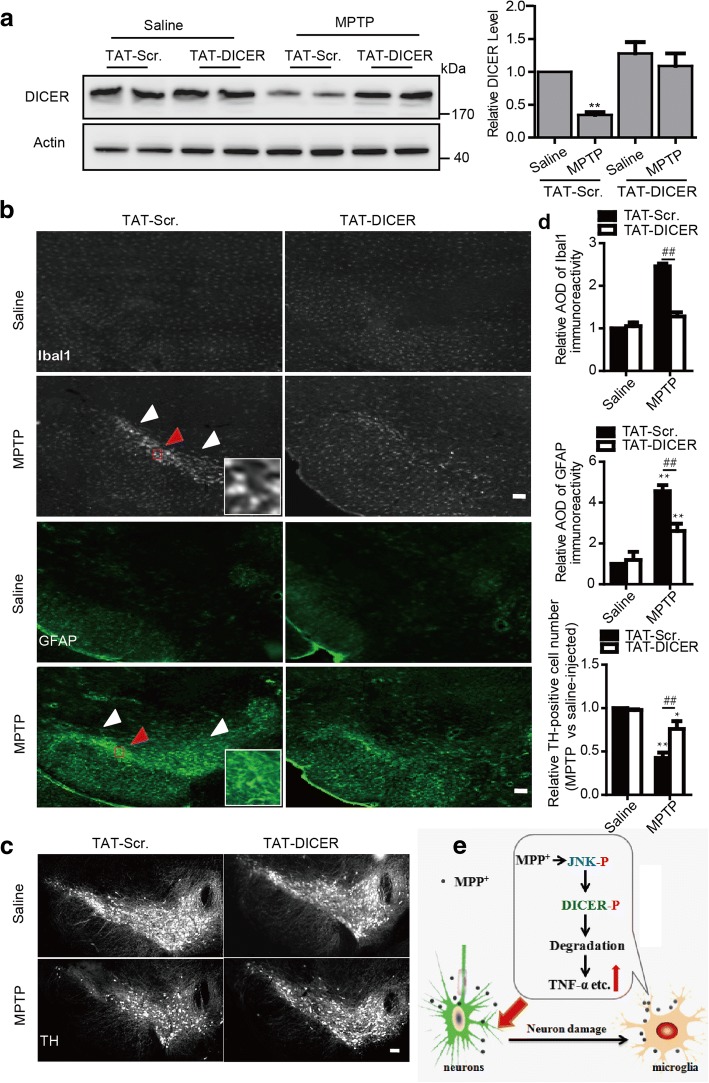
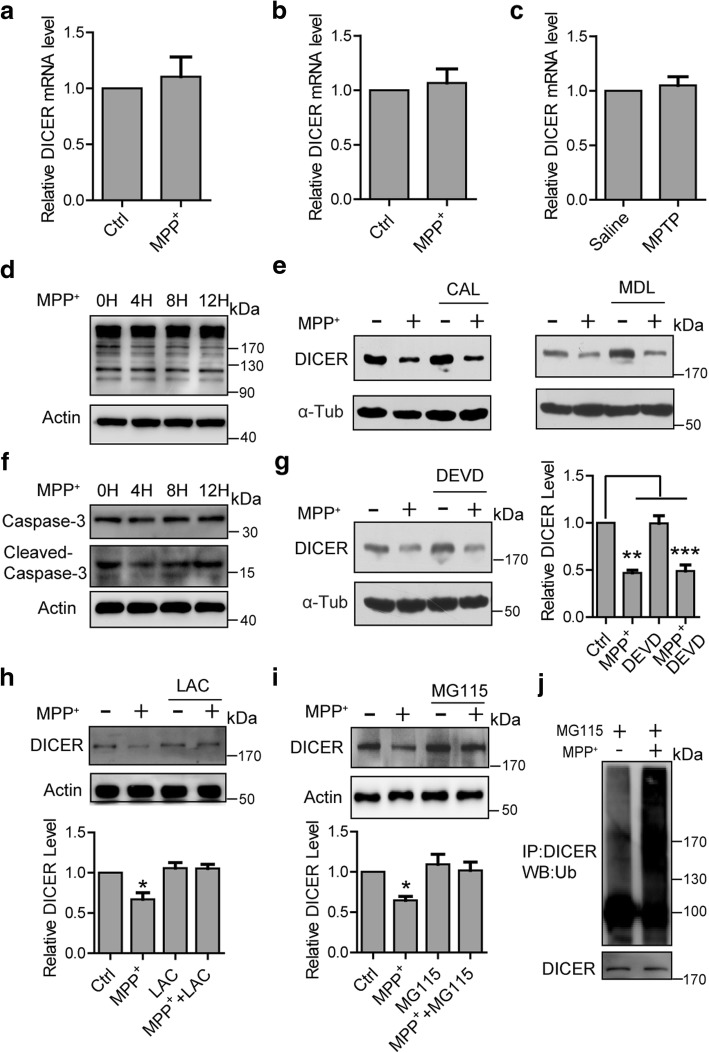
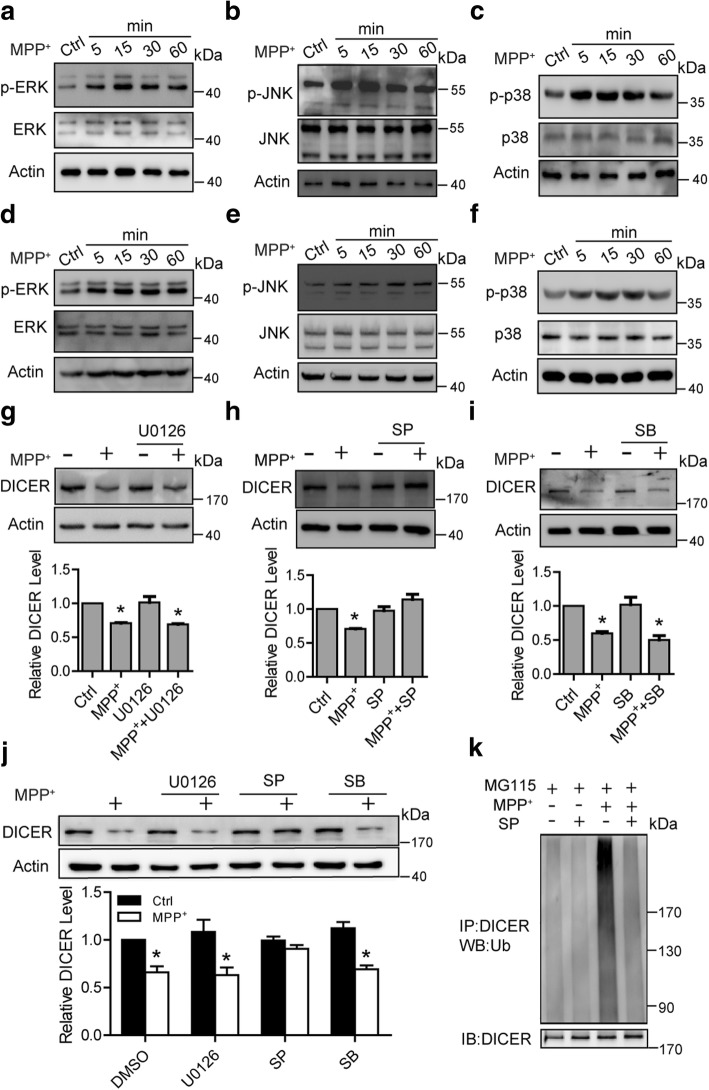
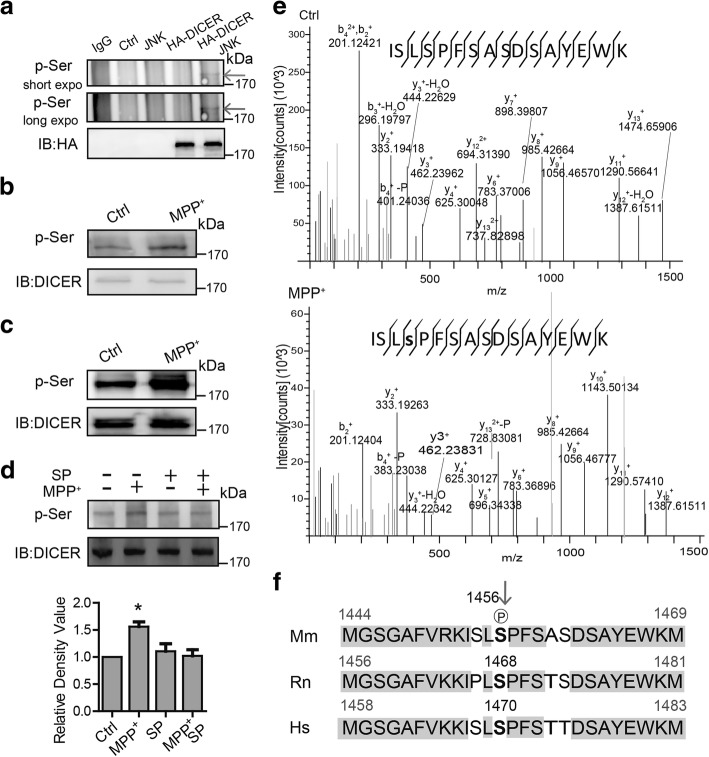
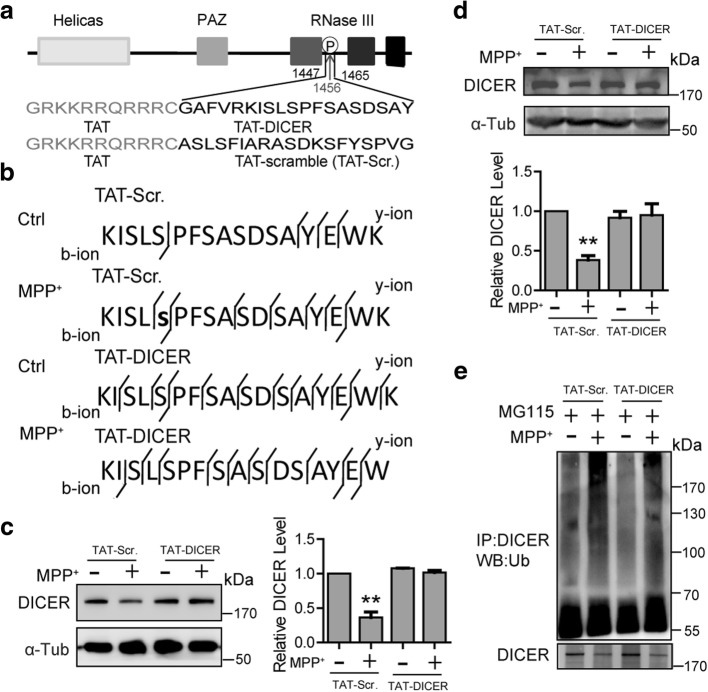
Microglial DICER was phosphorylated at serine 1456 by c-jun N-terminal kinase (JNK) and downregulated in response to 1-methyl-4-phenylpyridinium (MPP), a causative agent in PD. Inhibition of JNK phosphorylation of DICER at serine 1456 rescued the MPP-induced DICER degradation, suppressed microglial inflammatory process, and prevented the loss of tyrosine hydroxylase-expressing neurons in the mouse MPTP model.
JNK-mediated microglial DICER degradation potentiates inflammation to induce dopaminergic neuronal loss. Thus, preventing microglial DICER degradation could be a novel strategy for controlling neuroinflammation in PD.
放大的炎症对于帕金森病(PD)的进展很重要。然而,这种增强的炎症是如何调节的,在很大程度上仍然未知。DICER 的缺失导致多巴胺能神经元进行性丧失,并诱导神经胶质增生。我们假设小胶质细胞 DICER 的内稳性负责 PD 小鼠模型中的放大炎症。
用 l-甲基-4-苯基-1,2,3,6-四氢吡啶(MPTP)或 1-甲基-4-苯基吡啶(MPP)分别处理或注射小胶质细胞或 C57BL/6 小鼠,建立模型。用荧光激活细胞分选(FACS)分选的小胶质细胞和星形胶质细胞进行实时定量 PCR、Western 印迹、免疫沉淀、酶联免疫吸附测定(ELISA)、免疫荧光和质谱分析。
小胶质细胞 DICER 被 c-jun N 末端激酶(JNK)磷酸化在丝氨酸 1456 并对 1-甲基-4-苯基吡啶(MPP)做出响应,MPP 是 PD 的致病剂。抑制 JNK 对 DICER 丝氨酸 1456 的磷酸化挽救了 MPP 诱导的 DICER 降解,抑制了小胶质细胞炎症过程,并防止了在小鼠 MPTP 模型中酪氨酸羟化酶表达神经元的丧失。
JNK 介导的小胶质细胞 DICER 降解增强炎症诱导多巴胺能神经元丧失。因此,防止小胶质细胞 DICER 降解可能是控制 PD 神经炎症的一种新策略。