Liu Wei, Xiao Zhidan, Fan Chao, Jiang Nonghui, Meng Xiangchun, Xiang Xu
Institute of Fruit Tree Research, Guangdong Academy of Agricultural Sciences, Guangzhou, China.
Key Laboratory of South Subtropical Fruit Biology and Genetic Resource Utilization, Ministry of Agriculture, Guangzhou, China.
Front Plant Sci. 2018 Apr 25;9:567. doi: 10.3389/fpls.2018.00567. eCollection 2018.
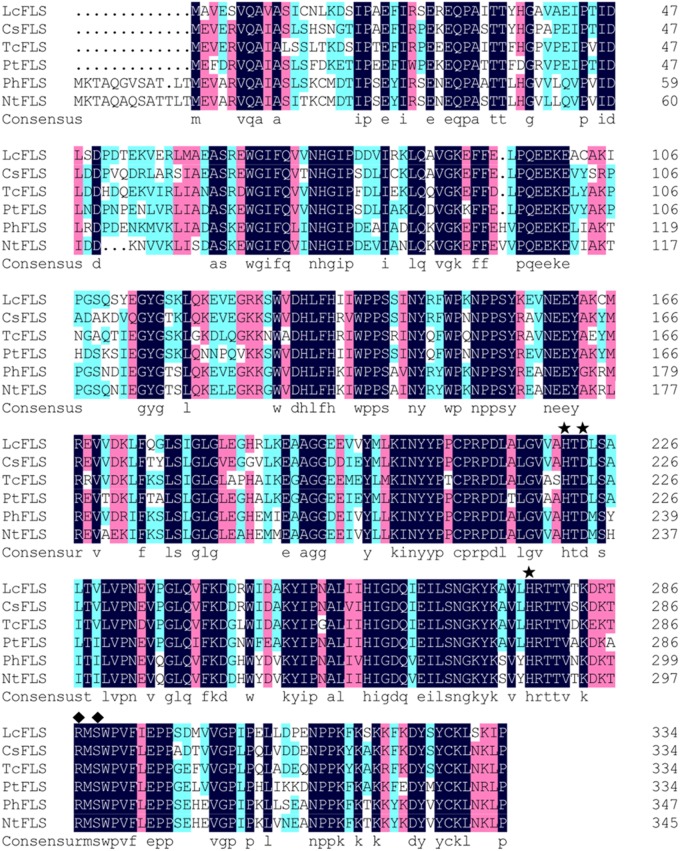
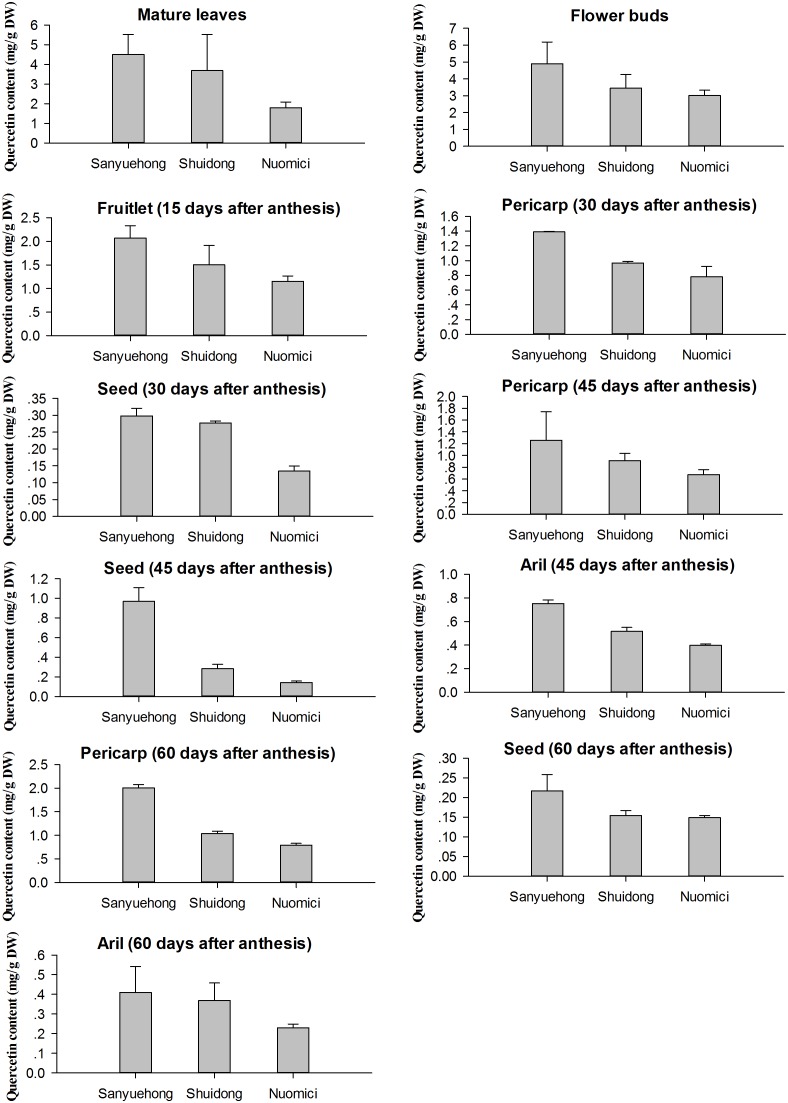
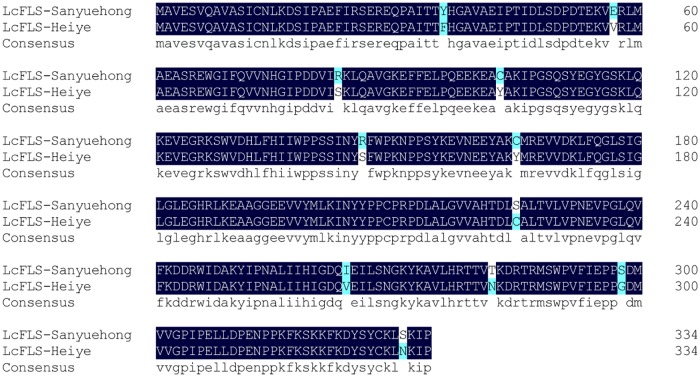
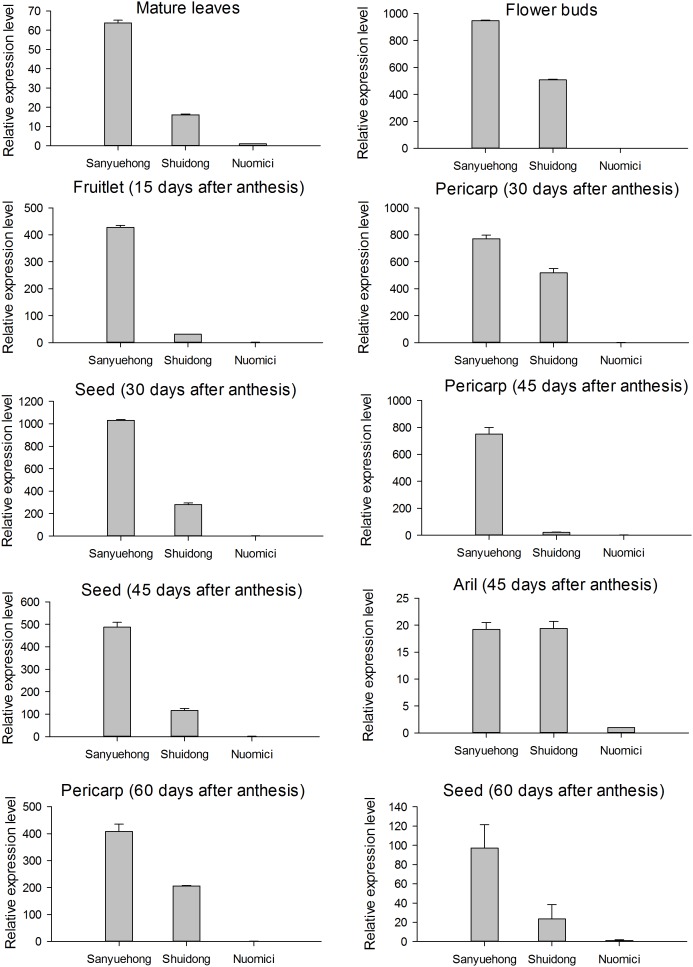
Litchi () is an important subtropical fruit tree with high commercial value. However, the short and centralized fruit maturation period of litchi cultivars represents a bottleneck for litchi production. Therefore, the development of novel cultivars with extremely early fruit maturation period is critical. Previously, we showed that the genotypes of extremely early-maturing (EEM), early-maturing (EM), and middle-to-late-maturing (MLM) cultivars at a specific locus SNP51 (substitution type C/T) were consistent with their respective genetic background at the whole-genome level; a homozygous C/C genotype at SNP51 systematically differentiated EEM cultivars from others. The litchi gene on which SNP51 was located was annotated as flavonol synthase (), which catalyzes the formation of flavonols. Here, we further elucidate the variation of the gene from () among EEM, EM, and MLM cultivars. EEM cultivars with a homozygous C/C genotype at SNP51 all contained the same 2,199-bp sequence of the gene. For MLM cultivars with a homozygous T/T genotype at SNP51, the sequence lengths of the gene were 2,202-2,222 bp. EM cultivars with heterozygous C/T genotypes at SNP51 contained two different alleles of the gene: a 2,199-bp sequence identical to that in EEM cultivars and a 2,205-bp sequence identical to that in MLM cultivar 'Heiye.' Moreover, the coding regions of genes of other MLM cultivars were almost identical to that of 'Heiye.' Therefore, the gene coding region may be used as a source of diagnostic SNP markers to discriminate or identify genotypes with the EEM trait. The expression pattern of the gene and accumulation pattern of flavonol from EEM, EM, and MLM cultivars were analyzed and compared using quantitative real-time PCR (qRT-PCR) and high-performance liquid chromatography (HPLC) for mature leaves, flower buds, and fruits, 15, 30, 45, and 60 days after anthesis. Flavonol content and gene expression levels were positively correlated in all three cultivars: both decreased from the EEM to MLM cultivars, with moderate levels in the EM cultivars. gene function could be further analyzed to elucidate its correlation with phenotype variation among litchi cultivars with different fruit maturation periods.
荔枝()是一种具有高商业价值的重要亚热带果树。然而,荔枝品种果实成熟期短且集中是荔枝生产的一个瓶颈。因此,培育果实成熟期极早的新品种至关重要。此前,我们发现极早熟(EEM)、早熟(EM)和中晚熟(MLM)品种在特定位点SNP51(替换类型C/T)的基因型在全基因组水平上与其各自的遗传背景一致;SNP51处的纯合C/C基因型系统地将EEM品种与其他品种区分开来。SNP51所在的荔枝基因被注释为黄酮醇合酶(),它催化黄酮醇的形成。在此,我们进一步阐明了EEM、EM和MLM品种中来自()的基因变异。在SNP51处具有纯合C/C基因型的EEM品种均含有该基因相同的2199 bp序列。在SNP51处具有纯合T/T基因型的MLM品种,该基因的序列长度为2202 - 2222 bp。在SNP51处具有杂合C/T基因型的EM品种含有该基因的两个不同等位基因:一个与EEM品种相同的2199 bp序列和一个与MLM品种‘黑叶’相同的2205 bp序列。此外,其他MLM品种的基因编码区与‘黑叶’的几乎相同。因此,该基因编码区可作为诊断SNP标记的来源,用于区分或鉴定具有EEM性状的基因型。使用定量实时PCR(qRT-PCR)和高效液相色谱(HPLC)对盛花后15、30、45和60天的成熟叶片、花芽和果实,分析并比较了EEM、EM和MLM品种中该基因的表达模式以及黄酮醇的积累模式。在所有三个品种中,黄酮醇含量和基因表达水平呈正相关:从EEM品种到MLM品种均下降,EM品种处于中等水平。可以进一步分析该基因的功能,以阐明其与不同果实成熟期荔枝品种表型变异的相关性。