Laboratory of Plant Nematology and Research Center of Nematodes of Plant Quarantine, Department of Plant Pathology / Guangdong Province Key Laboratory of Microbial Signals and Disease Control, College of Agriculture, South China Agricultural University, Guangzhou, People's Republic of China.
Key Laboratory of Biopesticide and Chemical Biology, Ministry of Education, College of Plant Protection, Fujian Agriculture and Forestry University, Fuzhou, People's Republic of China.
PLoS One. 2018 Jun 29;13(6):e0199935. doi: 10.1371/journal.pone.0199935. eCollection 2018.
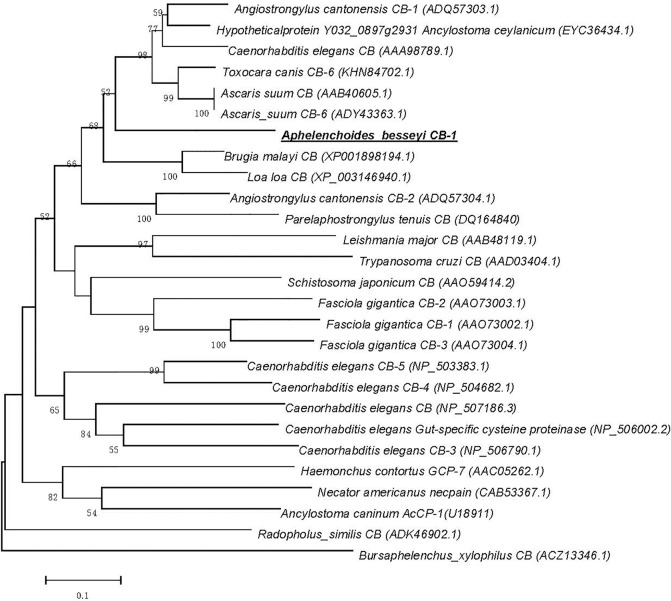
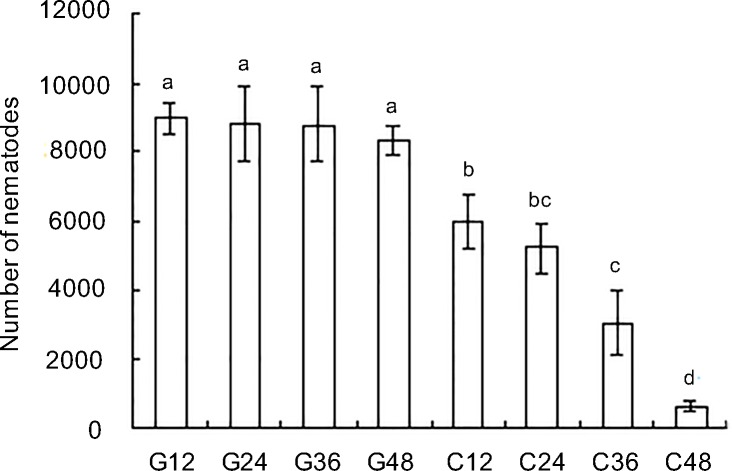
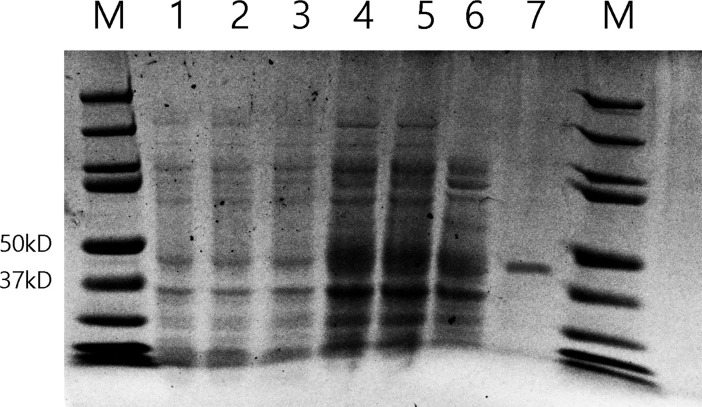
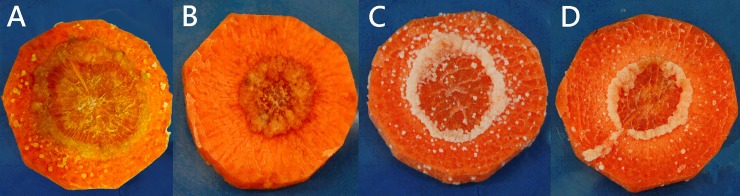
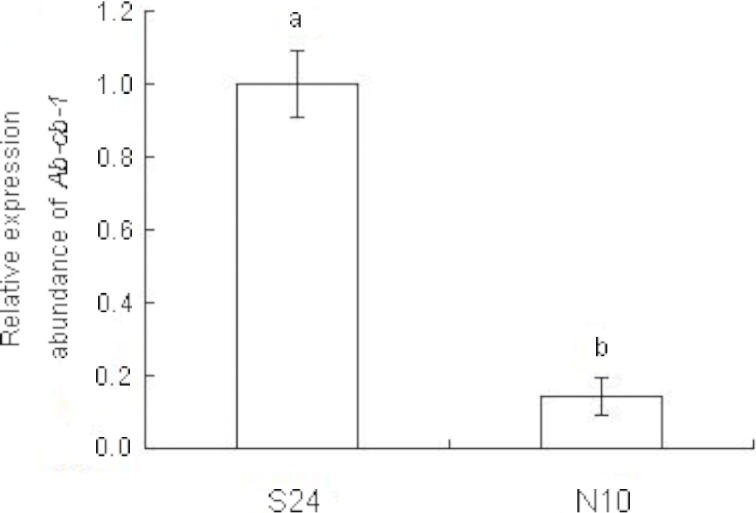
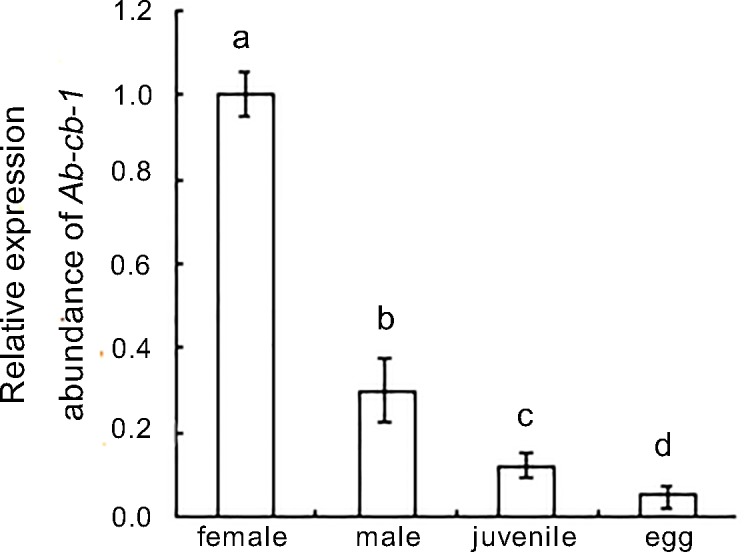
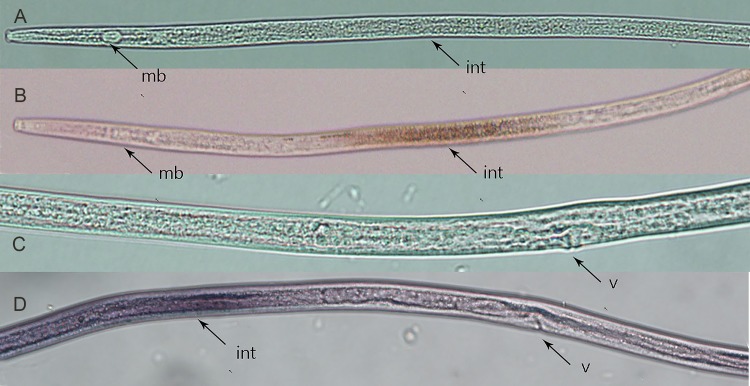
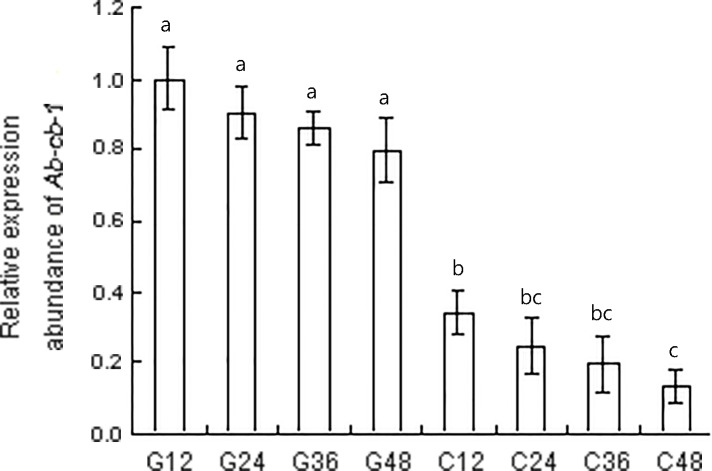
The rice white tip nematode, Aphelenchoides besseyi, is widely distributed in rice planting areas worldwide and causes serious economic losses. Cathepsin genes have been demonstrated to have importance in studying the reproduction, development, pathogenicity, and control methods of plant nematodes. In this paper, a novel cathepsin B gene, Ab-cb-1, was found and cloned. The Ab-cb-1 gene was 1347 bp in length and encodes 369 amino acids. The Ab-CB-1 protein contains characteristic occluding loops but no signal peptide. A homology analysis showed that Ab-CB-1 had the highest identity value (64%) to the known amino acid sequence of cathepsin B-like cysteine protease 6 from Toxocara canis. When Ab-cb-1 was expressed in a prokaryotic system, the protein massed approximately 45 kDa and could decompose carrot callus. Ab-cb-1 mRNA was localized in the nematode intestine. The relative expression level of Ab-cb-1 in the A. besseyi Ab-S24 population, which had high reproductivity, was approximately 6.9 times that in the Ab-N10 population, which had low reproductivity, and the difference was significant (p<0.05). The Ab-cb-1 expression level was highest in females; the expression levels in males, juveniles and eggs were 30%, 12.2% and 5% of that in females, respectively, and the differences were significant among all four stages (p<0.05). Nematodes of the Ab-S24 population were treated with Ab-cb-1 dsRNA for 12 h, 24 h, 36 h and 48 h, and their reproduction decreased with increasing time. These results demonstrated that Ab-CB-1 was a digestive enzyme with hydrolytic protease properties and that Ab-cb-1 played an important role in the reproduction of A. besseyi.
水稻白点线虫,Aphelenchoides besseyi,广泛分布于全球水稻种植区,造成严重的经济损失。组织蛋白酶基因在研究植物线虫的繁殖、发育、致病性和防治方法方面具有重要意义。本文发现并克隆了一个新的组织蛋白酶 B 基因 Ab-cb-1。Ab-cb-1 基因长 1347bp,编码 369 个氨基酸。Ab-CB-1 蛋白含有特征性的封闭环,但没有信号肽。同源性分析表明,Ab-CB-1 与已知的犬弓首蛔虫组织蛋白酶 B 样半胱氨酸蛋白酶 6 的氨基酸序列具有最高的同源性(64%)。当 Ab-cb-1 在原核系统中表达时,蛋白质分子量约为 45kDa,可以分解胡萝卜愈伤组织。Ab-cb-1mRNA 定位于线虫肠道。在具有高繁殖力的 A. besseyi Ab-S24 群体中,Ab-cb-1 的相对表达水平约为具有低繁殖力的 Ab-N10 群体的 6.9 倍,差异显著(p<0.05)。Ab-cb-1 在雌性中的表达水平最高;在雄性、幼虫和卵中的表达水平分别为雌性的 30%、12.2%和 5%,四个阶段之间的差异均显著(p<0.05)。用 Ab-cb-1 dsRNA 处理 Ab-S24 种群线虫 12 h、24 h、36 h 和 48 h,其繁殖能力随时间的增加而降低。这些结果表明,Ab-CB-1 是一种具有水解蛋白酶特性的消化酶,Ab-cb-1 在 A. besseyi 的繁殖中起重要作用。