Feng Jiao, Chen Kan, Xia Yujing, Wu Liwei, Li Jingjing, Li Sainan, Wang Wenwen, Lu Xiya, Liu Tong, Guo Chuanyong
Department of Gastroenterology, Shanghai Tenth People's Hospital, Tongji University School of Medicine, Shanghai, China.
Drug Des Devel Ther. 2018 Jun 22;12:1837-1853. doi: 10.2147/DDDT.S162950. eCollection 2018.
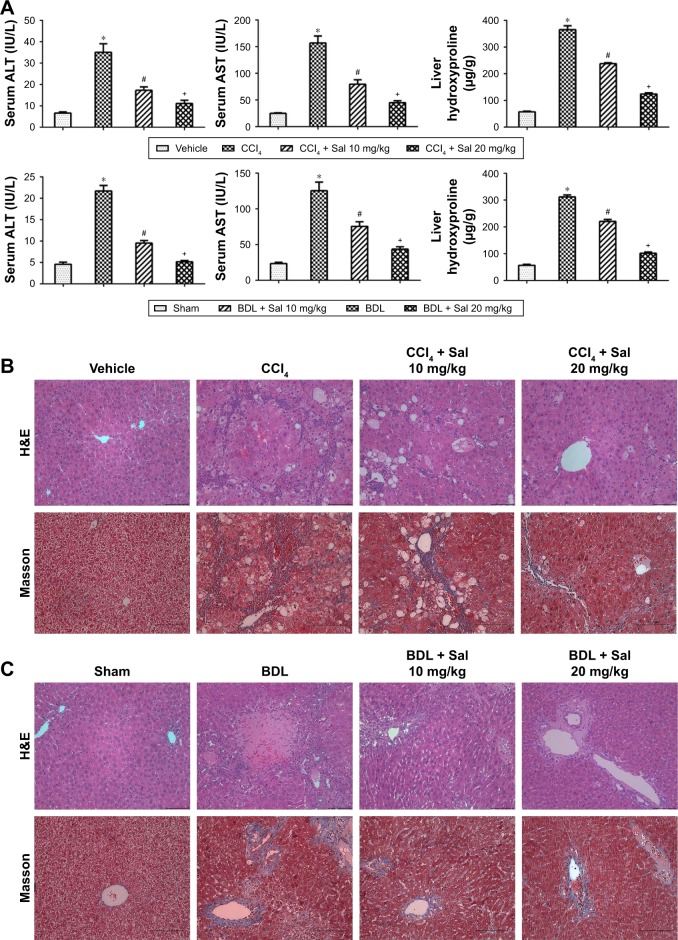
Liver fibrosis is commonly seen and a necessary stage in chronic liver disease. The aim of this study was to explore the effect of salidroside on liver fibrosis in mice and its potential mechanisms.
Two mouse liver fibrosis models were established by intraperitoneal injection of carbon tetrachloride (CCl) for 8 weeks and bile duct ligation for 14 days. Salidroside was injected intraperitoneally at doses of 10 and 20 mg/kg once a day. Gene and protein expression levels were determined by quantitative real-time polymerase chain reaction, enzyme-linked immunosorbent assay, Western blot, immunohistochemistry, and immunofluorescence.
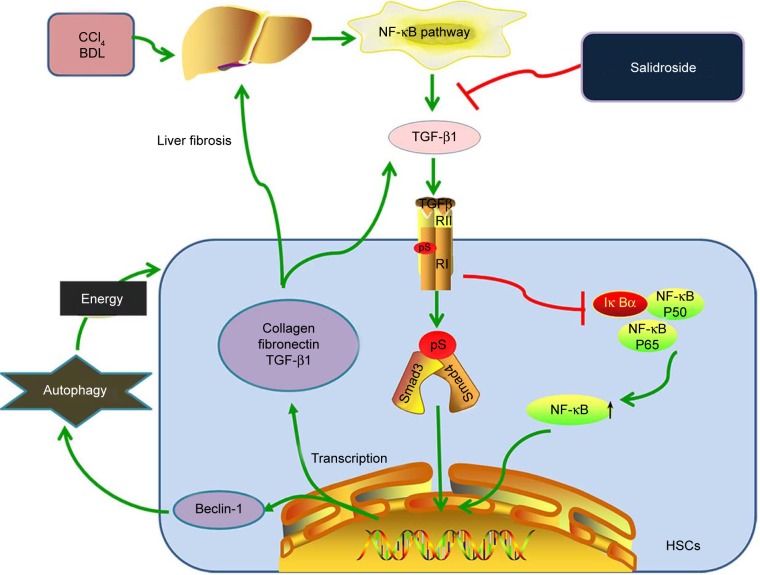
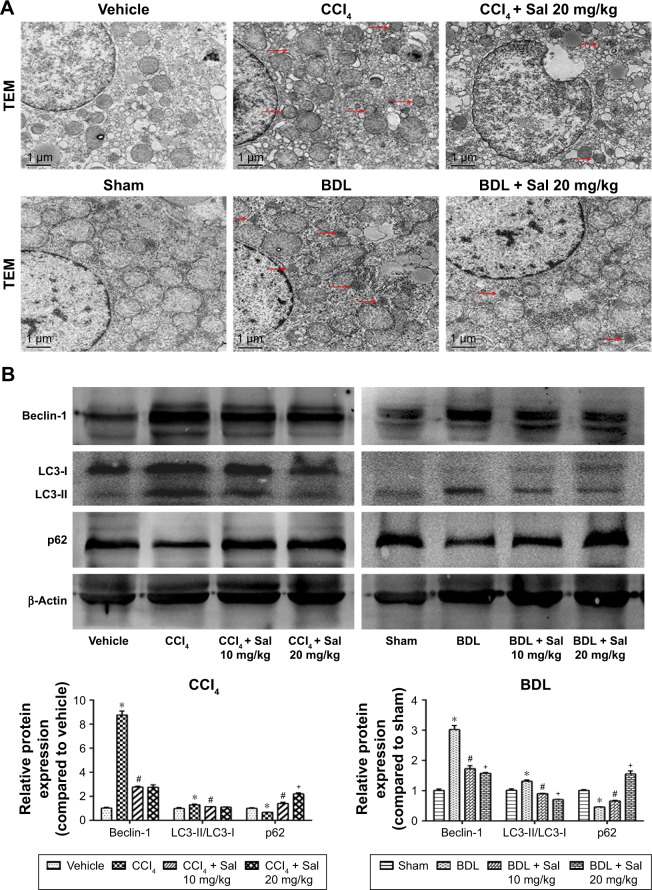
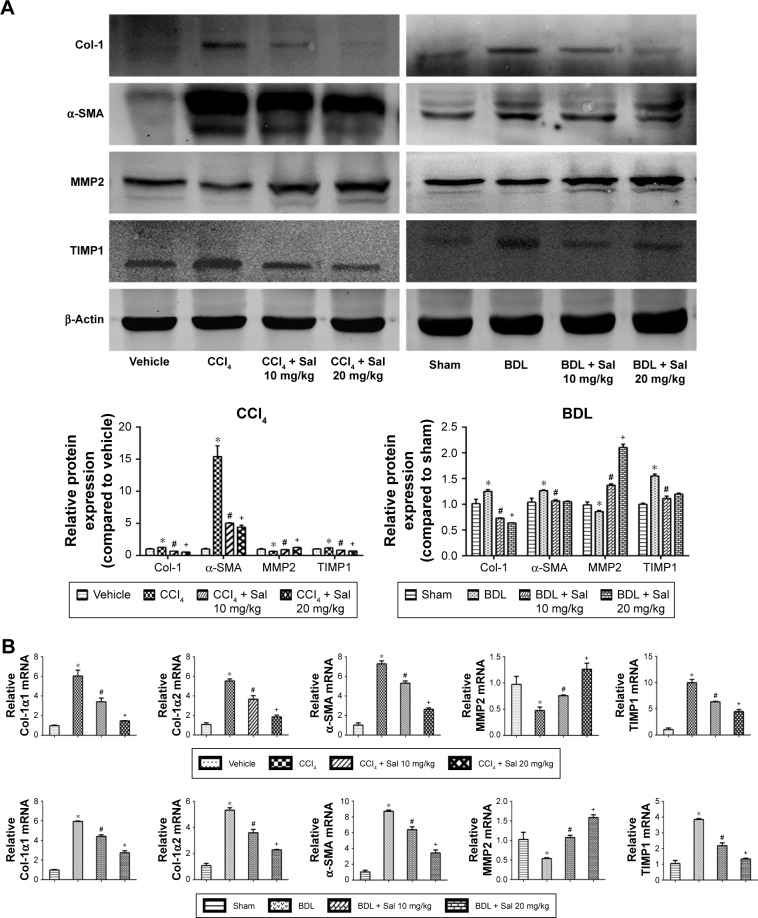
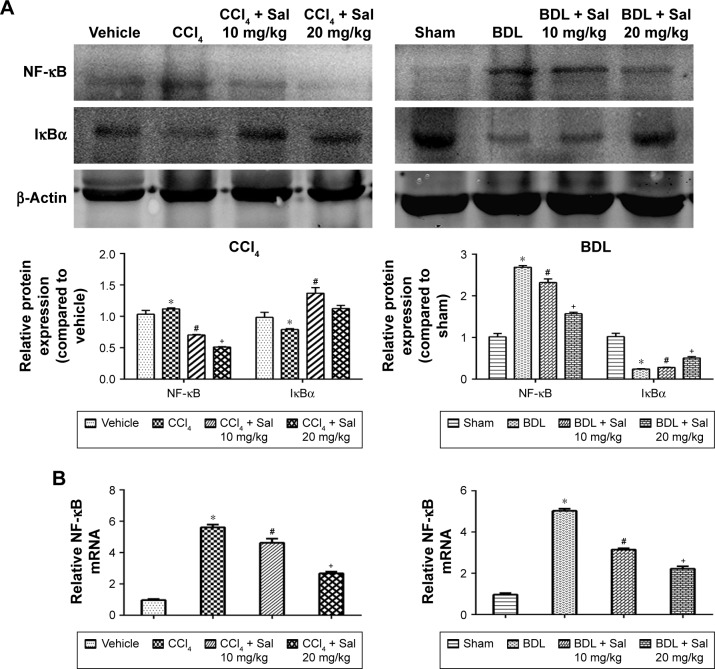
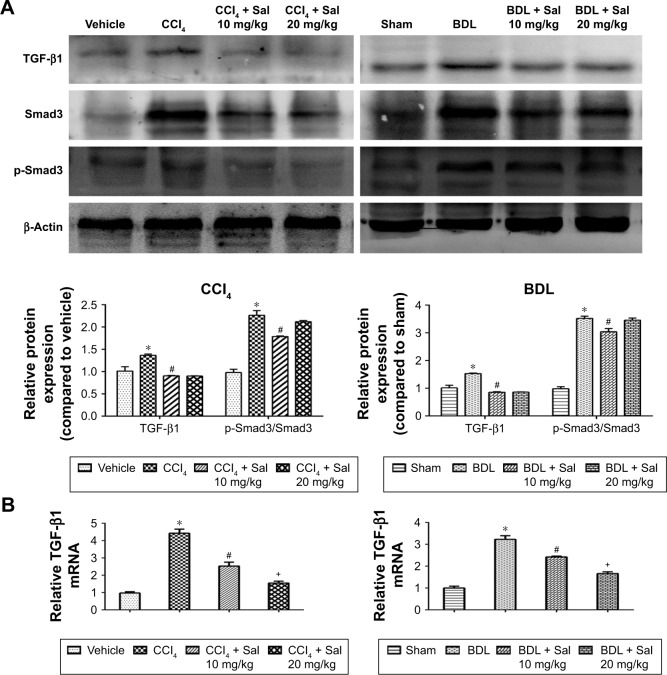
Salidroside inhibited the production of extracellular matrix (ECM) and regulated the balance between MMP2 and TIMP1 and, therefore, alleviated liver fibrosis in the two fibrosis models. Salidroside reduced the production of transforming growth factor (TGF)-β1 in Kupffer cells and hepatic stellate cells (HSCs) via the nuclear factor-κB signaling pathway and, therefore, inhibited the activation of HSCs and autophagy by downregulation of the TGF-β1/Smad3 signaling pathway.
Salidroside can effectively attenuate liver fibrosis by inhibiting the activation of HSCs in mice.
肝纤维化在慢性肝病中常见且是必经阶段。本研究旨在探讨红景天苷对小鼠肝纤维化的影响及其潜在机制。
通过腹腔注射四氯化碳(CCl)8周和胆管结扎14天建立两种小鼠肝纤维化模型。红景天苷按10和20mg/kg剂量每日腹腔注射一次。采用定量实时聚合酶链反应、酶联免疫吸附测定、蛋白质印迹法、免疫组织化学和免疫荧光法测定基因和蛋白质表达水平。
红景天苷抑制细胞外基质(ECM)产生,调节基质金属蛋白酶2(MMP2)和基质金属蛋白酶组织抑制因子1(TIMP1)之间的平衡,从而减轻两种纤维化模型中的肝纤维化。红景天苷通过核因子-κB信号通路减少库普弗细胞和肝星状细胞(HSCs)中转化生长因子(TGF)-β1的产生,从而通过下调TGF-β1/Smad3信号通路抑制HSCs的活化和自噬。
红景天苷可通过抑制小鼠HSCs的活化有效减轻肝纤维化。