Hsu Shih-Lin, Oda Harumi, Shirahata Saya, Watanabe Mana, Sasaki Makoto
Course of Physical Therapy, School of Health Sciences, Akita University, Japan.
Department of Physical Therapy, Graduate School of Health Sciences, Akita University: 1-1-1 Hondo, Akita 010-8543, Japan.
J Phys Ther Sci. 2018 Aug;30(8):1014-1018. doi: 10.1589/jpts.30.1014. Epub 2018 Jul 24.
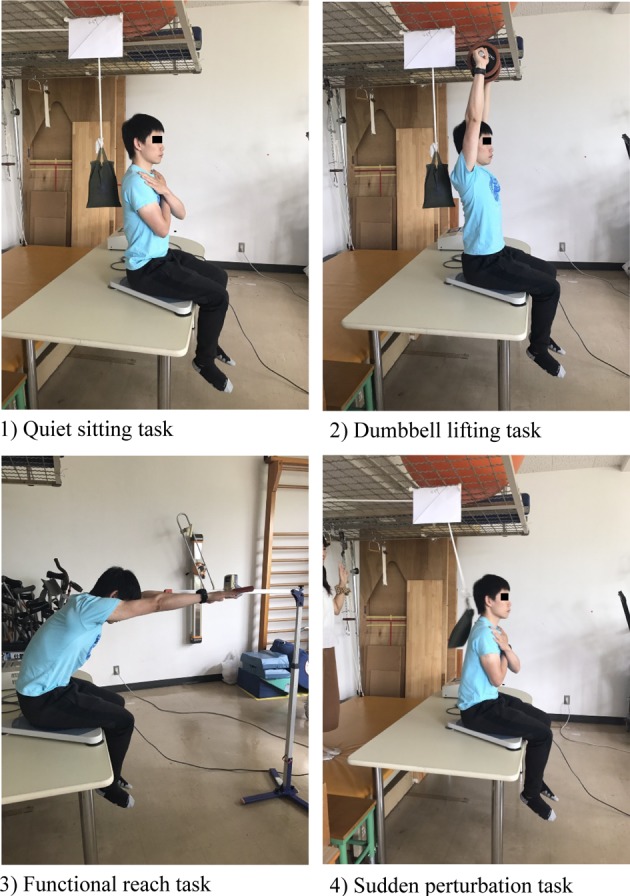
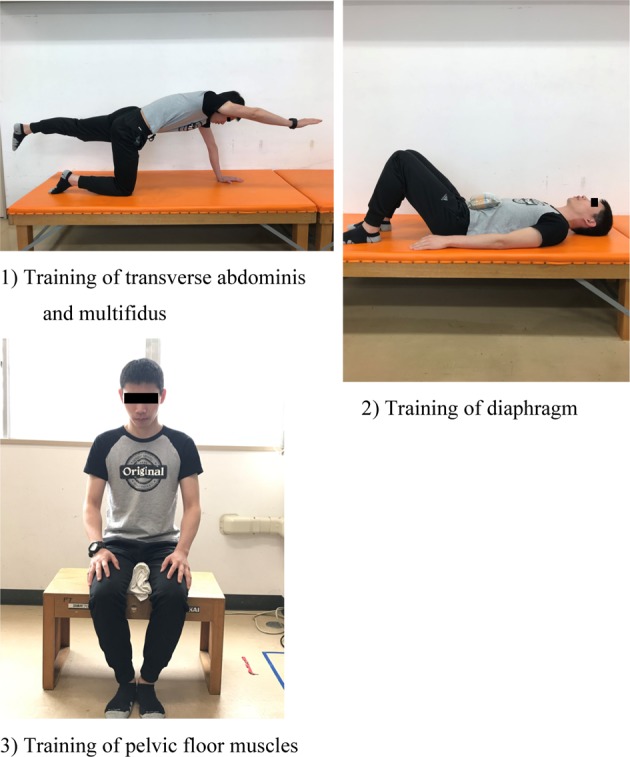
[Purpose] To investigate the effects of core strength training on core stability with and without the Valsalva maneuver. [Participants and Methods] Twenty-four students were randomly assigned to the training and control groups. Students in the training group undertook a 4-week training program that included exercises for the transverse abdominis, multifidus, diaphragm, and pelvic floor muscles, whereas students in the control group performed their usual activities. Participants were required to perform four types of task with and without the Valsalva maneuver. Seated stabilometry was assessed according to the center of pressure (COP). [Results] In the training group, the rectus area in the quiet sitting position with the Valsalva maneuver was enlarged and the length of trajectory during a sudden perturbation task was decreased. No significant changes to the COP were seen in the control group. [Conclusion] Some parameters of core stability improved after participants completed a 4-week core strength training program.
[目的] 研究有无瓦尔萨尔瓦动作时核心力量训练对核心稳定性的影响。[参与者与方法] 24名学生被随机分为训练组和对照组。训练组学生进行为期4周的训练计划,包括针对腹横肌、多裂肌、膈肌和盆底肌的练习,而对照组学生进行日常活动。参与者需在有无瓦尔萨尔瓦动作的情况下执行四种类型的任务。根据压力中心(COP)评估坐姿稳定度。[结果] 在训练组中,进行瓦尔萨尔瓦动作时安静坐姿下的直肠面积增大,突发扰动任务期间的轨迹长度缩短。对照组的COP未见显著变化。[结论] 参与者完成为期4周的核心力量训练计划后,核心稳定性的一些参数得到改善。