
不同肩袖修复术中邻近组织和肌腱病变时肱二头肌长头肌腱的远端拔出强度。
Distal Pullout Strengths of the Biceps Long Head Tendon for Different Adjacent Tissue and Tendon Pathologies during Rotator Cuff Repair.
机构信息
Department of Orthopaedic Surgery, Seoul National University College of Medicine, Seoul National University Hospital, Republic of Korea.
出版信息
Biomed Res Int. 2018 Sep 9;2018:4267163. doi: 10.1155/2018/4267163. eCollection 2018.
Pathologies of the long head of the biceps tendon (LHBT) are frequently recognized in cases of rotator cuff tear. Recommendations for managing such pathologies remain debatable, and distal migration of tenotomized biceps is always a concern when only tenotomy is performed. Seventy patients of mean age 60.4 ± 6.9 years (range: 44 to 82 years) were included in this retrospective study. During subpectoral tenodesis in rotator cuff repair, pullout tensions were measured using a digital tensiometer. Measured tensions obtained were analyzed with respect to sex, tear involvement of the subscapularis, and the presence of a partial tear of LHBT, type II SLAP lesion, subluxation/dislocation of the biceps, or a pulley lesion. . Mean LHBT pullout tension for the 70 study subjects was 86.5 ± 42.1 N (26.7-240.5 N). Distal LHBT pullout tension was significantly greater for men than women (93.2 ± 42.7 N versus 73.7 ± 38.7 N, P = 0.041). However, LHBT pullout tensions were not significantly associated with different pathologies of surrounding tissues or of LHBTs (all Ps > 0.05). The study failed to show pullout tension differences associated with pathologies affect distal migration of a tenotomized LHBT. Gender was the only factor found to affect LHBT pullout strength. Risk of distal migration of tenotomized LHBT could not be predicted with intraoperative arthroscopic pathologic findings.
肱二头肌长头腱(LHBT)病变在肩袖撕裂中经常被发现。对于此类病变的治疗建议仍存在争议,并且当仅进行肌腱切断术时,切断的二头肌向远端迁移始终是一个关注点。
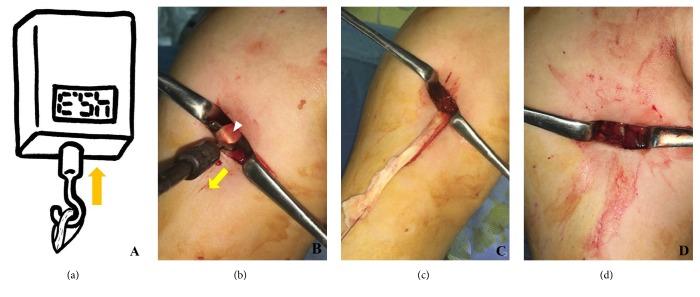
本回顾性研究纳入了 70 名平均年龄为 60.4 ± 6.9 岁(范围:44 至 82 岁)的患者。在肩袖修复的胸肌下肌腱固定术中,使用数字张力计测量肌腱拔出张力。分析了所获得的测量张力与性别、肩胛下肌撕裂的参与程度、LHBT 的部分撕裂、II 型 SLAP 病变、二头肌半脱位/脱位、或滑囊病变的相关性。
70 名研究对象的平均 LHBT 拔出张力为 86.5 ± 42.1 N(26.7-240.5 N)。男性的 LHBT 远端拔出张力明显大于女性(93.2 ± 42.7 N 比 73.7 ± 38.7 N,P = 0.041)。然而,LHBT 拔出张力与周围组织或 LHBT 的不同病变之间无显著相关性(所有 P 值均大于 0.05)。
该研究未能显示与病变相关的拔出张力差异会影响切断的 LHBT 向远端迁移。性别是唯一发现会影响 LHBT 拔出强度的因素。术中关节镜病理检查结果不能预测切断的 LHBT 远端迁移的风险。

 Zotero 插件