Prather Cynthia, Fuller Taleria R, Jeffries William L, Marshall Khiya J, Howell A Vyann, Belyue-Umole Angela, King Winifred
Division of HIV/AIDS Prevention, National Center for HIV, Hepatitis, STD and TB Prevention, Centers for Disease Control and Prevention, Atlanta, Georgia.
Division of Reproductive Health, National Center for Chronic Disease Prevention and Health Promotion, Centers for Disease Control and Prevention, Atlanta, Georgia.
Health Equity. 2018 Sep 24;2(1):249-259. doi: 10.1089/heq.2017.0045. eCollection 2018.
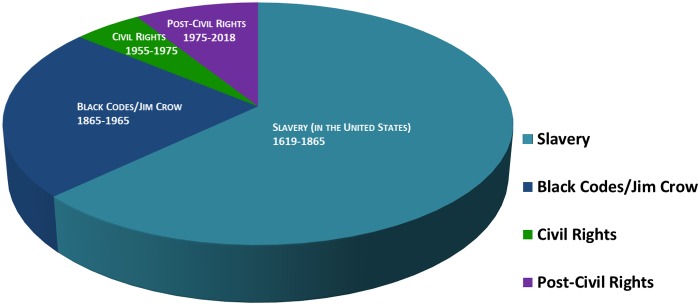
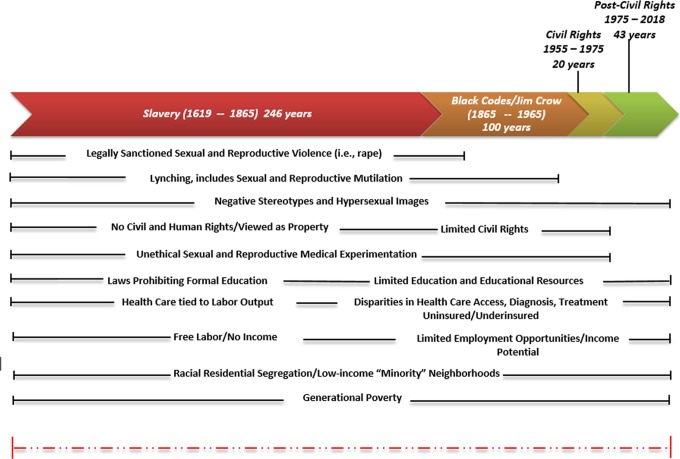
The sexual and reproductive health of African American women has been compromised due to multiple experiences of racism, including discriminatory healthcare practices from slavery through the post-Civil Rights era. However, studies rarely consider how the historical underpinnings of racism negatively influence the present-day health outcomes of African American women. Although some improvements to ensure equitable healthcare have been made, these historical influences provide an unexplored context for illuminating present-day epidemiology of sexual and reproductive health disparities among African American women. To account for the unique healthcare experiences influenced by racism, including healthcare provision, we searched online databases for peer-reviewed sources and books published in English only. We explored the link between historical and current experiences of racism and sexual and reproductive health outcomes. The legacy of medical experimentation and inadequate healthcare coupled with social determinants has exacerbated African American women's complex relationship with healthcare systems. The social determinants of health associated with institutionalized and interpersonal racism, including poverty, unemployment, and residential segregation, may make African American women more vulnerable to disparate sexual and reproductive health outcomes. The development of innovative models and strategies to improve the health of African American women may be informed by an understanding of the historical and enduring legacy of racism in the United States. Addressing sexual and reproductive health through a historical lens and ensuring the implementation of culturally appropriate programs, research, and treatment efforts will likely move public health toward achieving health equity. Furthermore, it is necessary to develop interventions that address the intersection of the social determinants of health that contribute to sexual and reproductive health inequities.
非裔美国女性的性健康和生殖健康因多重种族主义经历而受到损害,这些经历包括从奴隶制到民权运动后时代的歧视性医疗行为。然而,研究很少考虑种族主义的历史根源如何对非裔美国女性当前的健康结果产生负面影响。尽管在确保公平医疗方面已经取得了一些进展,但这些历史影响为阐明非裔美国女性性健康和生殖健康差异的当前流行病学提供了一个未被探索的背景。为了了解受种族主义影响的独特医疗经历,包括医疗服务提供情况,我们在在线数据库中搜索了仅以英文发表的同行评审资料和书籍。我们探讨了种族主义的历史和当前经历与性健康和生殖健康结果之间的联系。医学实验的遗留问题、医疗服务不足以及社会决定因素加剧了非裔美国女性与医疗系统之间的复杂关系。与制度化和人际种族主义相关的健康社会决定因素,包括贫困、失业和居住隔离,可能使非裔美国女性更容易出现不同的性健康和生殖健康结果。了解美国种族主义的历史和持久影响,可能有助于开发创新模式和策略来改善非裔美国女性的健康。通过历史视角解决性健康和生殖健康问题,并确保实施符合文化背景的项目、研究和治疗措施,可能会推动公共卫生朝着实现健康公平的方向发展。此外,有必要制定干预措施,以解决导致性健康和生殖健康不平等的健康社会决定因素的交叉问题。