Psychology Department, University of Florida, Gainesville, FL, 32611, USA.
Center for Addiction Research and Education, University of Florida, Gainesville, FL, 32610, USA.
Transl Psychiatry. 2018 Oct 5;8(1):209. doi: 10.1038/s41398-018-0265-9.
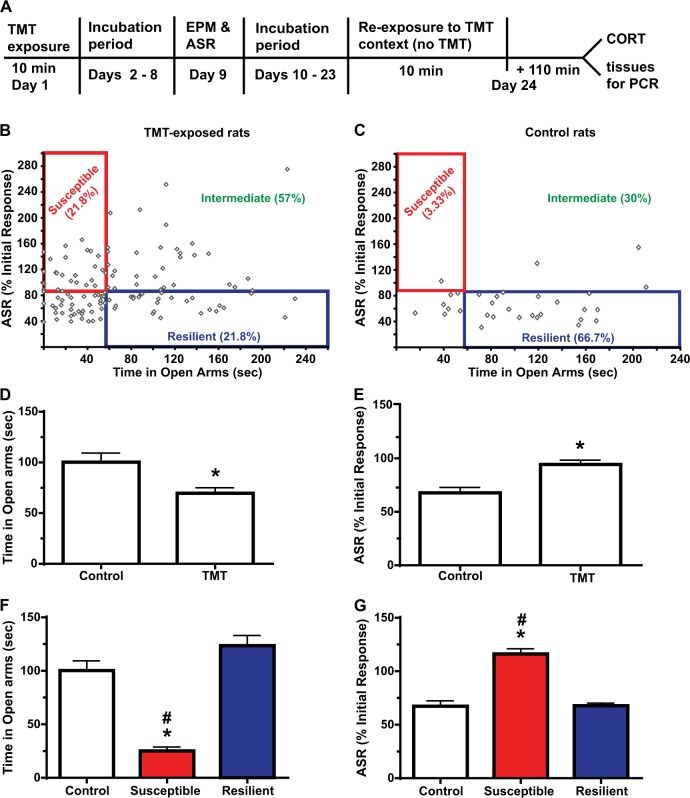
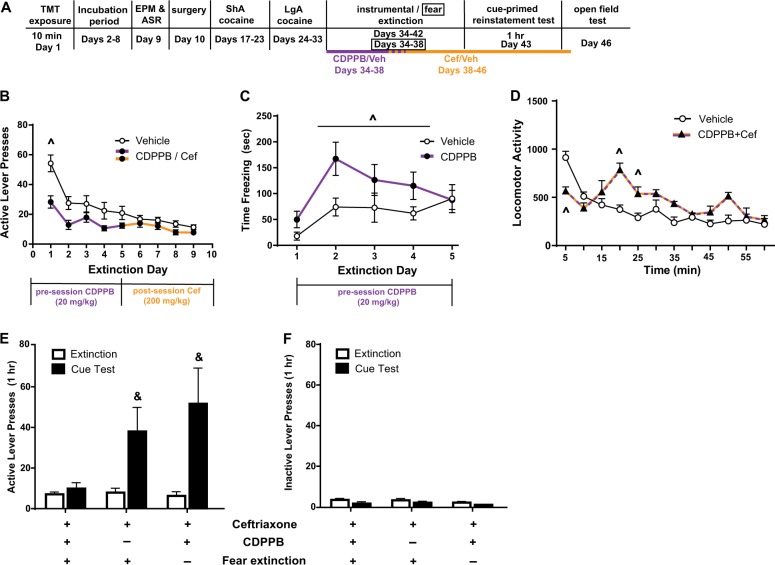
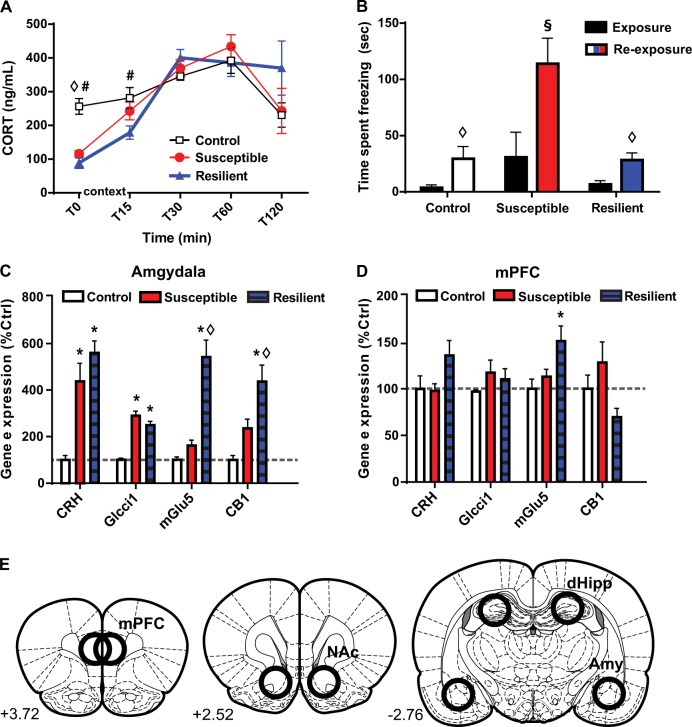
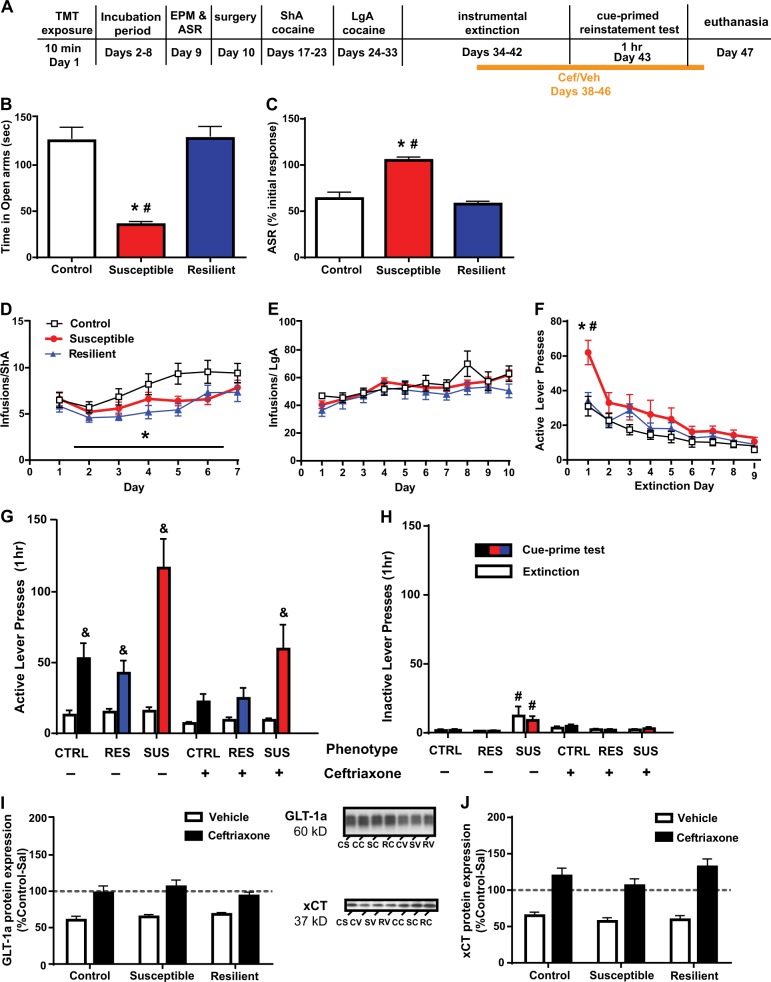
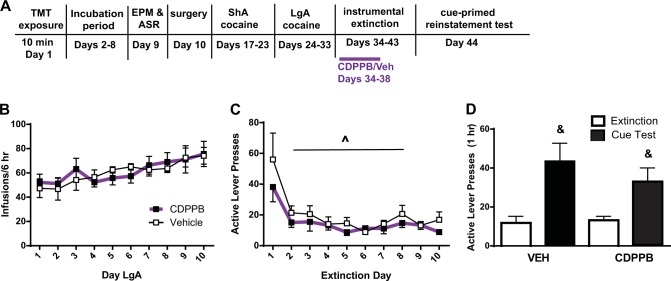
PTSD is highly comorbid with cocaine use disorder (CUD), and cocaine users with PTSD + CUD are more resistant to treatment. Here we sought to develop a rat model of PTSD + CUD in order to identify the neurobiological changes underlying such comorbidity and screen potential medications for reducing cocaine seeking in the PTSD population. We utilized a predator scent stress model of PTSD, wherein rats received a single exposure to the fox pheromone 2,5-dihydro-2,4,5-trimethylthiazoline (TMT). One week after TMT exposure, stress-susceptible (susceptible), intermediate, and resilient phenotypes were detected and were consistent with behavioral, corticosterone, and gene expression profiles 3 weeks post TMT. We assessed phenotypic differences in cocaine self-administration, extinction, and cue-primed reinstatement. Susceptible rats exhibited deficits in extinction learning and increased cue-primed reinstatement that was not prevented by Ceftriaxone, an antibiotic that consistently attenuates the reinstatement of cocaine seeking. TMT-exposed resilient rats displayed increased mGlu5 gene expression in the amygdala and medial prefrontal cortex and did not display the enhanced cocaine seeking observed in susceptible rats. Combined treatment with the mGlu5 positive allosteric modulator 3-Cyano-N-(1,3-diphenyl-1 H-pyrazol-5-yl)benzamide (CDPPB), fear extinction, and ceftriaxone prevented the reinstatement of cocaine seeking in susceptible rats with fear extinction an important mediating condition. These results highlight the need for animal models of PTSD to consider stress-responsivity, as only a subset of trauma-exposed individuals develop PTSD and these individuals likely exhibit distinct neurobiological changes compared with trauma-exposed populations who are resilient to stress. This work further identifies glutamate homeostasis and mGlu5 as a target for treating relapse in comorbid PTSD-cocaine addiction.
创伤后应激障碍(PTSD)与可卡因使用障碍(CUD)高度共病,且 PTSD+CUD 可卡因使用者对治疗的反应更差。在这里,我们试图建立一个 PTSD+CUD 的大鼠模型,以确定这种共病的神经生物学变化,并筛选潜在的药物来减少 PTSD 人群对可卡因的寻求。我们利用了一种 PTSD 的捕食者气味应激模型,其中大鼠接受单一的狐臭素 2,5-二氢-2,4,5-三甲基噻唑啉(TMT)暴露。在 TMT 暴露后一周,检测到应激易感性(易感性)、中间和弹性表型,并且与 3 周后 TMT 的行为、皮质酮和基因表达谱一致。我们评估了可卡因自我给药、消退和线索诱发复吸的表型差异。易感性大鼠表现出消退学习缺陷和增加的线索诱发复吸,而抗生素头孢曲松不能预防这种复吸,头孢曲松一致减弱可卡因寻求的复吸。TMT 暴露的弹性大鼠在杏仁核和内侧前额叶皮层中显示出 mGlu5 基因表达增加,并且没有显示出易感性大鼠观察到的增强的可卡因寻求。与 mGlu5 正变构调节剂 3-氰基-N-(1,3-二苯基-1H-吡唑-5-基)苯甲酰胺(CDPPB)、恐惧消退和头孢曲松联合治疗可防止易感性大鼠的可卡因寻求复吸,恐惧消退是一个重要的中介条件。这些结果强调了 PTSD 动物模型需要考虑应激反应性,因为只有一部分创伤暴露个体发展为 PTSD,这些个体可能与对压力有弹性的创伤暴露人群相比表现出不同的神经生物学变化。这项工作进一步确定了谷氨酸稳态和 mGlu5 作为治疗共病 PTSD-可卡因成瘾复发的靶点。