Santos-Pata Diogo, Verschure Paul F M J
SPECS: The Perceptive, Emotive and Cognitive Systems Group, Barcelona, Spain.
Institute for Bioengineering of Catalonia, Barcelona, Spain.
Front Behav Neurosci. 2018 Oct 12;12:237. doi: 10.3389/fnbeh.2018.00237. eCollection 2018.
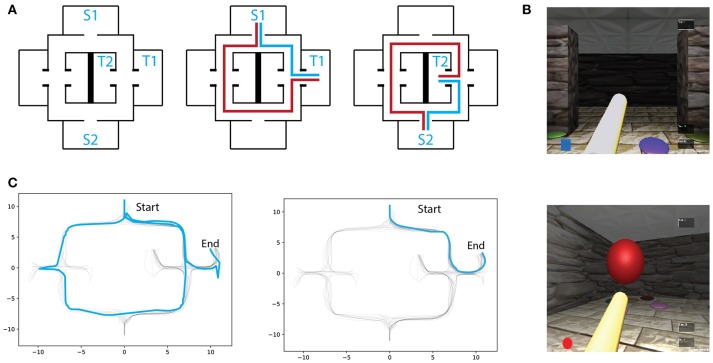
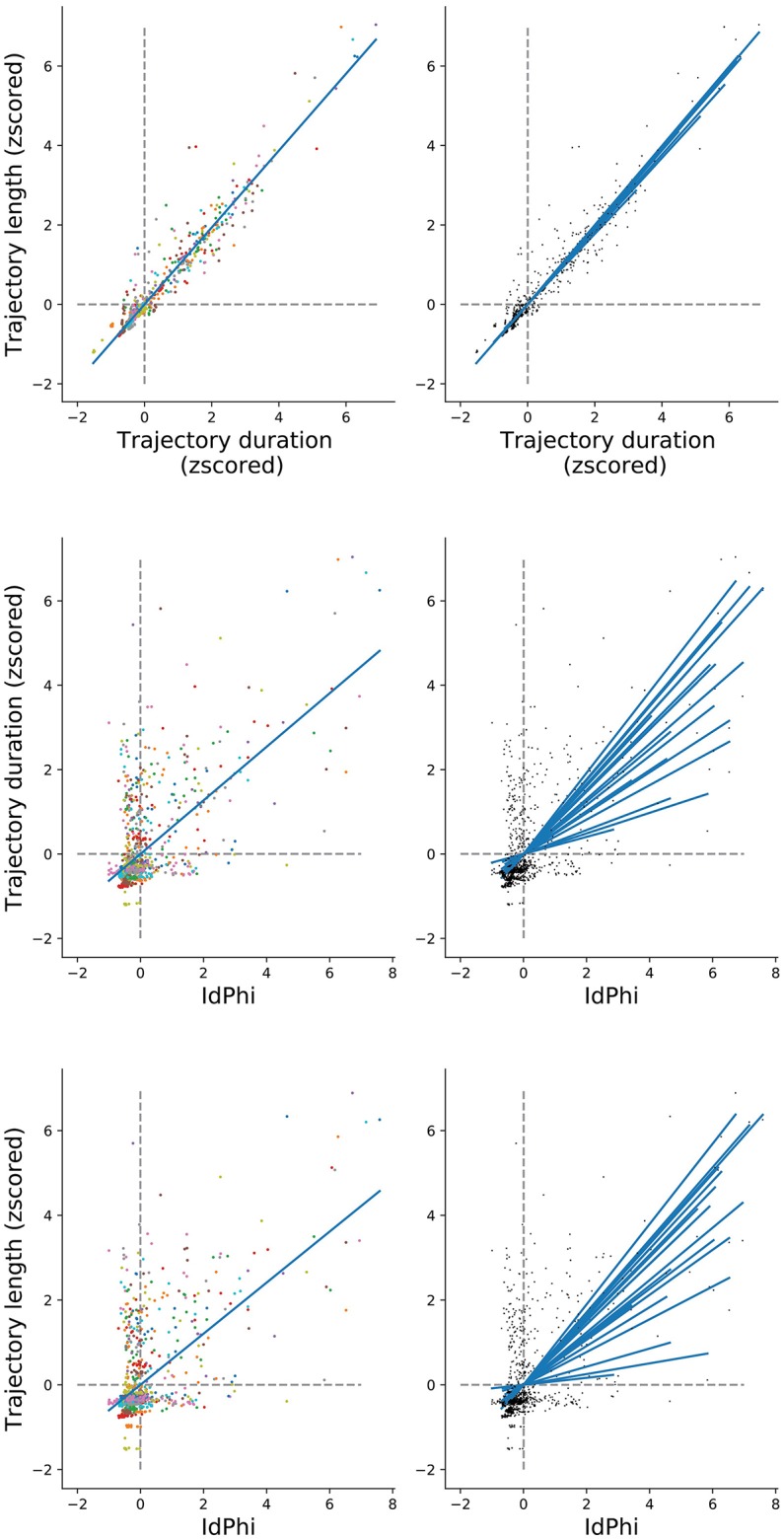
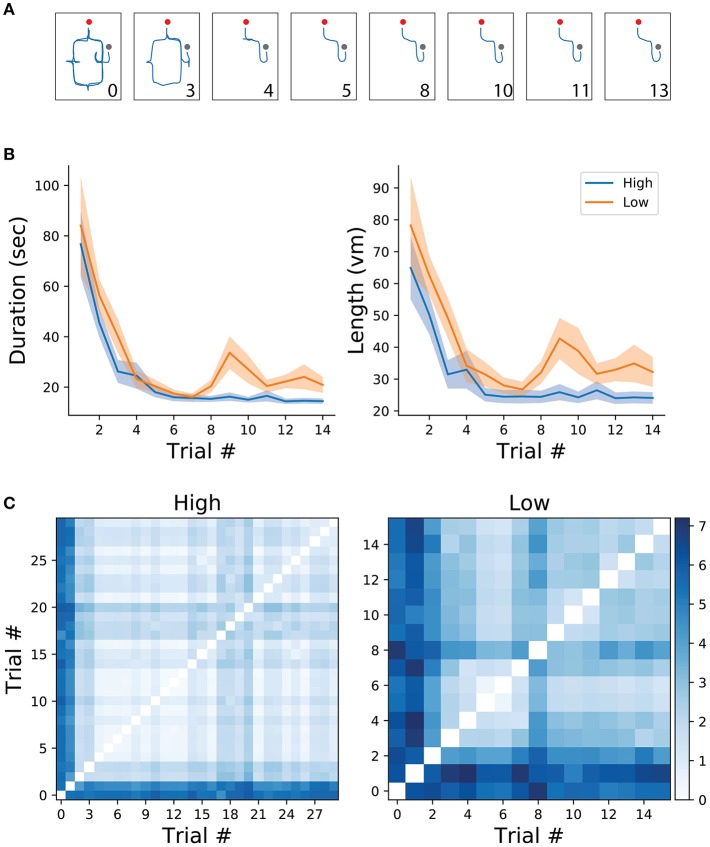
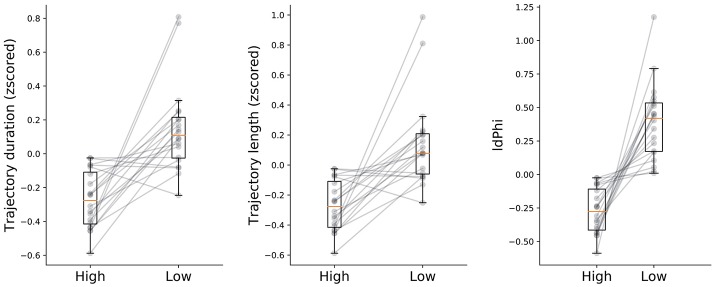
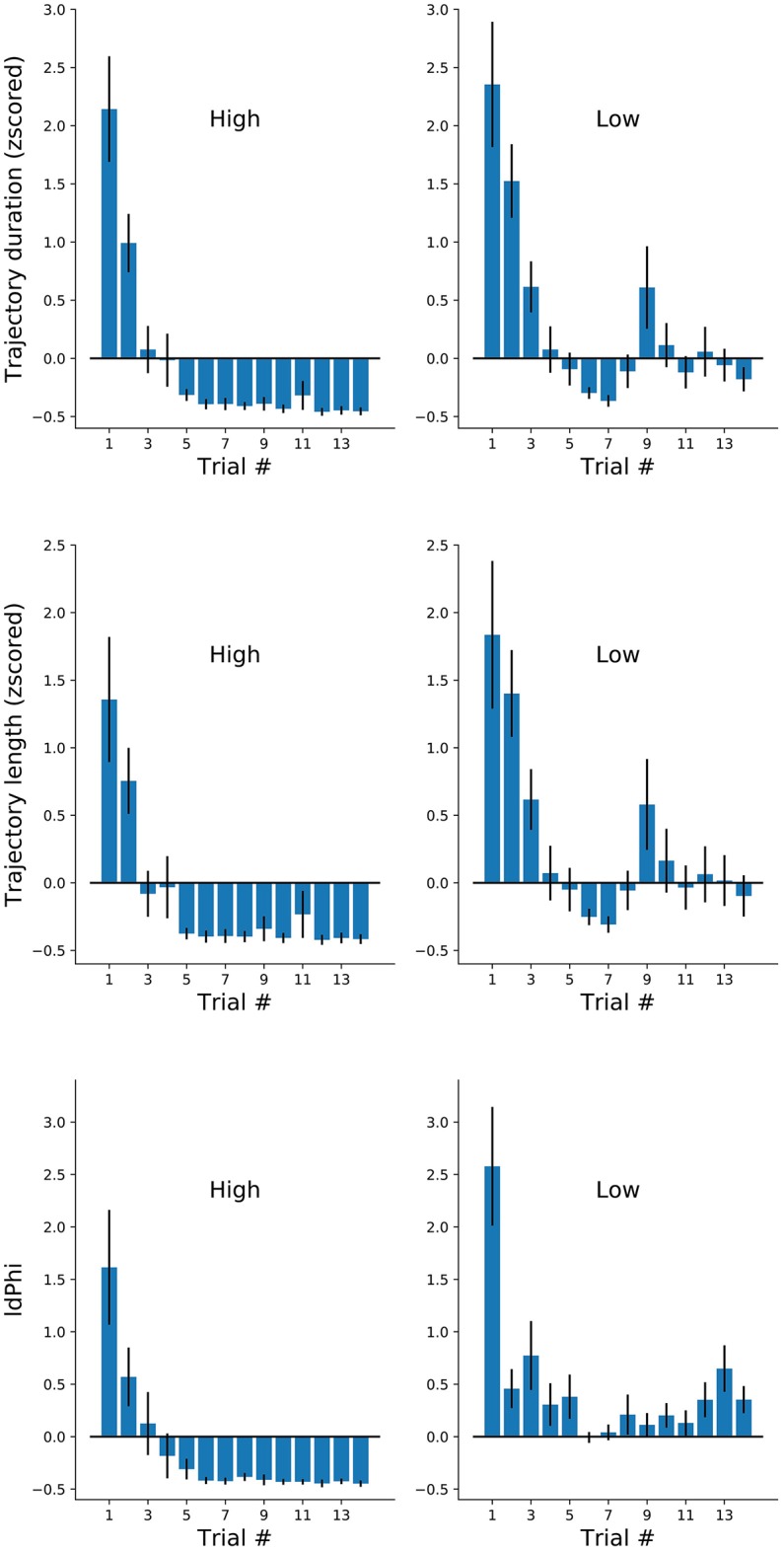
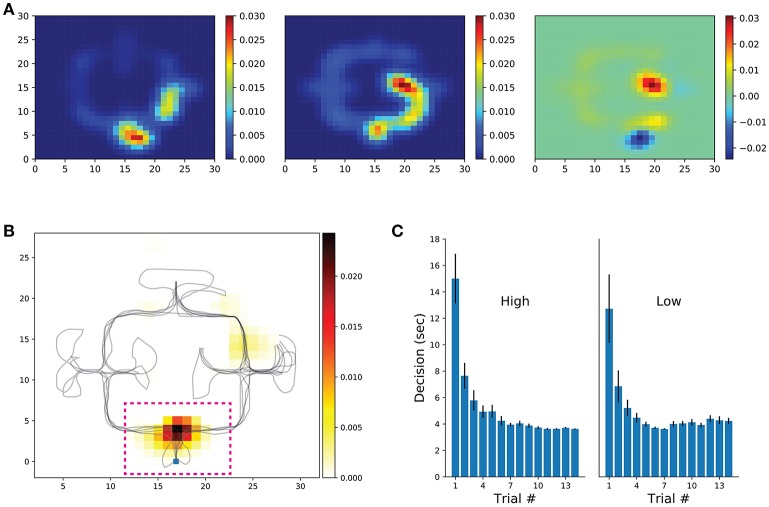
When learning new environments, rats often pause at decision points and look back and forth over their possible trajectories as if they were imagining the future outcome of their actions, a behavior termed "Vicarious trial and error" (VTE). As the animal learns the environmental configuration, rats change from deliberative to habitual behavior, and VTE tends to disappear, suggesting a functional relevance in the early stages of learning. Despite the extensive research on spatial navigation, learning and VTE in the rat model, fewer studies have focused on humans. Here, we tested whether head-scanning behaviors that humans typically exhibit during spatial navigation are as predictive of spatial learning as in the rat. Subjects performed a goal-oriented virtual navigation task in a symmetric environment. Spatial learning was assessed through the analysis of trajectories, timings, and head orientations, under habitual and deliberative spatial navigation conditions. As expected, we found that trajectory length and duration decreased with the trial number, implying that subjects learned the spatial configuration of the environment over trials. Interestingly, IdPhi (a standard metric of VTE) also decreased with the trial number, suggesting that humans benefit from the same head-orientation scanning behavior as rats at spatial decision-points. Moreover, IdPhi captured exclusively at the first decision-point of each trial, was correlated with trial trajectory duration and length. Our findings demonstrate that in VTE is a signature of the stage of spatial learning in humans, and can be used to predict performance in navigation tasks with high accuracy.
在学习新环境时,大鼠常常会在决策点停顿,来回审视它们可能的行动轨迹,就好像它们在想象自己行动的未来结果一样,这种行为被称为“替代性试错”(VTE)。随着动物了解环境布局,大鼠从深思熟虑的行为转变为习惯性行为,VTE往往会消失,这表明它在学习的早期阶段具有功能相关性。尽管对大鼠模型中的空间导航、学习和VTE进行了广泛研究,但针对人类的研究较少。在这里,我们测试了人类在空间导航过程中通常表现出的头部扫描行为是否与大鼠一样能预测空间学习。受试者在一个对称环境中执行一项目标导向的虚拟导航任务。在习惯性和深思熟虑的空间导航条件下,通过分析轨迹、时间和头部方向来评估空间学习。正如预期的那样,我们发现轨迹长度和持续时间随着试验次数的增加而减少,这意味着受试者在多次试验中了解了环境的空间布局。有趣的是,IdPhi(VTE的一个标准指标)也随着试验次数的增加而减少,这表明人类在空间决策点受益于与大鼠相同的头部方向扫描行为。此外,仅在每次试验的第一个决策点捕获的IdPhi与试验轨迹的持续时间和长度相关。我们的研究结果表明,VTE是人类空间学习阶段的一个标志,并且可以高精度地用于预测导航任务中的表现。