Li Xuejin, Li Jinhua, Bai Jing, Dong Yifan, Li Linsen, Zhou Baoxue
1School of Environmental Science and Engineering, Shanghai Jiao Tong University, No. 800 Dongchuan Rd, Shanghai, 200240 People's Republic of China.
Key Laboratory for Thin Film and Microfabrication of the Ministry of Education, Shanghai, 200240 People's Republic of China.
Nanomicro Lett. 2016;8(3):221-231. doi: 10.1007/s40820-015-0080-2. Epub 2016 Jan 12.
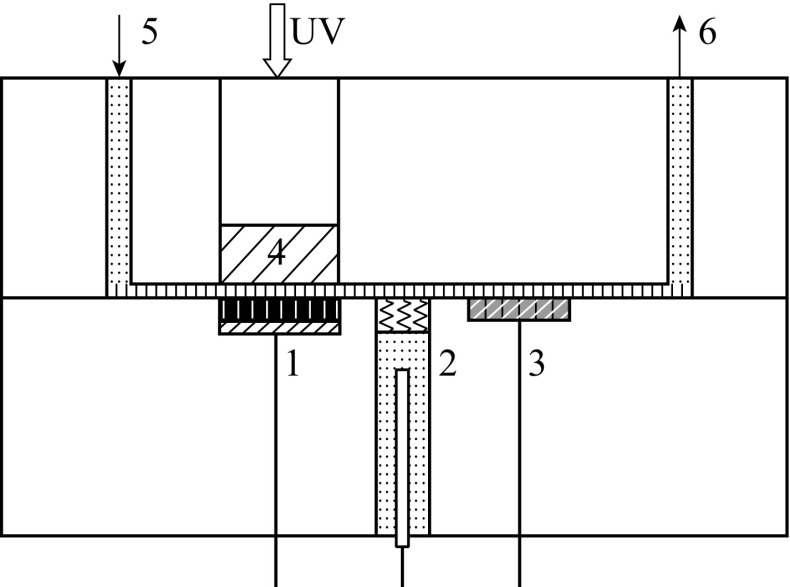
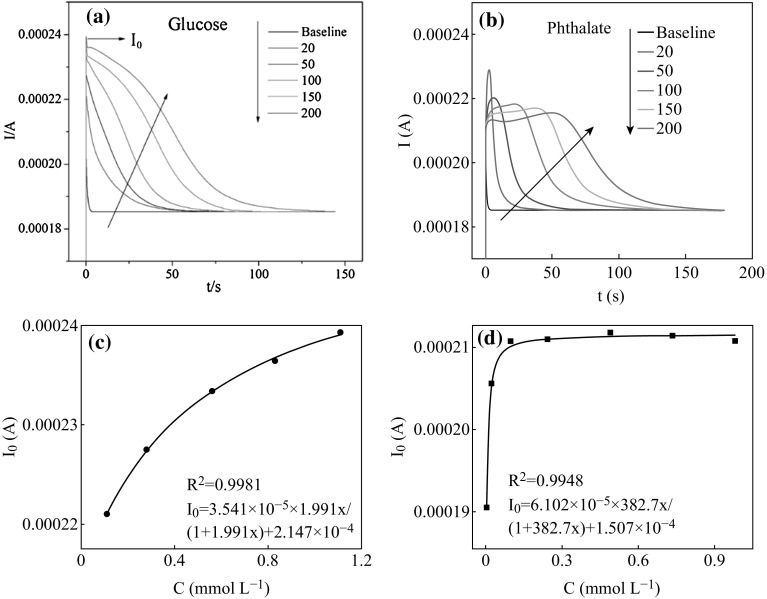
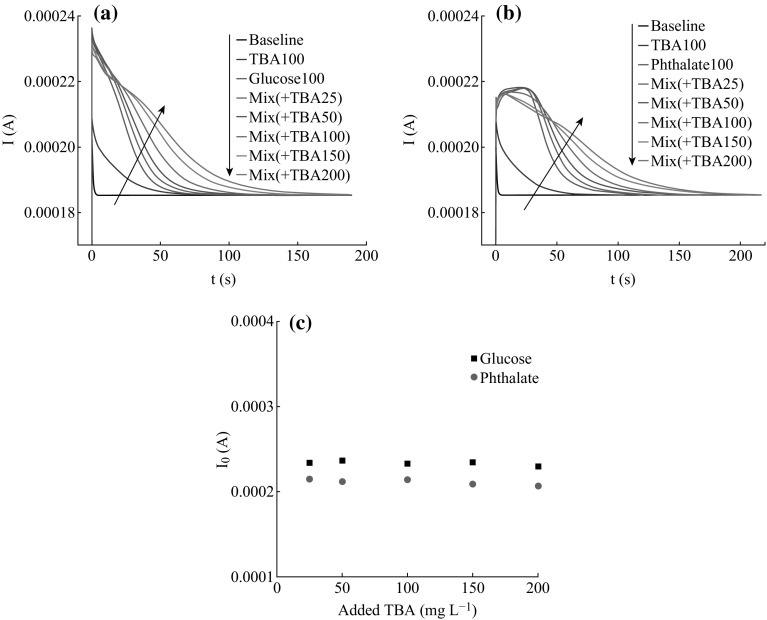
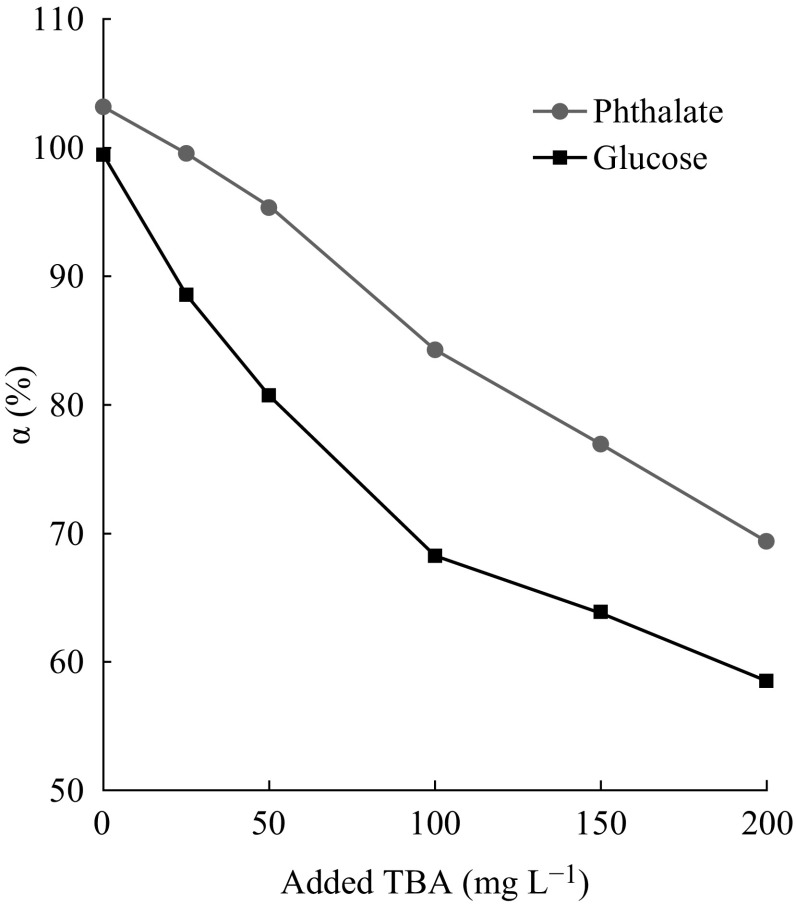
The inhibition effect of tert-butyl alcohol (TBA), identified as the OH radical inhibitor, on the TiO nano assays (TNA) photoelectrocatalytic oxidation of different organics such as glucose and phthalate was reported. The adsorption performance of these organics on the TNA photoelectrode was investigated by using the instantaneous photocurrent value, and the degradation property was examined by using the exhausted reaction. The results showed that glucose exhibited the poor adsorption and easy degradation performance, phthalate showed the strong adsorption and hard-degradation, but TBA showed the weak adsorption and was the most difficult to be degraded. The degradation of both glucose and phthalate could be inhibited evidently by TBA. But the effect on glucose was more obvious. The different inhibition effects of TBA on different organics could be attributed to the differences in the adsorption and the degradation property. For instance, phthalate of the strong adsorption property could avoid from the capture of OH radicals by TBA in TNA photoelectrocatalytic process.
据报道,作为羟基自由基抑制剂的叔丁醇(TBA)对TiO纳米分析(TNA)光催化氧化葡萄糖和邻苯二甲酸酯等不同有机物具有抑制作用。通过使用瞬时光电流值研究了这些有机物在TNA光电极上的吸附性能,并通过耗尽反应考察了降解性能。结果表明,葡萄糖表现出较差的吸附性能和易于降解的性能,邻苯二甲酸酯表现出较强的吸附性能和难以降解的性能,而TBA表现出较弱的吸附性能且最难降解。TBA对葡萄糖和邻苯二甲酸酯的降解均有明显抑制作用。但对葡萄糖的影响更为明显。TBA对不同有机物的不同抑制作用可归因于吸附和降解性能的差异。例如,具有强吸附性能的邻苯二甲酸酯在TNA光催化过程中可避免被TBA捕获羟基自由基。