
城市森林斑块在维持等足目动物(潮虫亚目)多样性方面的作用。
The role of urban forest patches in maintaining isopod diversity (Oniscidea).
作者信息
Hornung Elisabeth, Kásler Andrea, Tóth Zsolt
机构信息
Department of Ecology, Institute for Biology, University of Veterinary Medicine Budapest, H-1077 Budapest, Rottenbiller str. 50, Hungary University of Veterinary Medicine Budapest Budapest Hungary.
出版信息
Zookeys. 2018 Dec 3(801):371-388. doi: 10.3897/zookeys.801.22829. eCollection 2018.
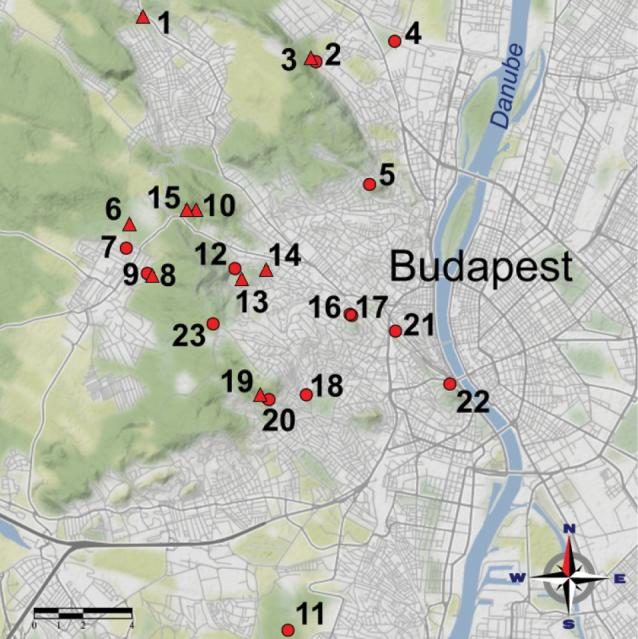
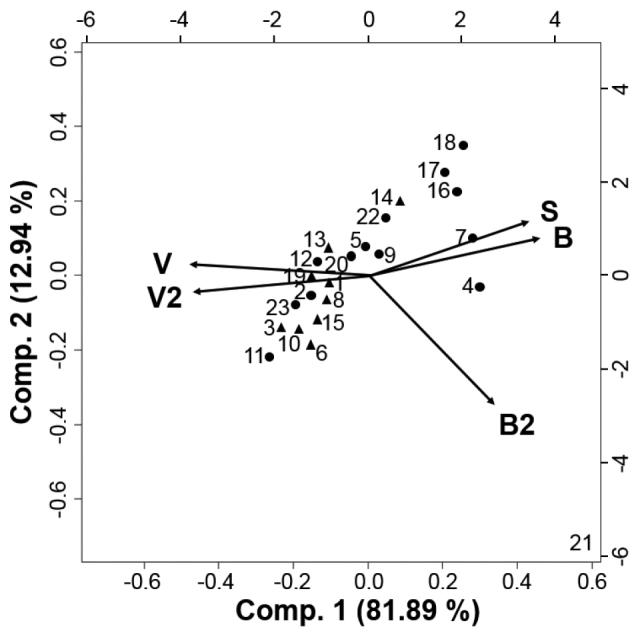
Compositional changes in natural communities associated with anthropogenic influence often lead to localised extinctions and biodiversity loss. Soil invertebrates are also threatened by urbanisation due to habitat fragmentation, vegetation changes and management, soil alteration, degradation, and disappearing shelter sites. The aim was to assess terrestrial isopod (Oniscidea) assemblages in differently degraded urban forest patches of a metropolitan area (Budapest, Hungary). Study sites were compared by their species richness, composition and the relevant background factors (soil properties, dead wood, litter characteristics, and canopy closure). The degree of urban disturbance was expressed using an urbanisation index (UI) based on built-up density and vegetation cover. The isopods were identified to species level, and were qualified by their habitat preference and naturalness index (TINI). Average Rarity Index (ARI), derived from TINIs provided information on the degree of naturalness/disturbance of each habitat. Altogether 14 isopod species were collected from 23 sample sites. Urbanisation indirectly affected on the composition of isopod assemblages through the quantity of dead wood and soil plasticity. ARIs and UIs of sample sites were negatively correlated. Urban patches harboured habitat generalist, synanthropic and established introduced species with low naturalness value of assemblages. Areas with no or low anthropogenic disturbance maintained stable native, autochthonous assemblages that were characteristic of rural sites in the region. Transitional zones between rural and urban habitats usually maintained a mixed isopod fauna consisting of both urban and rural elements.
与人为影响相关的自然群落组成变化往往会导致局部灭绝和生物多样性丧失。由于栖息地破碎化、植被变化与管理、土壤改变、退化以及遮蔽场所消失,土壤无脊椎动物也受到城市化的威胁。研究目的是评估大都市地区(匈牙利布达佩斯)不同退化程度的城市森林斑块中的陆生等足类动物(潮虫亚目)群落。通过物种丰富度、组成以及相关背景因素(土壤性质、枯木、凋落物特征和树冠郁闭度)对研究地点进行比较。使用基于建筑密度和植被覆盖的城市化指数(UI)来表示城市干扰程度。将等足类动物鉴定到物种水平,并根据其栖息地偏好和自然度指数(TINI)进行分类。从TINI得出的平均稀有度指数(ARI)提供了每个栖息地自然度/干扰程度的信息。共从23个采样点收集到14种等足类动物。城市化通过枯木数量和土壤可塑性间接影响等足类动物群落的组成。采样点的ARI和UI呈负相关。城市斑块中栖息着栖息地广适性、伴人物种和已定居的外来物种,其群落的自然度值较低。人为干扰少或无的区域维持着稳定的本地原生群落,这些群落是该地区农村地点的特征。农村和城市栖息地之间的过渡区域通常维持着由城市和农村元素组成的混合等足类动物区系。



 Zotero 插件