
建立犬 B 细胞淋巴瘤的生物发光移植瘤模型,用于监测临床前研究中的肿瘤进展和治疗反应。
Establishment of a bioluminescent canine B-cell lymphoma xenograft model for monitoring tumor progression and treatment response in preclinical studies.
机构信息
CIISA - Centro de Investigação Interdisciplinar em Sanidade Animal, Faculdade de Medicina Veterinária, Universidade de Lisboa, Lisbon, Portugal.
Research Institute for Medicines (iMed.ULisboa), Faculty of Pharmacy, Universidade de Lisboa, Lisbon, Portugal.
出版信息
PLoS One. 2018 Dec 28;13(12):e0208147. doi: 10.1371/journal.pone.0208147. eCollection 2018.
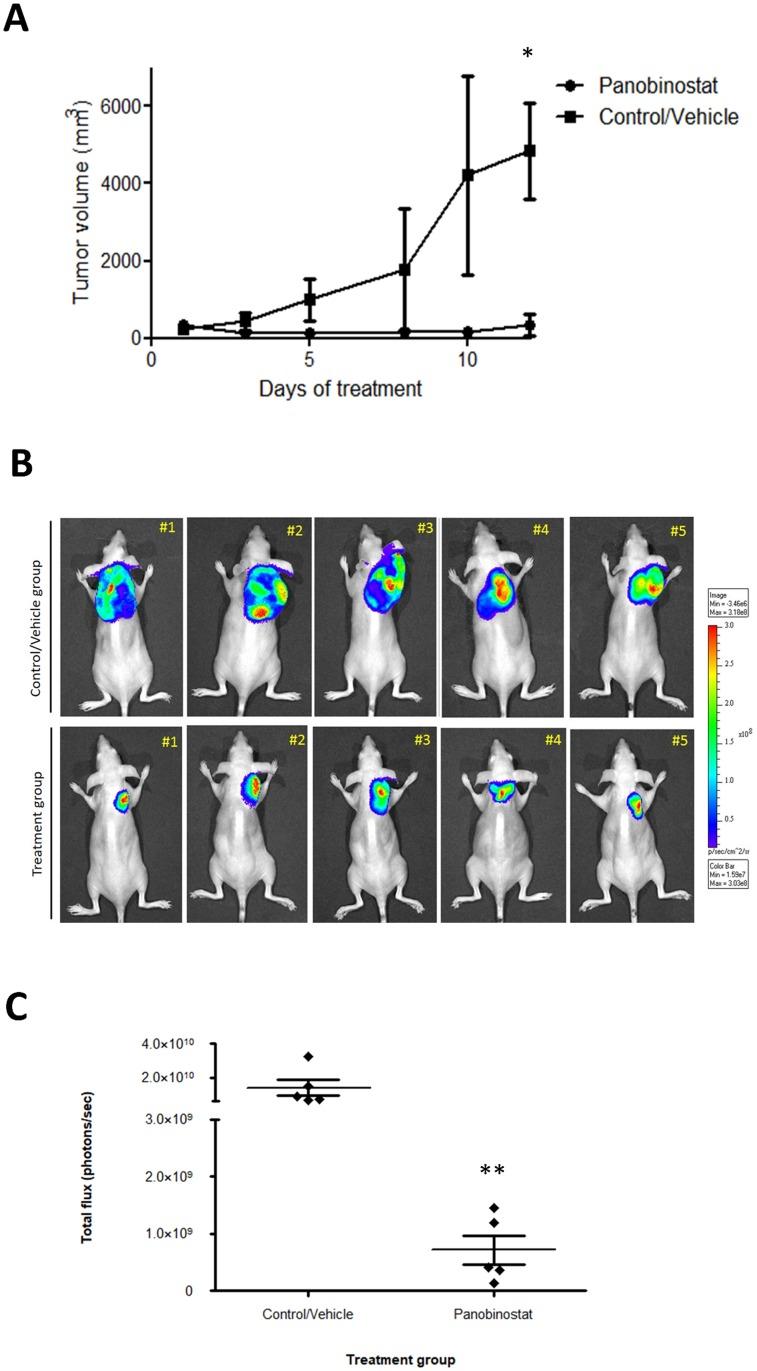
Canine diffuse large B-cell lymphoma (DLBCL) is one of the most common cancers in dogs which shares remarkable similarities with its human counterpart, making the dog an excellent model for the investigation of novel therapeutic agents. However, the integration of canine lymphoma in comparative studies has been limited due in part to the lack of suitable xenograft mouse models for preclinical studies. To overcome these limitations, we established and characterized a localized subcutaneous bioluminescent canine DLBCL xenograft mouse model. The canine CLBL-1 cell line stably expressing the luciferase and green fluorescent protein reporters was generated and used to establish the xenograft tumor model. A pilot study was first conducted with three different cell densities (0.1×10(6), 0.5×10(6) and 1×10(6) cells) in SCID mice. All mice presented homogeneous tumor induction within eight days after subcutaneous injection, with a 100% engraftment efficiency and no significant differences were observed among groups. The tumors were highly aggressive and localized at the site of inoculation and reproduced histological features and immunophenotype consistent with canine DLBCL. Importantly, xenograft tumors were detected and quantified by bioluminescent imaging. To assess response to therapy, a therapeutic study with a histone deacetylase inhibitor, panobinostat, was performed. The results demonstrated that panobinostat (20 mg/kg) efficiently inhibited tumor growth and that bioluminescent imaging allowed the monitorization and quantification of tumor response to therapy. In summary, this study provides a bioluminescence canine DLBCL model that offers high engraftment efficiency, preservation of tumor features, and noninvasive monitoring of tumor progression, validating the model as a promising preclinical tool for both veterinary and human medicine.
犬弥漫性大 B 细胞淋巴瘤 (DLBCL) 是犬类最常见的癌症之一,与人类的 DLBCL 具有显著相似性,这使得犬成为研究新型治疗药物的理想模型。然而,由于缺乏适合的临床前研究用的异种移植鼠模型,犬淋巴瘤在比较研究中的整合受到了限制。为了克服这些限制,我们建立并鉴定了一种局部皮下发光犬 DLBCL 异种移植鼠模型。我们生成了稳定表达荧光素酶和绿色荧光蛋白报告基因的犬 CLBL-1 细胞系,并用于建立异种移植肿瘤模型。首先在 SCID 鼠中进行了一项包含三个不同细胞密度(0.1×10(6)、0.5×10(6) 和 1×10(6) 细胞)的初步研究。所有小鼠在皮下注射后 8 天内均呈现均匀的肿瘤诱导,植入效率达到 100%,且各组之间无显著差异。肿瘤具有高度侵袭性,局限于接种部位,重现了与犬 DLBCL 一致的组织学特征和免疫表型。重要的是,异种移植肿瘤可通过生物发光成像进行检测和定量。为了评估治疗反应,我们进行了一种组蛋白去乙酰化酶抑制剂帕比司他的治疗研究。结果表明,帕比司他(20mg/kg)可有效抑制肿瘤生长,并且生物发光成像允许监测和定量肿瘤对治疗的反应。总之,本研究提供了一种发光犬 DLBCL 模型,具有高植入效率、保留肿瘤特征和对肿瘤进展的非侵入性监测,验证了该模型作为兽医和人类医学中一种很有前途的临床前工具的适用性。


 Zotero 插件