Department of Food Science & Human Nutrition, Agricultural University of Athens, 11855 Athens, Greece.
Department of Food Science & Nutrition, School of the Environment, University of the Aegean, 81400 Myrina, Lemnos, Greece.
Molecules. 2019 Jan 9;24(2):222. doi: 10.3390/molecules24020222.
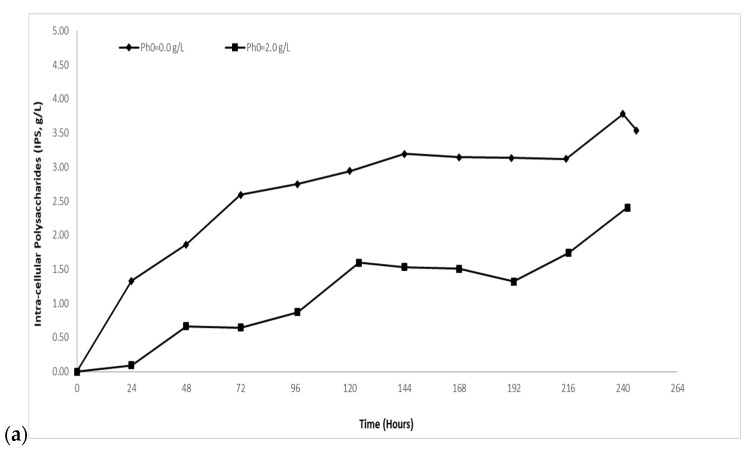
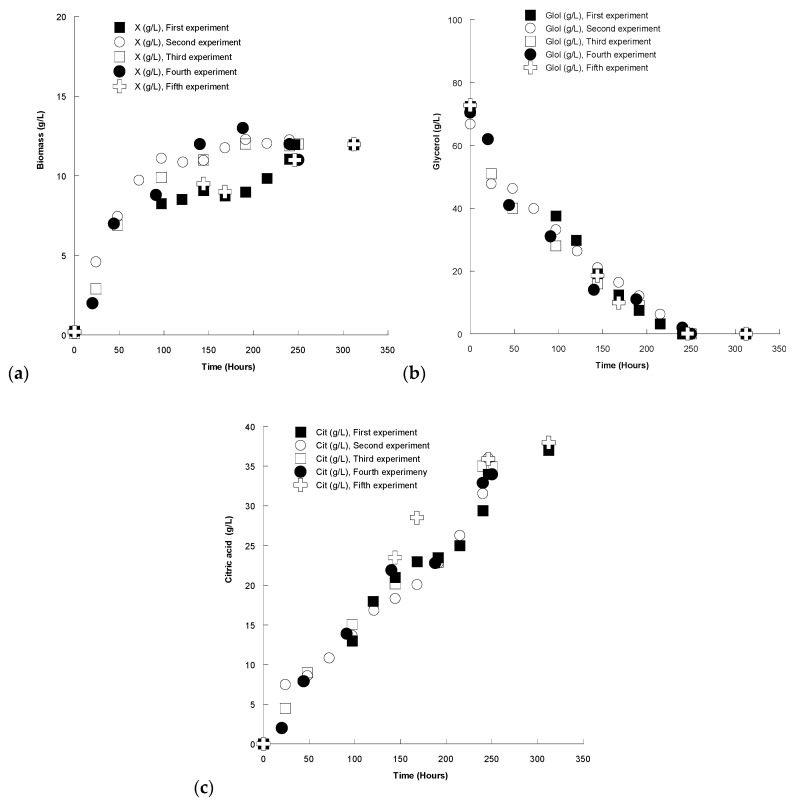
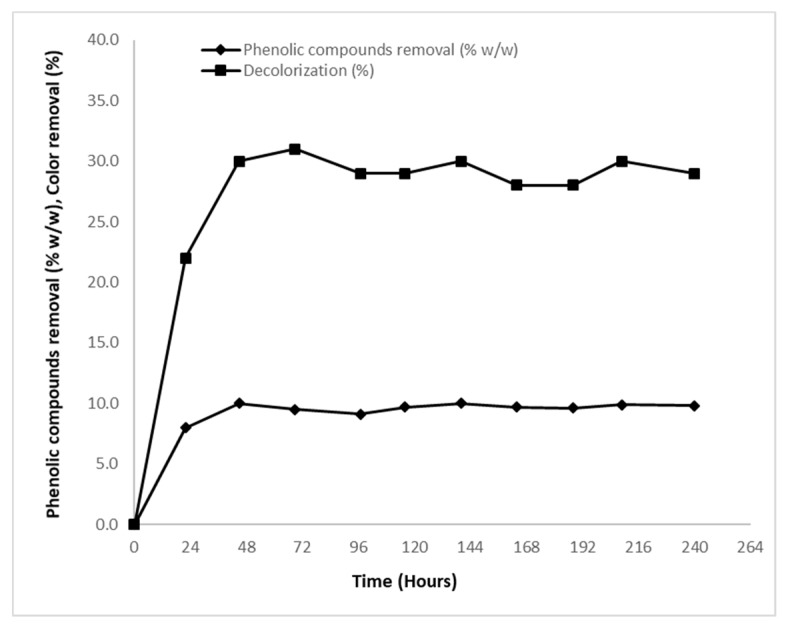
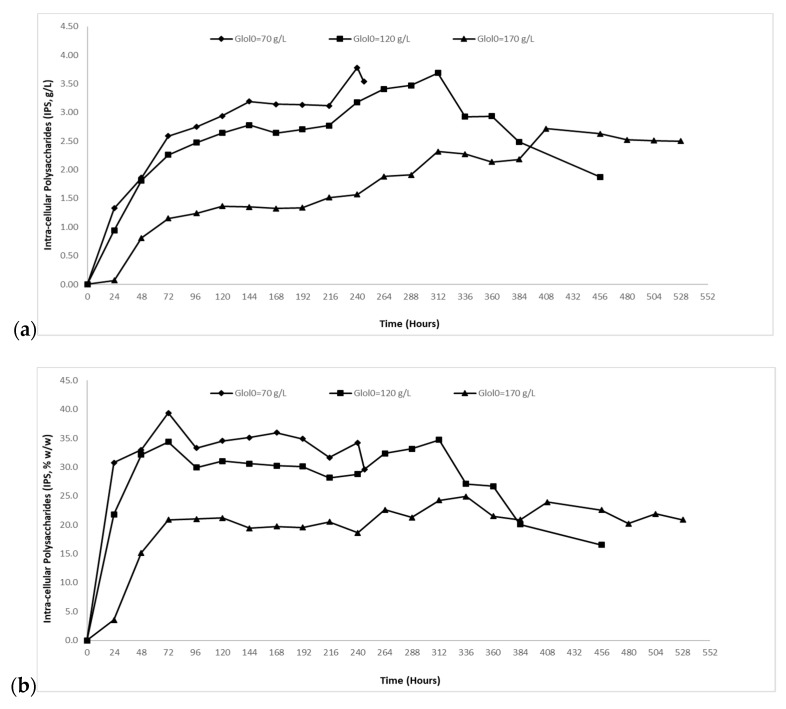
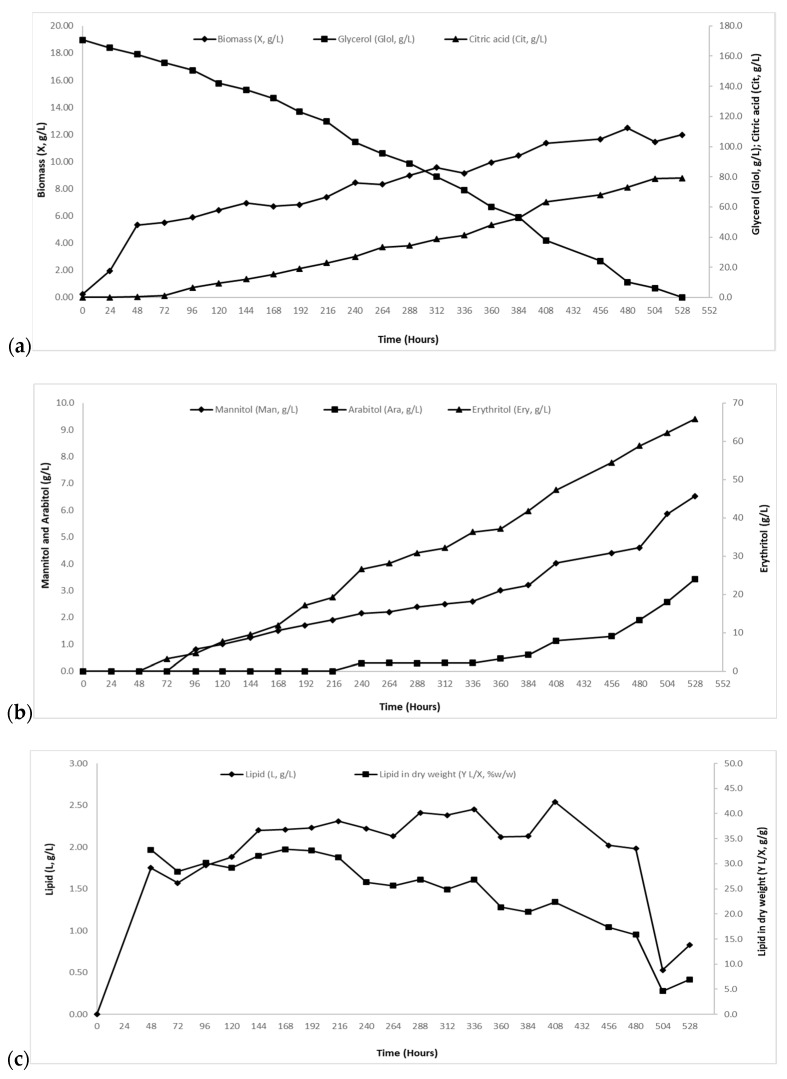
Olive mill wastewaters (OMW) are the major effluent deriving from olive oil production and are considered as one of the most challenging agro-industrial wastes to treat. Crude glycerol is the main by-product of alcoholic beverage and oleochemical production activities including biodiesel production. The tremendous quantities of glycerol produced worldwide represent a serious environmental challenge. The aim of this study was to assess the ability of strain ACA-DC 5029 to grow on nitrogen-limited submerged shake-flask cultures, in crude glycerol and OMW blends as well as in media with high initial glycerol concentration and produce biomass, cellular lipids, citric acid and polyols. The rationale of using such blends was the dilution of concentrated glycerol by OMW to (partially or fully) replace process tap water with a wastewater stream. The strain presented satisfactory growth in blends; citric acid production was not affected by OMW addition (Cit37.0 g/L, Y0.55 g/g) and microbial oil accumulation raised proportionally to OMW addition (L2.0 g/L, Y20% /). Partial removal of color (30%) and phenolic compounds (10% /) of the blended media occurred. In media with high glycerol concentration, a shift towards erythritol production was noted (Ery66.0 g/L, Y0.39 g/g) simultaneously with high amounts of produced citric acid (Cit79.0 g/L, Y0.46 g/g). Fatty acid analysis of microbial lipids demonstrated that OMW addition in blended media and in excess carbon media with high glycerol concentration favored oleic acid production.
橄榄油厂废水(OMW)是橄榄油生产过程中的主要废水,被认为是最难处理的农业工业废物之一。粗甘油是酒精饮料和油脂化学生产活动(包括生物柴油生产)的主要副产品。全球生产的大量甘油对环境构成了严重挑战。本研究的目的是评估 ACA-DC 5029 菌株在氮限制的浸没摇瓶培养中、在粗甘油和 OMW 混合物以及在高初始甘油浓度的培养基中生长的能力,并生产生物量、细胞脂质、柠檬酸和多元醇。使用这种混合物的原理是通过 OMW 稀释浓缩甘油,以(部分或全部)用废水代替工艺自来水。该菌株在混合物中表现出良好的生长;添加 OMW 对柠檬酸的生产没有影响(Cit37.0 g/L,Y0.55 g/g),并且微生物油的积累与 OMW 的添加成正比(L2.0 g/L,Y20%/)。混合培养基的颜色(30%)和酚类化合物(10%/)部分去除。在高甘油浓度的培养基中,注意到向赤藓醇生产的转变(Ery66.0 g/L,Y0.39 g/g),同时产生大量柠檬酸(Cit79.0 g/L,Y0.46 g/g)。微生物脂质的脂肪酸分析表明,在混合培养基和高甘油浓度的过量碳培养基中添加 OMW 有利于油酸的生产。