
通过速度和加速度测量获得的铁路轨道挠度信号的自动化处理。
Automated processing of railway track deflection signals obtained from velocity and acceleration measurements.
作者信息
Milne David, Pen Louis L, Thompson David, Powrie William
机构信息
Faculty of Engineering and the Environment, University of Southampton, Southampton, UK.
出版信息
Proc Inst Mech Eng F J Rail Rapid Transit. 2018 Sep;232(8):2097-2110. doi: 10.1177/0954409718762172. Epub 2018 Mar 19.
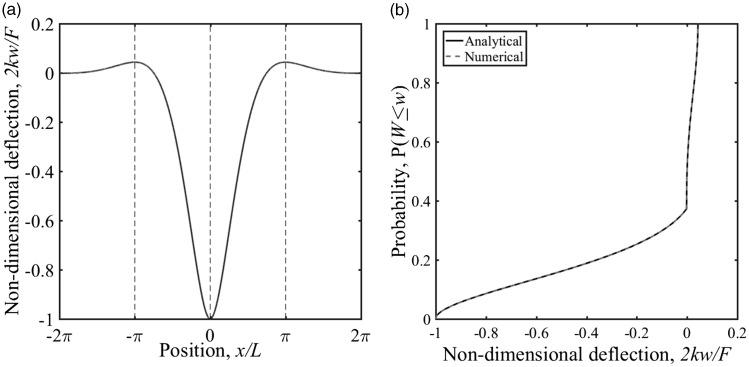
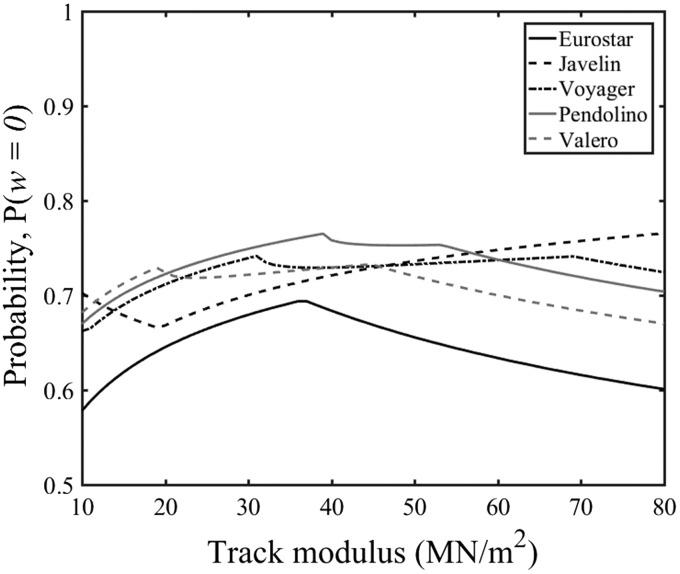
Measurements of low-frequency vibration are increasingly being used to assess the condition and performance of railway tracks. Displacements used to characterise the track movement under train loads are commonly obtained from velocity or acceleration signals. Artefacts from signal processing, which lead to a shift in the datum associated with the at-rest position, as well as variability between successive wheels, mean that interpreting measurements is non-trivial. As a result, deflections are often interpreted by inspection rather than following an algorithmic or statistical process. This can limit the amount of data that can be usefully analysed in practice, militating against widespread or long-term use of track vibration measurements for condition or performance monitoring purposes. This paper shows how the cumulative distribution function of the track deflection can be used to identify the at-rest position and to interpret the typical range of track movement from displacement data. This process can be used to correct the shift in the at-rest position in velocity or acceleration data, to determine the proportion of upward and downward movement and to align data from multiple transducers to a common datum for visualising deflection as a function of distance along the track. The technique provides a means of characterising track displacement automatically, which can be used as a measure of system performance. This enables large volumes of track vibration data to be used for condition monitoring.
低频振动测量越来越多地用于评估铁路轨道的状况和性能。用于表征列车荷载作用下轨道运动的位移通常从速度或加速度信号中获取。信号处理产生的伪像会导致与静止位置相关的基准发生偏移,以及连续车轮之间的变异性,这意味着解释测量结果并非易事。因此,挠度通常通过检查来解释,而不是遵循算法或统计过程。这可能会限制在实际中可有效分析的数据量,不利于将轨道振动测量广泛或长期用于状况或性能监测目的。本文展示了如何利用轨道挠度的累积分布函数来识别静止位置,并从位移数据中解释轨道运动的典型范围。这个过程可用于校正速度或加速度数据中静止位置的偏移,确定向上和向下运动的比例,并将来自多个传感器的数据对齐到一个公共基准,以便将挠度表示为沿轨道距离的函数。该技术提供了一种自动表征轨道位移的方法,可作为系统性能的一种度量。这使得大量的轨道振动数据可用于状态监测。






 Zotero 插件