
癌症与炎症中的紧密连接蛋白和信号通路:功能串扰
Tight Junction Proteins and Signaling Pathways in Cancer and Inflammation: A Functional Crosstalk.
作者信息
Bhat Ajaz A, Uppada Srijayaprakash, Achkar Iman W, Hashem Sheema, Yadav Santosh K, Shanmugakonar Muralitharan, Al-Naemi Hamda A, Haris Mohammad, Uddin Shahab
机构信息
Division of Translational Medicine, Research Branch, Sidra Medicine, Doha, Qatar.
Department of Pharmacology and Experimental Neuroscience, University of Nebraska Medical Center, Omaha, NE, United States.
出版信息
Front Physiol. 2019 Jan 23;9:1942. doi: 10.3389/fphys.2018.01942. eCollection 2018.
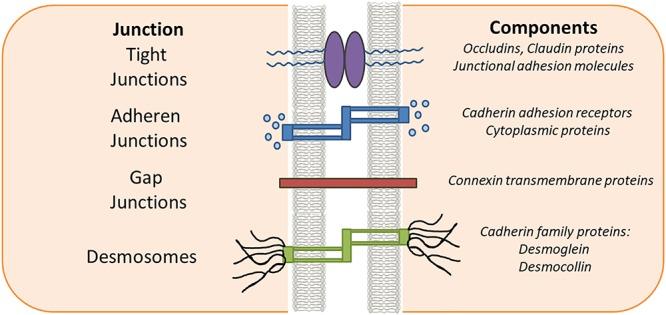
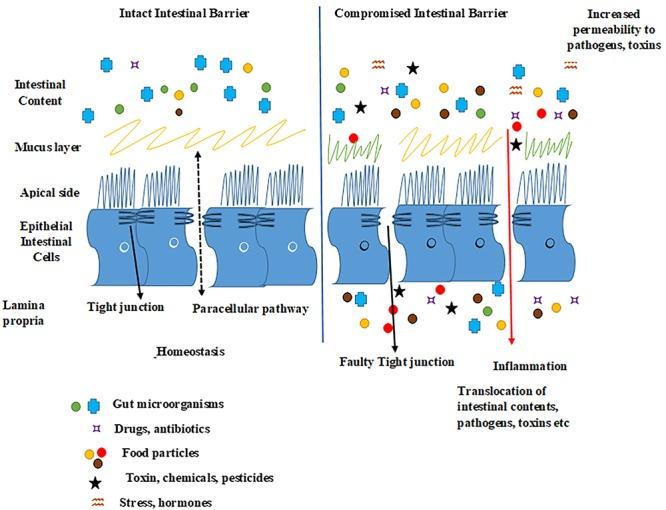
The ability of epithelial cells to organize through cell-cell adhesion into a functioning epithelium serves the purpose of a tight epithelial protective barrier. Contacts between adjacent cells are made up of tight junctions (TJ), adherens junctions (AJ), and desmosomes with unique cellular functions and a complex molecular composition. These proteins mediate firm mechanical stability, serves as a gatekeeper for the paracellular pathway, and helps in preserving tissue homeostasis. TJ proteins are involved in maintaining cell polarity, in establishing organ-specific apical domains and also in recruiting signaling proteins involved in the regulation of various important cellular functions including proliferation, differentiation, and migration. As a vital component of the epithelial barrier, TJs are under a constant threat from proinflammatory mediators, pathogenic viruses and bacteria, aiding inflammation and the development of disease. Inflammatory bowel disease (IBD) patients reveal loss of TJ barrier function, increased levels of proinflammatory cytokines, and immune dysregulation; yet, the relationship between these events is partly understood. Although TJ barrier defects are inadequate to cause experimental IBD, mucosal immune activation is changed in response to augmented epithelial permeability. Thus, the current studies suggest that altered barrier function may predispose or increase disease progression and therapies targeted to specifically restore the barrier function may provide a substitute or supplement to immunologic-based therapies. This review provides a brief introduction about the TJs, AJs, structure and function of TJ proteins. The link between TJ proteins and key signaling pathways in cell proliferation, transformation, and metastasis is discussed thoroughly. We also discuss the compromised intestinal TJ integrity under inflammatory conditions, and the signaling mechanisms involved that bridge inflammation and cancer.
上皮细胞通过细胞间黏附组织形成功能性上皮的能力,构成了紧密的上皮保护屏障。相邻细胞之间的接触由紧密连接(TJ)、黏附连接(AJ)和桥粒组成,它们具有独特的细胞功能和复杂的分子组成。这些蛋白质介导牢固的机械稳定性,作为细胞旁通路的守门人,并有助于维持组织内稳态。TJ蛋白参与维持细胞极性、建立器官特异性顶端结构域,还参与招募参与调节各种重要细胞功能(包括增殖、分化和迁移)的信号蛋白。作为上皮屏障的重要组成部分,TJ不断受到促炎介质、致病病毒和细菌的威胁,从而促进炎症和疾病的发展。炎症性肠病(IBD)患者表现出TJ屏障功能丧失、促炎细胞因子水平升高和免疫失调;然而,这些事件之间的关系尚部分明确。虽然TJ屏障缺陷不足以引发实验性IBD,但黏膜免疫激活会因上皮通透性增加而发生改变。因此,目前的研究表明,屏障功能改变可能易患或加速疾病进展,针对特异性恢复屏障功能的疗法可能为基于免疫的疗法提供替代或补充。本综述简要介绍了TJ、AJ、TJ蛋白的结构和功能。深入讨论了TJ蛋白与细胞增殖、转化和转移中的关键信号通路之间的联系。我们还讨论了炎症条件下肠道TJ完整性受损的情况,以及连接炎症和癌症的信号传导机制。
 Zotero 插件