Department of Medicine, University of Maryland School of Medicine, 10 S. Pine St., MSTF 8-34, Baltimore, MD 21201, United States; Research Service, Baltimore VA Medical Center, 10 N. Greene St, Baltimore, MD 21201, United States.
Department of Medicine, University of Maryland School of Medicine, 10 S. Pine St., MSTF 8-34, Baltimore, MD 21201, United States.
Cytokine. 2019 Jul;119:1-6. doi: 10.1016/j.cyto.2019.02.015. Epub 2019 Mar 8.
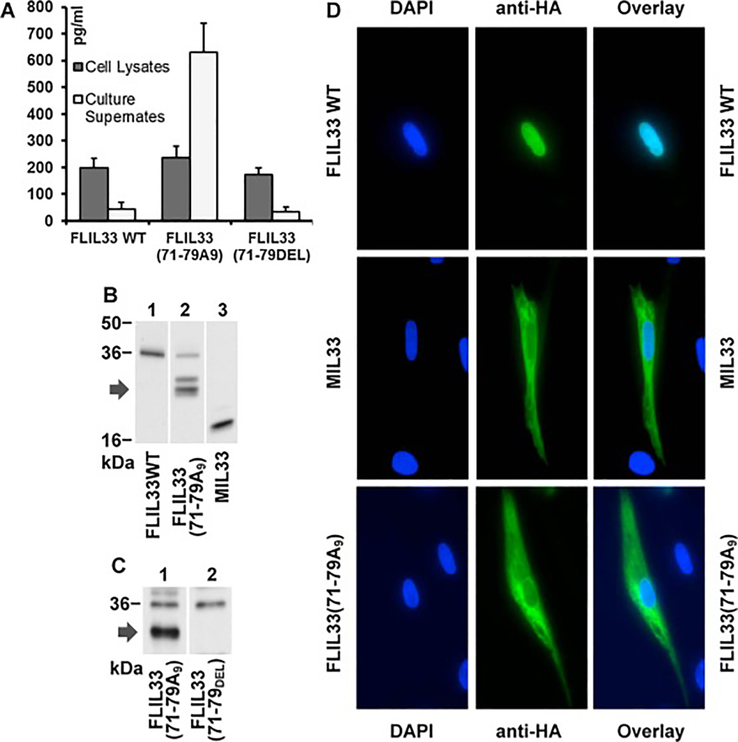
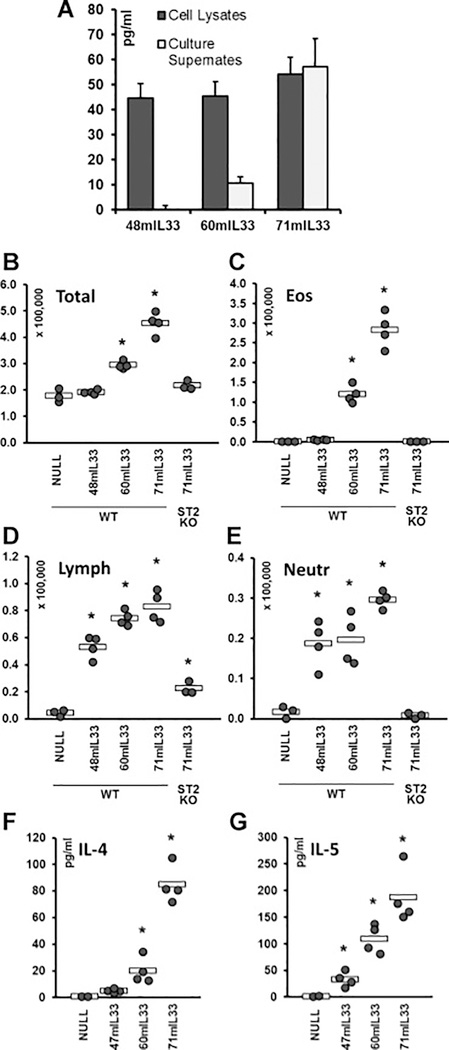
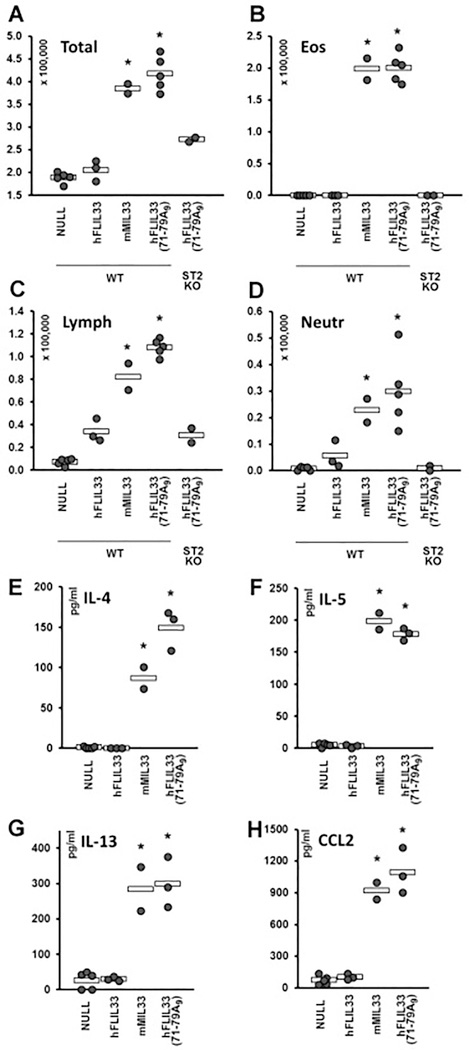
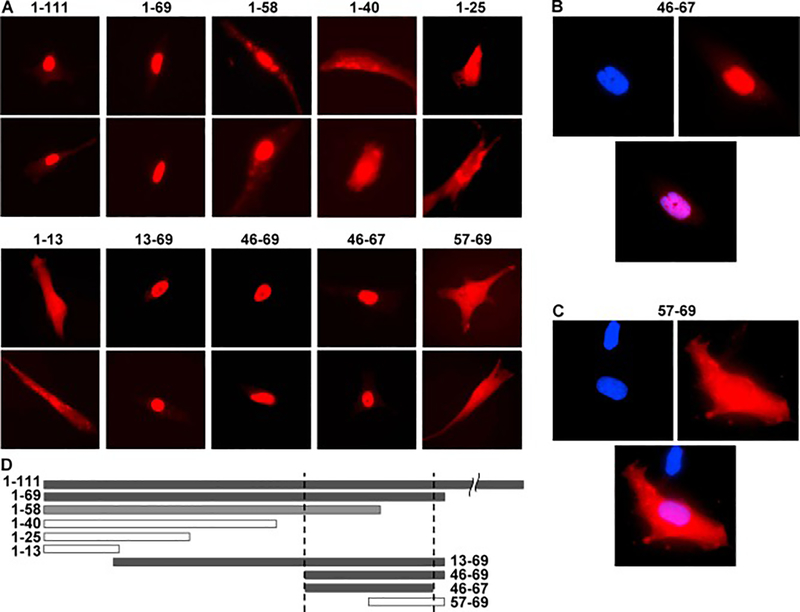
Proteolytic activation of the IL-33 precursor, full-length interleukin-33 (FLIL33), at multiple sites within the sensor domain (aa 95-109) yields several functionally mature (MIL33) forms. Unlike nuclear FLIL33, intracellular MIL33 occurs in the cytoplasm, is secreted from source cells, and exerts biological effects by activating the ST2 receptor on target cells. Previous studies and our findings in this report indicated that IL-33 forms that are substantially longer than those produced by cleavage within the sensor domain are biologically indistinguishable from classical MIL33. We utilized a series of human and mouse N-terminal FLIL33 mutants to narrow down the boundaries of the nuclear localization sequence to aa 46-67, a segment known to include a portion of the chromatin-binding motif as well as another site controlling intracellular stability of FLIL33 in an importin-5-dependent fashion. The N-terminal FLIL33 deletion mutants starting prior to this region were intranuclear, non-secreted in cell culture, and manifested modest functional activity in vivo, similar to FLIL33. By contrast, the mutants starting after this region were cytoplasmic, secreted from cells in culture, and overtly biologically active in vivo, similar to MIL33. The deletion mutants starting within this region manifested an intermediate phenotype between FLIL33 and MIL33. Thus, this segment of IL-33 molecule controls multiple aspects of its biology, including subcellular localization, extracellular secretion, and functional maturation into the longest possible form of mature IL-33 cytokine. Future anti-IL-33 therapies may be based on interfering with this segment, thus restraining extracellular release and maturation of IL-33 into the active cytokine.
IL-33 前体的蛋白水解激活,全长白细胞介素-33(FLIL33),在传感器结构域(aa95-109)内的多个位点发生,产生几种功能成熟(MIL33)形式。与核 FLIL33 不同,细胞内 MIL33 存在于细胞质中,由源细胞分泌,并通过激活靶细胞上的 ST2 受体发挥生物学作用。先前的研究和我们在本报告中的发现表明,长度大大超过传感器结构域内切割产生的 IL-33 形式在生物学上与经典的 MIL33 无法区分。我们利用一系列人类和小鼠 N 端 FLIL33 突变体,将核定位序列的边界缩小到 aa46-67,该区域已知包含一部分染色质结合基序以及另一个控制 FLIL33 在 importin-5 依赖性方式下细胞内稳定性的位点。在此区域之前开始的 N 端 FLIL33 缺失突变体是核内的,在细胞培养中不分泌,并且在体内表现出适度的功能活性,类似于 FLIL33。相比之下,此区域之后开始的突变体是细胞质的,从细胞培养中分泌,并在体内表现出明显的生物学活性,类似于 MIL33。此区域内开始的缺失突变体表现出介于 FLIL33 和 MIL33 之间的中间表型。因此,IL-33 分子的这一部分控制其生物学的多个方面,包括亚细胞定位、细胞外分泌和功能成熟为最长可能形式的成熟 IL-33 细胞因子。未来的抗 IL-33 疗法可能基于干扰这一部分,从而限制 IL-33 的细胞外释放和成熟为活性细胞因子。