Department of HIV, National Institute for Research in Tuberculosis (Indian Council of Medical Research), Chennai, India.
International AIDS Vaccine Initiative, New Delhi, India.
PLoS One. 2019 Mar 28;14(3):e0213911. doi: 10.1371/journal.pone.0213911. eCollection 2019.
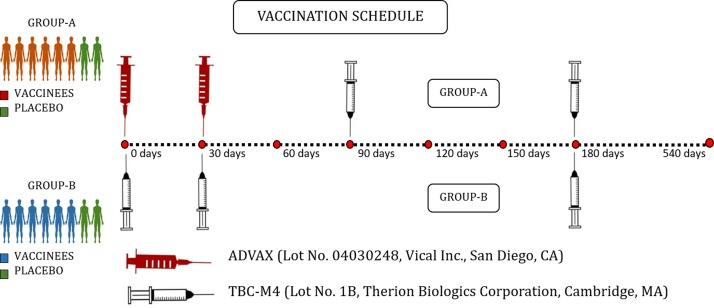
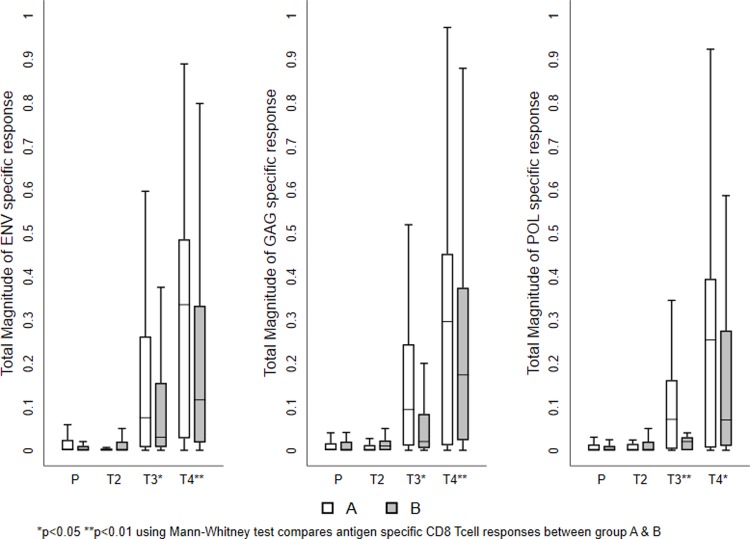
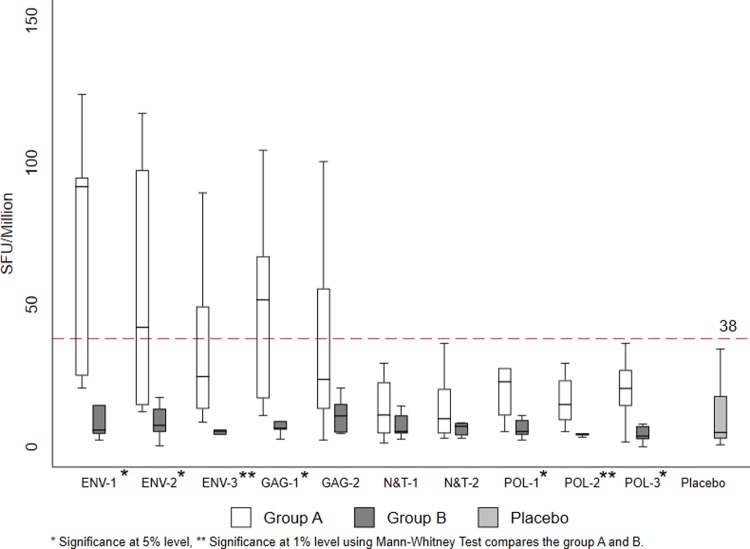
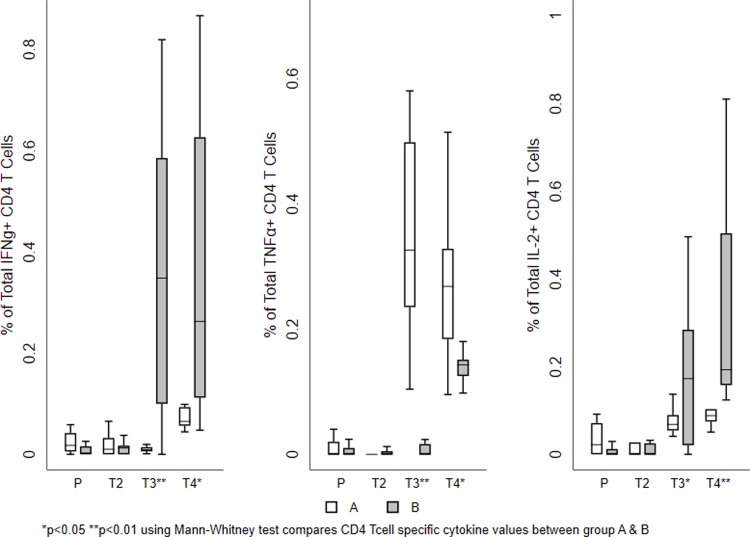
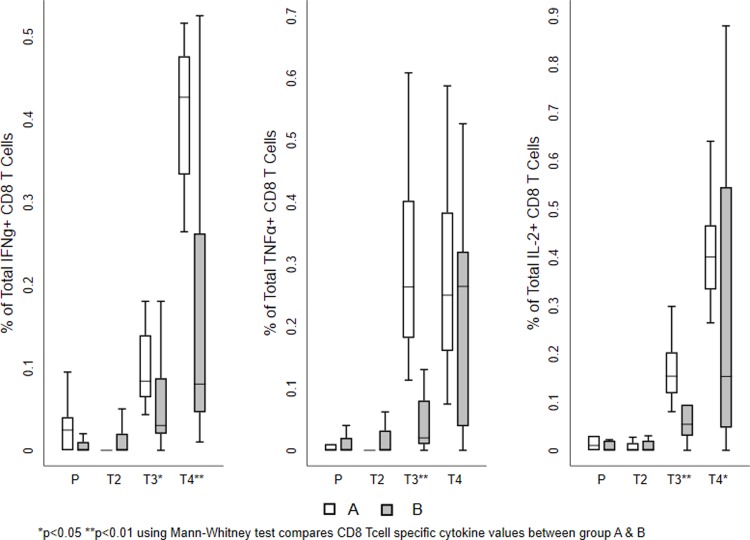
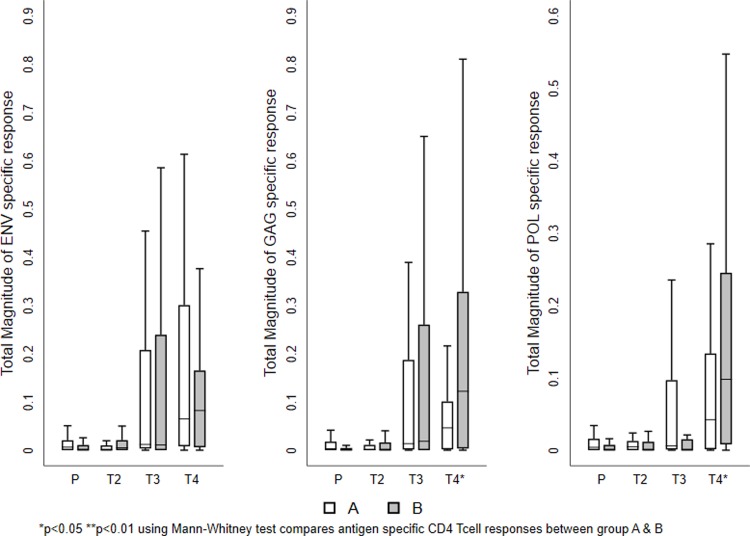
Effective vaccine design relies on accurate knowledge of protection against a pathogen, so as to be able to induce relevant and effective protective responses against it. An ideal Human Immunodeficiency virus (HIV) vaccine should induce humoral as well as cellular immune responses to prevent initial infection of host cells or limit early events of viral dissemination. A Phase I HIV-1 prophylactic vaccine trial sponsored by the International AIDS Vaccine Initiative (IAVI) was conducted in India in 2009.The trial tested a HIV-1 subtype C vaccine in a prime-boost regimen, comprising of a DNA prime (ADVAX) and Modified Vaccine Ankara (MVA) (TBC-M4) boost. The trial reported that the vaccine regimen was safe, well tolerated, and resulted in enhancement of HIV-specific immune responses. However, preliminary immunological studies were limited to vaccine-induced IFN-γ responses against the Env and Gag peptides. The present study is a retrospective study to characterize in detail the nature of the vaccine-induced cell mediated immune responses among volunteers, using Peripheral Blood Mononuclear Cells (PBMC) that were archived during the trial. ELISpot was used to measure IFN-γ responses and polyfunctional T cells were analyzed by intracellular multicolor flow cytometry. It was observed that DNA priming and MVA boosting induced Env and Gag specific bi-functional and multi-functional CD4+ and CD8+ T cells expressing IFN-γ, TNF-α and IL-2. The heterologous prime-boost regimen appeared to be slightly superior to the homologous prime-boost regimen in inducing favorable cell mediated immune responses. These results suggest that an in-depth analysis of vaccine-induced cellular immune response can aid in the identification of correlates of an effective immunogenic response, and inform future design of HIV vaccines.
有效的疫苗设计依赖于对病原体保护的准确认识,以便能够诱导针对该病原体的相关和有效的保护反应。理想的人类免疫缺陷病毒 (HIV) 疫苗应诱导体液和细胞免疫反应,以防止宿主细胞的初始感染或限制病毒传播的早期事件。国际艾滋病疫苗倡议 (IAVI) 于 2009 年在印度开展了一项 I 期 HIV-1 预防性疫苗试验。该试验在初免-加强方案中测试了一种 HIV-1 亚型 C 疫苗,包括 DNA 初免 (ADVAX) 和改良疫苗安卡拉 (MVA) (TBC-M4) 加强。该试验报告称,疫苗方案安全、耐受良好,并导致 HIV 特异性免疫反应增强。然而,初步免疫学研究仅限于疫苗诱导的针对Env 和 gag 肽的 IFN-γ 反应。本研究是一项回顾性研究,使用试验期间存档的外周血单核细胞 (PBMC),详细描述志愿者中疫苗诱导的细胞介导免疫反应的性质。ELISpot 用于测量 IFN-γ 反应,通过细胞内多色流式细胞术分析多功能 T 细胞。结果表明,DNA 初免和 MVA 加强诱导了表达 IFN-γ、TNF-α 和 IL-2 的 Env 和 gag 特异性双功能和多功能 CD4+和 CD8+T 细胞。异源初免-加强方案似乎比同源初免-加强方案在诱导有利的细胞介导免疫反应方面略具优势。这些结果表明,对疫苗诱导的细胞免疫反应进行深入分析有助于确定有效的免疫反应的相关性,并为未来 HIV 疫苗的设计提供信息。