
用涡流法评估AISI 410马氏体不锈钢的性能
Assessment of the Properties of AISI 410 Martensitic Stainless Steel by an Eddy Current Method.
作者信息
Zhang Huayu, Wei Zhiheng, Xie Fengqin, Sun Baohai
机构信息
College of Mechanical and electronic Engineering, Shandong University of Science and Technology, Qingdao 266590, China.
College of Transportation, Shandong University of Science and Technology, Qingdao 266590, China.
出版信息
Materials (Basel). 2019 Apr 19;12(8):1290. doi: 10.3390/ma12081290.
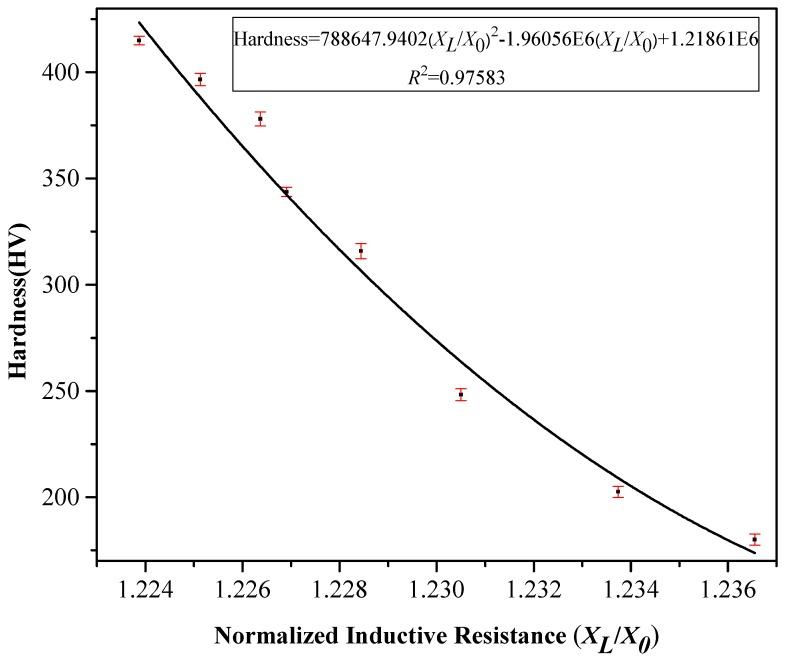
Based on electromagnetic theory, metallurgical characteristics can be detected by eddy current nondestructive testing technology. In this study, the relationship between the surface microstructure and the eddy current output of martensitic stainless steel AISI 410 was studied using this technology at different quenching temperatures. The mechanical properties include material hardness, microstructure types and microstructural changes after thermal treatment was evaluated. Using Vickers hardness as the surface hardness index of AISI 410 steel, the relationship between eddy current output signal, in terms of impedance and inductance, and sample surface hardness was studied and the effects of different quenching temperatures on the steel's surface hardness was examined. In addition, the change of microstructure types of AISI 410 steel after thermal treatment was detected by the eddy current nondestructive testing method, and the results were verified by metallographic microscopy.
基于电磁理论,可通过涡流无损检测技术检测冶金特性。在本研究中,利用该技术研究了马氏体不锈钢AISI 410在不同淬火温度下表面微观结构与涡流输出之间的关系。评估了材料硬度、微观结构类型以及热处理后的微观结构变化等力学性能。以维氏硬度作为AISI 410钢的表面硬度指标,研究了以阻抗和电感表示的涡流输出信号与样品表面硬度之间的关系,并考察了不同淬火温度对钢表面硬度的影响。此外,通过涡流无损检测方法检测了AISI 410钢热处理后微观结构类型的变化,并通过金相显微镜对结果进行了验证。


 Zotero 插件