
微小RNA-605通过直接靶向叉头框蛋白P1抑制非小细胞肺癌的致癌性。
microRNA-605 inhibits the oncogenicity of non-small-cell lung cancer by directly targeting Forkhead Box P1.
作者信息
Zhou Wei, Li Ruichao
机构信息
Department of Pneumology, Liyuan Hospital of Tongji Medical College of Huazhong University of Science and Technology, Wuhan, Hubei 430077, People's Republic of China.
Department of Gerontology, Tongji Hospital Tongji Medical College Huazhong University of Science and Technology, Wuhan, Hubei 430030, People's Republic of China.
出版信息
Onco Targets Ther. 2019 May 17;12:3765-3777. doi: 10.2147/OTT.S193675. eCollection 2019.
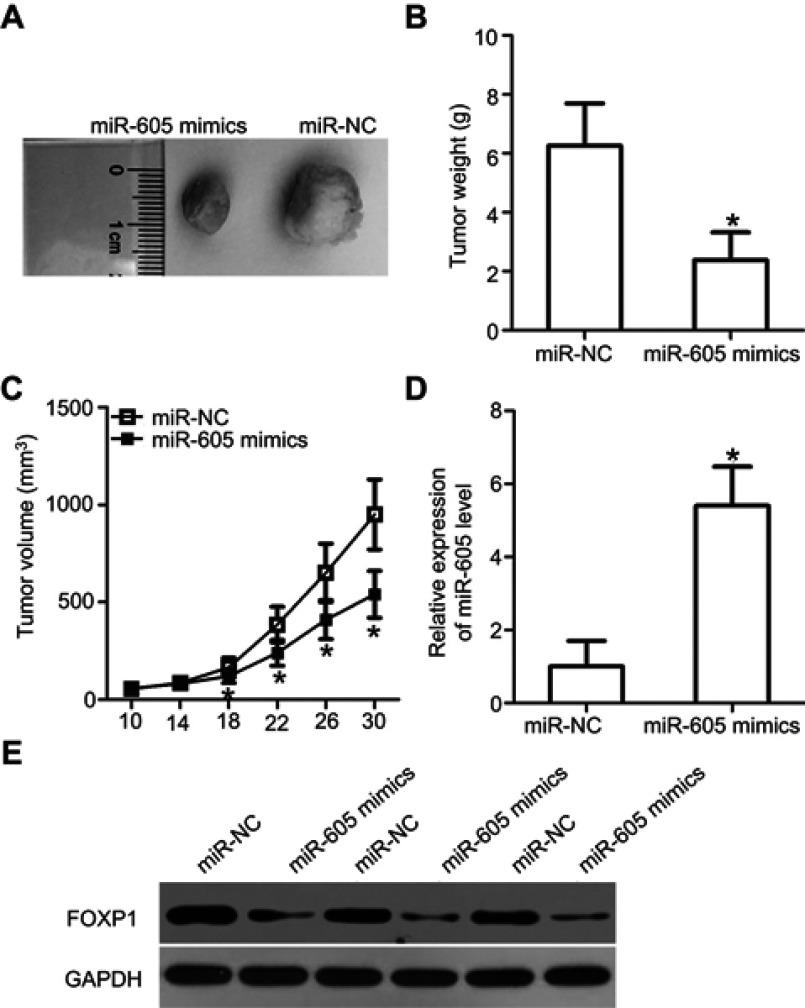
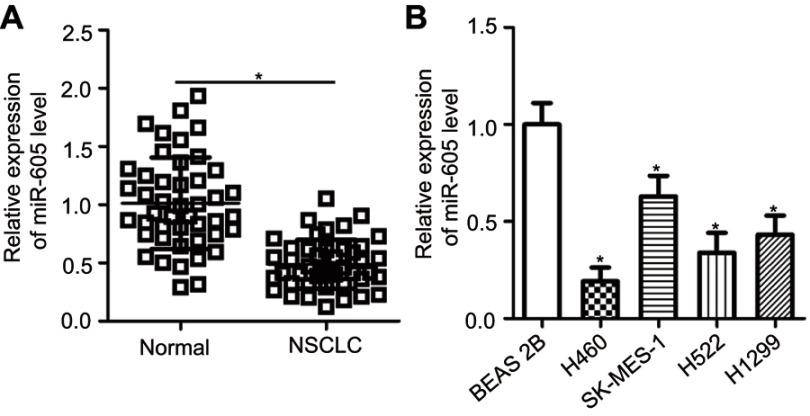
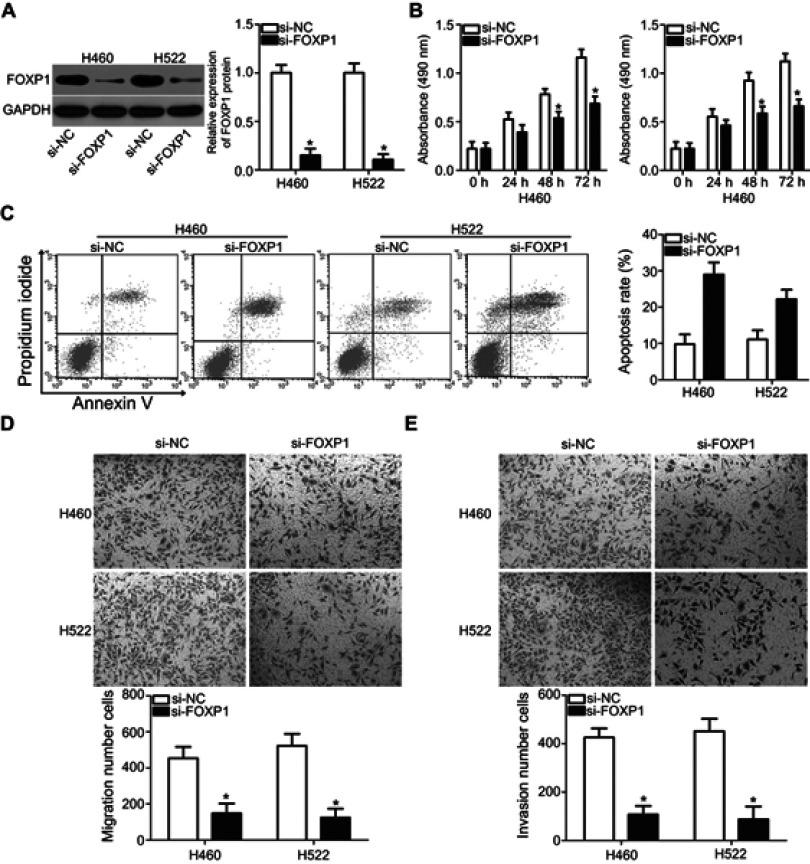
microRNA-605 (miR-605) is dysregulated in multiple cancers and plays crucial roles in regulating cancer progression. However, little is known about the expression pattern and detailed roles of miR-605 in non-small-cell lung cancer (NSCLC). Thus, in this study, we evaluated miR-605 expression in NSCLC along with its clinical significance. More importantly, the detailed roles and the underlying molecular mechanisms of miR-605 in NSCLC were explored. Quantitative reverse transcription polymerase chain reaction (RT-qPCR) was employed to detect miR-605 expression in NSCLC tissues and cell lines. A series of experiments were performed to determine the effects of miR-605 upregulation on NSCLC cell proliferation, apoptosis, migration and invasion in vitro and tumor growth in vivo. In addition, the downstream regulatory mechanisms of miR-605 action in NSCLC cells were explored. Decreased expression of miR-605 was frequently detected in NSCLC tissues and cell lines. Low expression of miR-605 was significantly correlated with the tumor size, TNM stage, and distane metastasis in NSCLC patients. Exogenous miR-605 expression inhibited proliferation, increased apoptosis, and inhibited metastasis of NSCLC cells in vitro. Additionally, miR-605 overexpression hindered the growth of NSCLC cells in vivo. Furthermore, Forkhead Box P1 (FOXP1) was identified as a direct target gene of miR-605 in NSCLC cells. Moreover, FOXP1 was highly expressed in NSCLC cells and showed an inverse correlation with miR-605 expression levels. Besides, silencing of FOXP1 simulated roles similar to miR-605 upregulation in NSCLC cells. FOXP1 reintroduction partially abolished the anticancer effects of miR-605 in NSCLC cells. Our results revealed that miR-605 inhibited the oncogenicity of NSCLC cells in vitro and in vivo by directly targeting FOXP1, suggesting the importance of the miR-605/FOXP1 pathway in the malignant development of NSCLC.
微小RNA-605(miR-605)在多种癌症中表达失调,并在调节癌症进展中发挥关键作用。然而,关于miR-605在非小细胞肺癌(NSCLC)中的表达模式和具体作用知之甚少。因此,在本研究中,我们评估了miR-605在NSCLC中的表达及其临床意义。更重要的是,探讨了miR-605在NSCLC中的具体作用及潜在分子机制。采用定量逆转录聚合酶链反应(RT-qPCR)检测NSCLC组织和细胞系中miR-605的表达。进行了一系列实验以确定miR-605上调对NSCLC细胞体外增殖、凋亡、迁移和侵袭以及体内肿瘤生长的影响。此外,还探讨了miR-605在NSCLC细胞中作用的下游调控机制。在NSCLC组织和细胞系中经常检测到miR-605表达降低。miR-605低表达与NSCLC患者的肿瘤大小、TNM分期和远处转移显著相关。外源性miR-605表达抑制NSCLC细胞体外增殖,增加凋亡,并抑制转移。此外,miR-605过表达阻碍NSCLC细胞体内生长。此外,叉头框蛋白P1(FOXP1)被确定为NSCLC细胞中miR-605的直接靶基因。而且,FOXP1在NSCLC细胞中高表达,且与miR-605表达水平呈负相关。此外,沉默FOXP1在NSCLC细胞中模拟了类似于miR-605上调的作用。重新引入FOXP1部分消除了miR-605在NSCLC细胞中的抗癌作用。我们的结果表明,miR-605通过直接靶向FOXP1在体外和体内抑制NSCLC细胞的致癌性,提示miR-605/FOXP1通路在NSCLC恶性发展中的重要性。



 Zotero 插件