
聆听偏好音乐与非偏好音乐对重复进行的温盖特无氧测试表现的影响。
Effects of Listening to Preferred versus Non-Preferred Music on Repeated Wingate Anaerobic Test Performance.
作者信息
Ballmann Christopher G, Maynard Daniel J, Lafoon Zachary N, Marshall Mallory R, Williams Tyler D, Rogers Rebecca R
机构信息
Department of Kinesiology, Samford University, Birmingham, AL 35229, USA.
出版信息
Sports (Basel). 2019 Jul 29;7(8):185. doi: 10.3390/sports7080185.
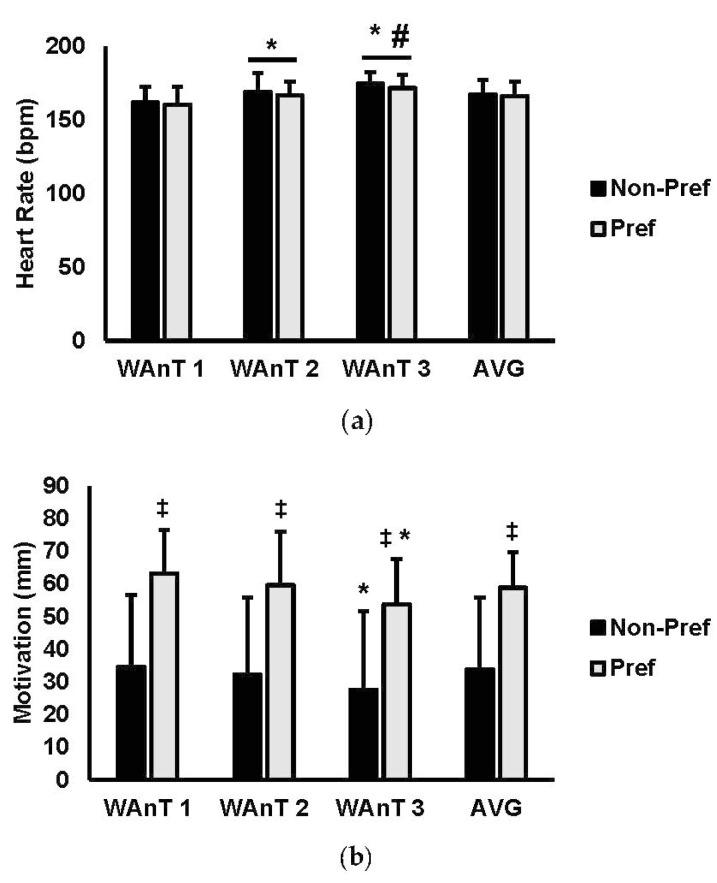
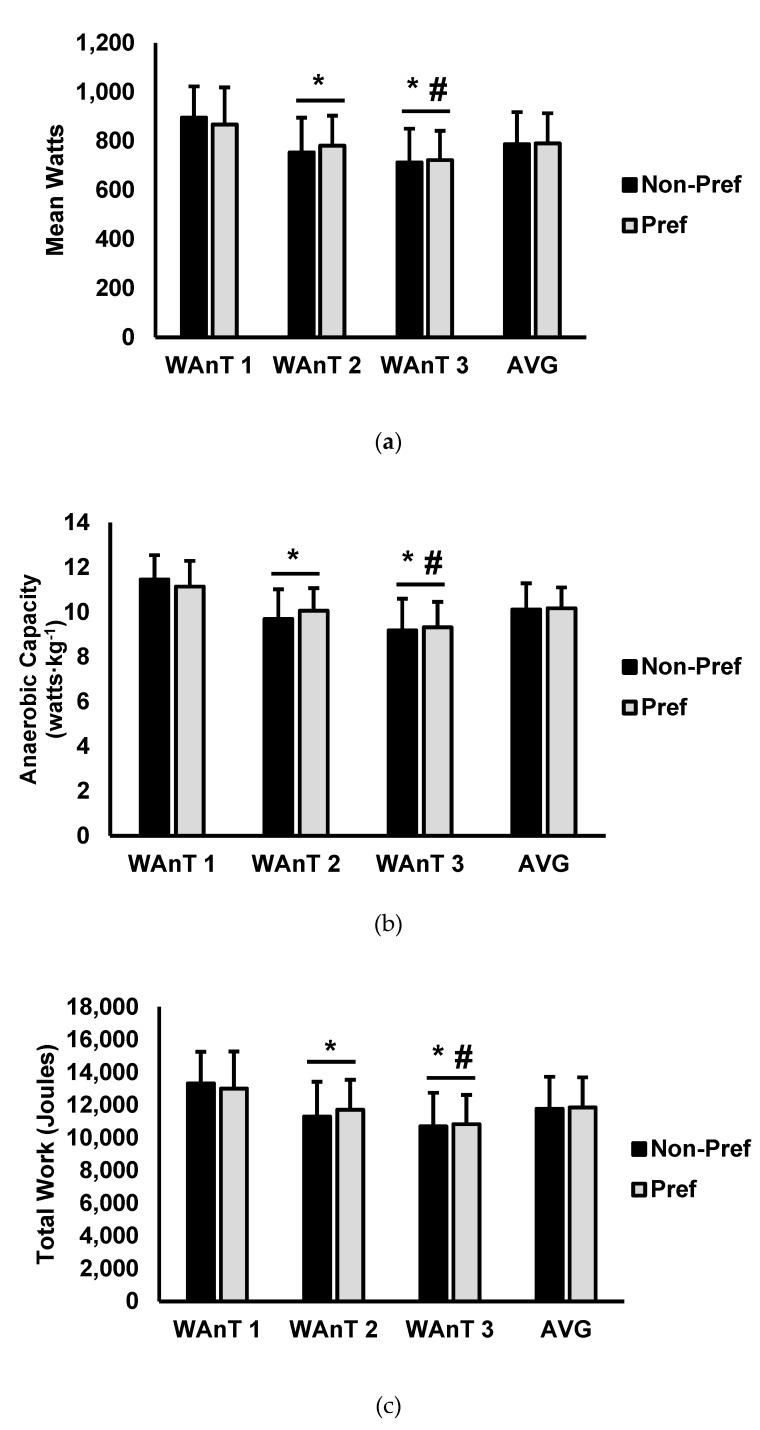
The purpose of this study was to examine the effects of listening to preferred or non-preferred music on repeated sprint performance. Fourteen physically active males (ages 18-25 years) were recruited for this study. In a counterbalanced crossover study design, participants completed two separate visits. During each visit, participants listened to either preferred or non-preferred music and completed 3 × 15 s Wingate Anaerobic Tests (WAnTs) separated by 2 min active recovery periods. Each visit was separated by a minimal recovery period of 48 h. Anaerobic performance measures, heart rate, rate of perceived exertion (RPE), and motivation were analyzed. Mean power ( = 0.846, effect size (ES) = 0.019), anaerobic capacity ( = 0.686, ES = 0.058), and total work ( = 0.677, ES = 0.039) were not significantly different between preferred and non-preferred music conditions. Mean heart rate ( = 0.608; ES = 0.125) was also unchanged. Motivation to exercise ( < 0.001; ES = 1.520) was significantly higher in the preferred music condition. Additionally, the rate of perceived exertion (RPE) ( = 0.028; ES = 0.540) was significantly lower during the preferred music condition. Our results show that listening to preferred music showed no ergogenic benefit during repeated anaerobic cycling sprints when compared to non-preferred music. However, preferred music increased motivation to exercise and decreased perceived exertion. The results from this study could hold important implications for the application of music and enduring repeated high-intensity sprint exercise.
本研究的目的是检验聆听偏好或非偏好音乐对重复冲刺表现的影响。本研究招募了14名身体活跃的男性(年龄在18 - 25岁之间)。在一项平衡交叉研究设计中,参与者完成了两次单独的访视。在每次访视期间,参与者聆听偏好或非偏好音乐,并完成3组15秒的温盖特无氧测试(WAnTs),每组测试之间有2分钟的主动恢复期。每次访视之间的最短恢复期为48小时。分析了无氧运动表现指标、心率、主观用力感觉(RPE)和动机。在偏好和非偏好音乐条件下,平均功率( = 0.846,效应量(ES) = 0.019)、无氧能力( = 0.686,ES = 0.058)和总功( = 0.677,ES = 0.039)没有显著差异。平均心率( = 0.608;ES = 0.125)也没有变化。在偏好音乐条件下,运动动机( < 0.001;ES = 1.520)显著更高。此外,在偏好音乐条件下,主观用力感觉(RPE)( = 0.028;ES = 0.540)显著更低。我们的结果表明,与非偏好音乐相比,在重复的无氧自行车冲刺过程中,聆听偏好音乐没有产生促力效益。然而,偏好音乐增加了运动动机并降低了主观用力感觉。本研究结果可能对音乐在持久重复高强度冲刺运动中的应用具有重要意义。
 Zotero 插件