Kawai Kanae, Negoro Ryosuke, Ichikawa Moe, Yamashita Tomoki, Deguchi Sayaka, Harada Kazuo, Hirata Kazumasa, Takayama Kazuo, Mizuguchi Hiroyuki
Laboratory of Biochemistry and Molecular Biology, School of Pharmaceutical Sciences, Osaka University, Osaka 565-0871, Japan.
Laboratory of Biochemistry and Molecular Biology, Graduate School of Pharmaceutical Sciences, Osaka University, Osaka 565-0871, Japan.
Mol Ther Methods Clin Dev. 2019 Nov 21;17:49-57. doi: 10.1016/j.omtm.2019.11.008. eCollection 2020 Jun 12.
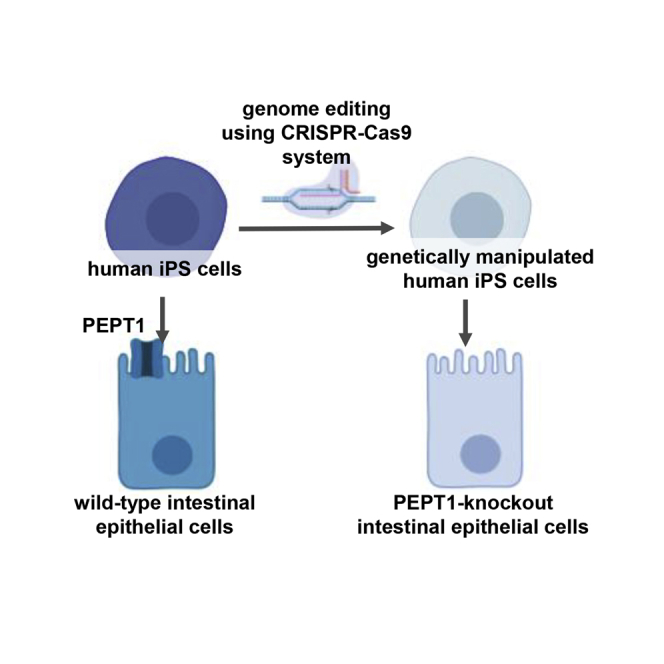
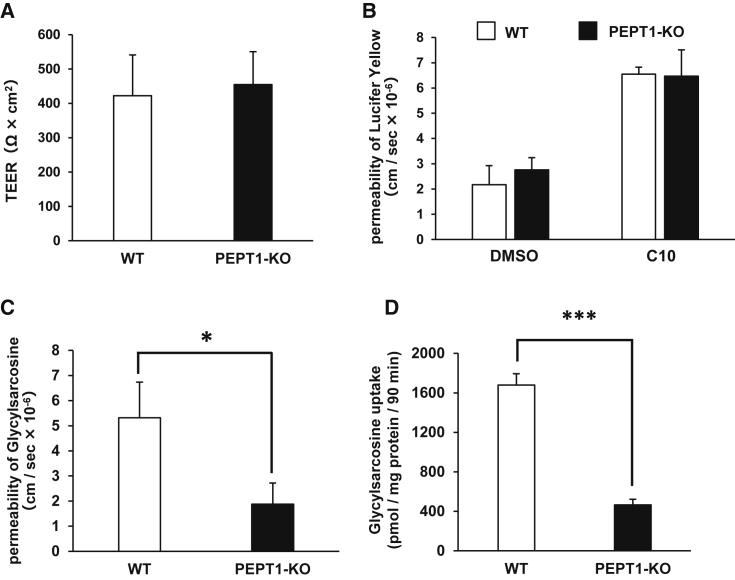
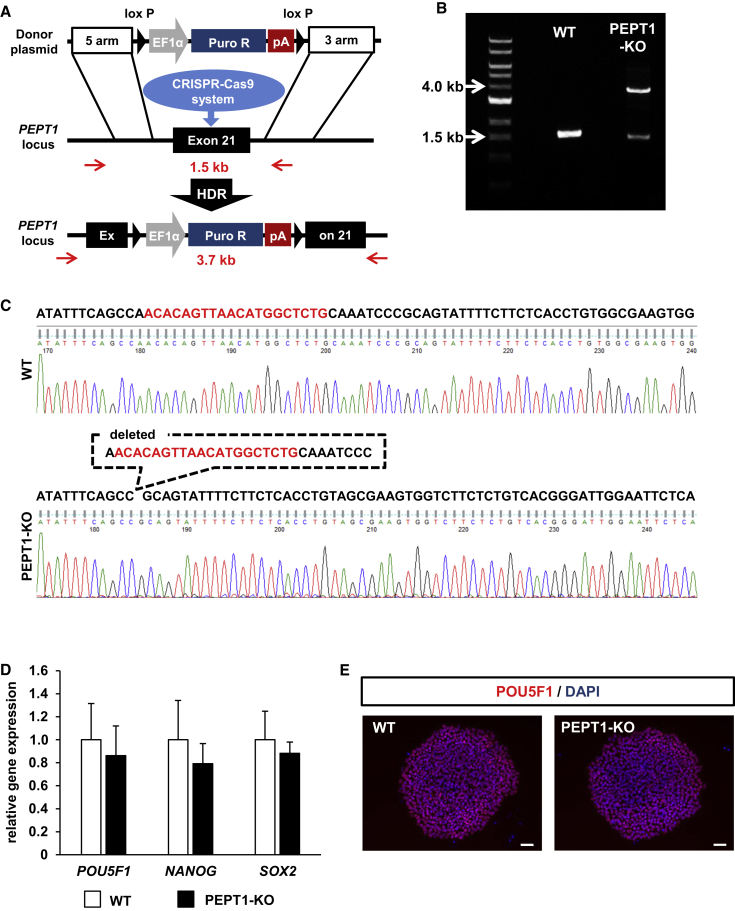
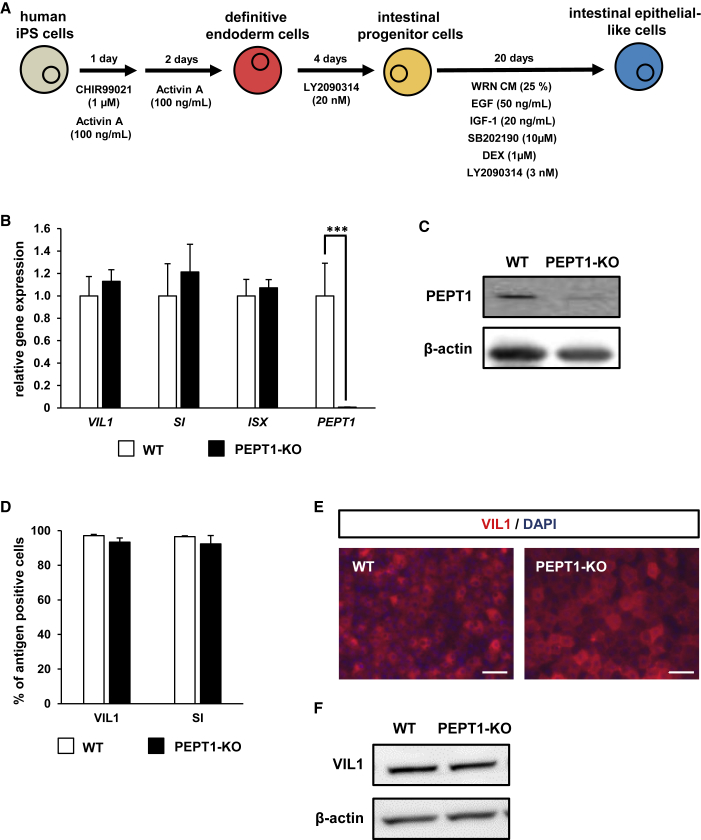
Because many peptide and peptide-mimetic drugs are substrates of peptide transporter 1, it is important to evaluate the peptide transporter 1-mediated intestinal absorption of drug candidates in the early phase of drug development. Although intestinal cell lines treated with inhibitors of peptide transporter 1 are widely used to examine whether drug candidates are substrates for peptide transporter 1, these inhibitors are not sufficiently specific for peptide transporter 1. In this study, to generate a more precise evaluation model, we established peptide transporter 1-knockout induced pluripotent stem cells (iPSCs) by using a CRISPR-Cas9 system and differentiated the cells into intestinal epithelial-like cells. The permeability value and uptake capacity of glycylsarcosine (substrate of peptide transporter 1) in peptide transporter 1-knockout intestinal epithelial-like cells were significantly lower than those in wild-type intestinal epithelial-like cells, suggesting that peptide transporter 1 was successfully depleted in the epithelial cells. Taken together, our model can be useful in the development of peptide and peptide-mimetic drugs.
由于许多肽类和肽模拟物药物是肽转运体1的底物,因此在药物开发的早期阶段评估肽转运体1介导的候选药物肠道吸收情况非常重要。尽管用肽转运体1抑制剂处理的肠道细胞系被广泛用于检测候选药物是否为肽转运体1的底物,但这些抑制剂对肽转运体1的特异性并不充分。在本研究中,为了建立一个更精确的评估模型,我们利用CRISPR-Cas9系统建立了肽转运体1基因敲除的诱导多能干细胞(iPSC),并将这些细胞分化为肠上皮样细胞。肽转运体1基因敲除的肠上皮样细胞中甘氨酰肌氨酸(肽转运体1的底物)的渗透值和摄取能力显著低于野生型肠上皮样细胞,这表明上皮细胞中的肽转运体1已成功缺失。综上所述,我们的模型可用于肽类和肽模拟物药物的开发。