Sobczak Maciej, Pietrzak Julita, Płoszaj Tomasz, Robaszkiewicz Agnieszka
Department of General Biophysics, Institute of Biophysics, Faculty of Biology and Environmental Protection, University of Lodz, Pomorska 141/143, 90-236 Lodz, Poland.
Department of Clinical and Laboratory Genetics, Medical University of Lodz, Pomorska 251, 92-213 Lodz, Poland.
Cancers (Basel). 2020 Feb 4;12(2):349. doi: 10.3390/cancers12020349.
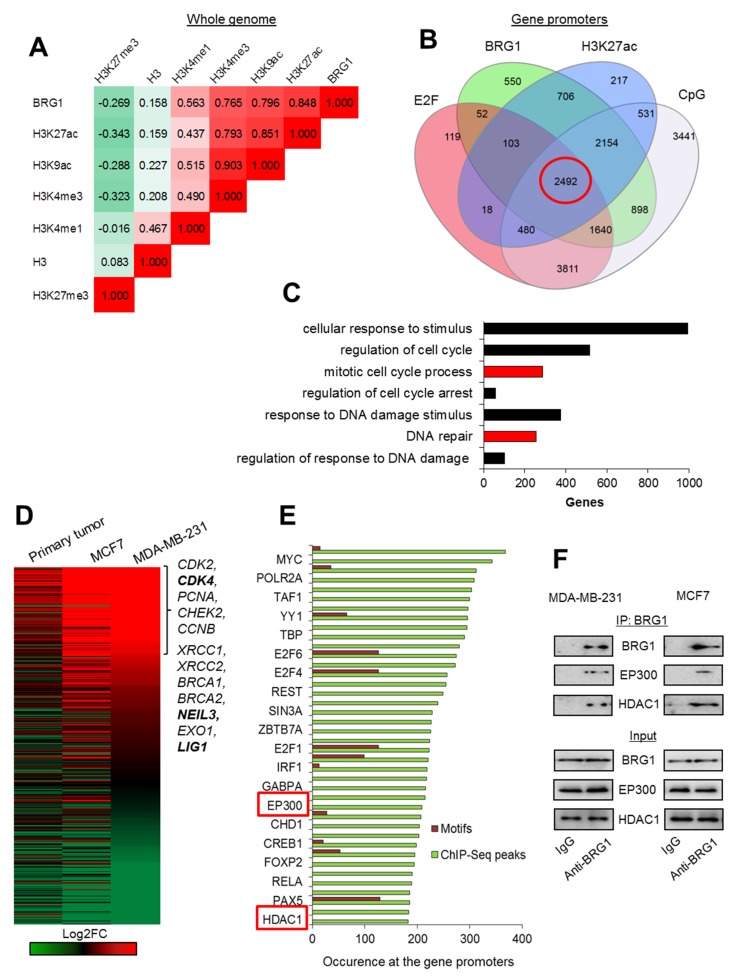
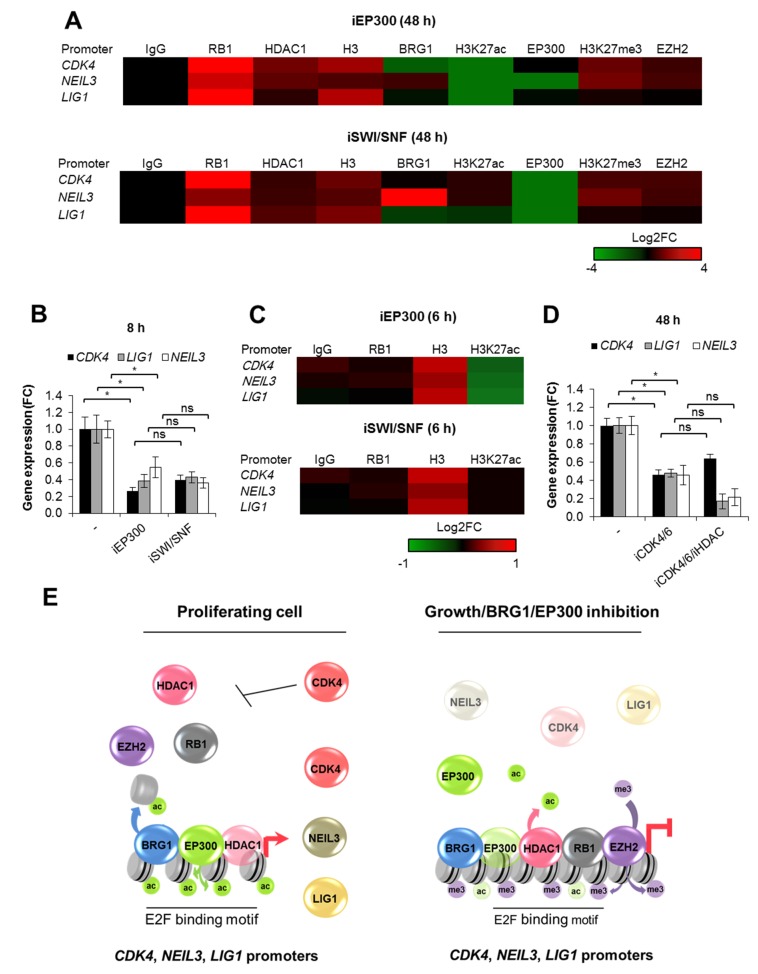
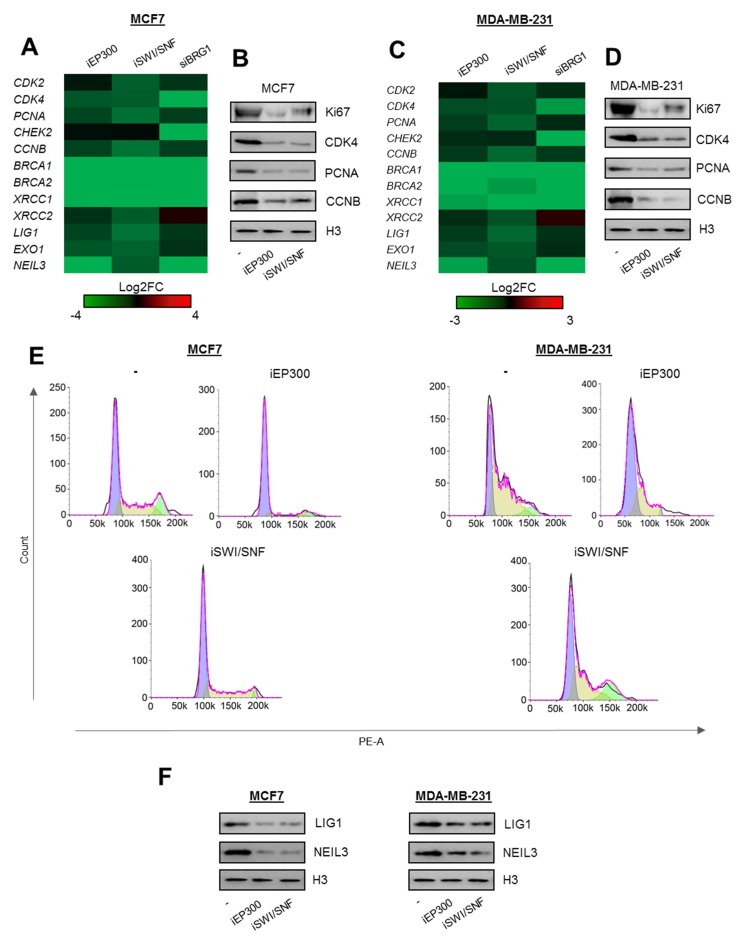
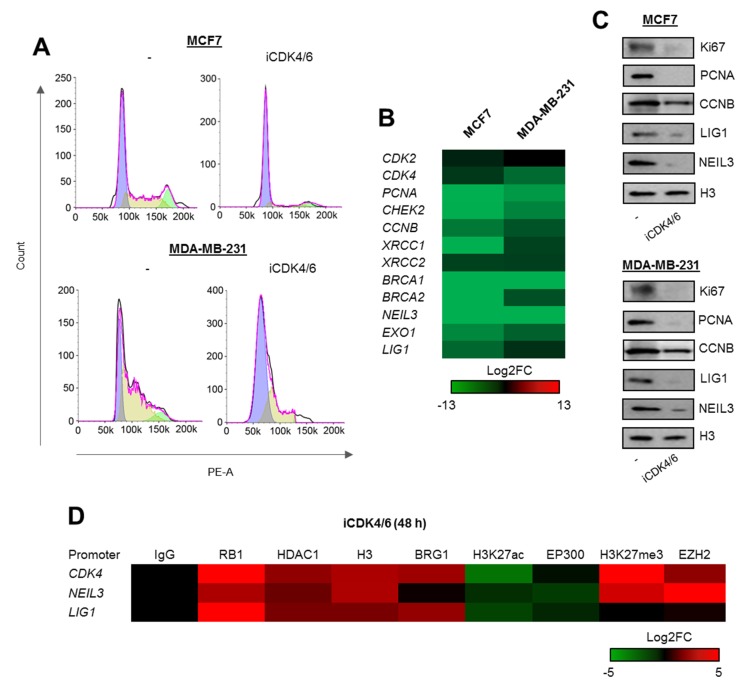
Cancer malignancy is usually characterized by unlimited self-renewal. In some types of advanced tumors that are rapidly dividing, gene expression profiles depict elevations in pro-proliferative genes accompanied by coordinately elevated transcription of factors responsible for removal of DNA lesions. In our studies, fast proliferating breast cancer cell lines (MDA-MB-231 and MCF7), BRG1, a component of the SWI/SNF complex, emerges as an activator of functionally-linked genes responsible for activities such as mitotic cell divisions and DNA repair. Products of at least some of them are considerably overrepresented in breast cancer cells and BRG1 facilitates growth of MCF7 and MDA-MB-231 cell lines. BRG1 occurs at the promoters of genes such as , , and , which are transcriptionally controlled by cell cycle progression and highly acetylated by EP300 in proliferating cells. As previously documented, in dividing cells BRG1 directly activates gene transcription by evicting EP300 modified nucleosomes from the promoters and, thereby, relaxing chromatin. However, the deficiency of BRG1 or EP300 activity for 48 h leads to cell growth arrest and to chromatin compaction, but also to the assembly of RB1/HDAC1/EZH2 complexes at the studied cell cycle-dependent gene promoters. Epigenetic changes include histone deacetylation and accumulation of H3K27me trimethylation, both known to repress transcription. Cell cycle arrest in G1 by inhibition of CDK4/6 phenocopies the effect of the long-term BRG1 inhibition on the chromatin structure. These results suggest that BRG1 may control gene transcription also by promoting expression of genes responsible for cell cycle progression in the studied breast cancer cells. In the current study, we show that BRG1 binding occurs at the promoters of functionally linked genes in proliferating breast cancer cells, revealing a new mechanism by which BRG1 defines gene transcription.
癌症恶性肿瘤通常以无限自我更新为特征。在一些快速分裂的晚期肿瘤类型中,基因表达谱显示促增殖基因升高,同时负责去除DNA损伤的因子的转录也协同升高。在我们的研究中,快速增殖的乳腺癌细胞系(MDA-MB-231和MCF7)中,SWI/SNF复合物的一个组成部分BRG1成为负责有丝分裂细胞分裂和DNA修复等活动的功能相关基因的激活剂。其中至少一些基因的产物在乳腺癌细胞中显著过量表达,并且BRG1促进MCF7和MDA-MB-231细胞系的生长。BRG1出现在诸如、和等基因的启动子处,这些基因受细胞周期进程的转录控制,并且在增殖细胞中被EP300高度乙酰化。如先前文献所记载,在分裂细胞中,BRG1通过从启动子上驱逐经EP300修饰的核小体,从而使染色质松弛,直接激活基因转录。然而,BRG1或EP300活性缺失48小时会导致细胞生长停滞和染色质压缩,同时也会导致RB1/HDAC1/EZH2复合物在所研究的细胞周期依赖性基因启动子处组装。表观遗传变化包括组蛋白去乙酰化和H3K27me三甲基化的积累,两者均已知会抑制转录。通过抑制CDK4/6使细胞周期停滞在G1期可模拟长期抑制BRG1对染色质结构的影响。这些结果表明,BRG1可能还通过促进所研究的乳腺癌细胞中负责细胞周期进程的基因的表达来控制基因转录。在本研究中,我们表明BRG1结合发生在增殖乳腺癌细胞中功能相关基因的启动子处,揭示了BRG1定义基因转录的新机制。