Arctic Centre, University of Groningen, Groningen, The Netherlands.
Norwegian Institute for Nature Research (NINA), Trondheim, Norway.
PLoS One. 2020 Feb 13;15(2):e0228991. doi: 10.1371/journal.pone.0228991. eCollection 2020.
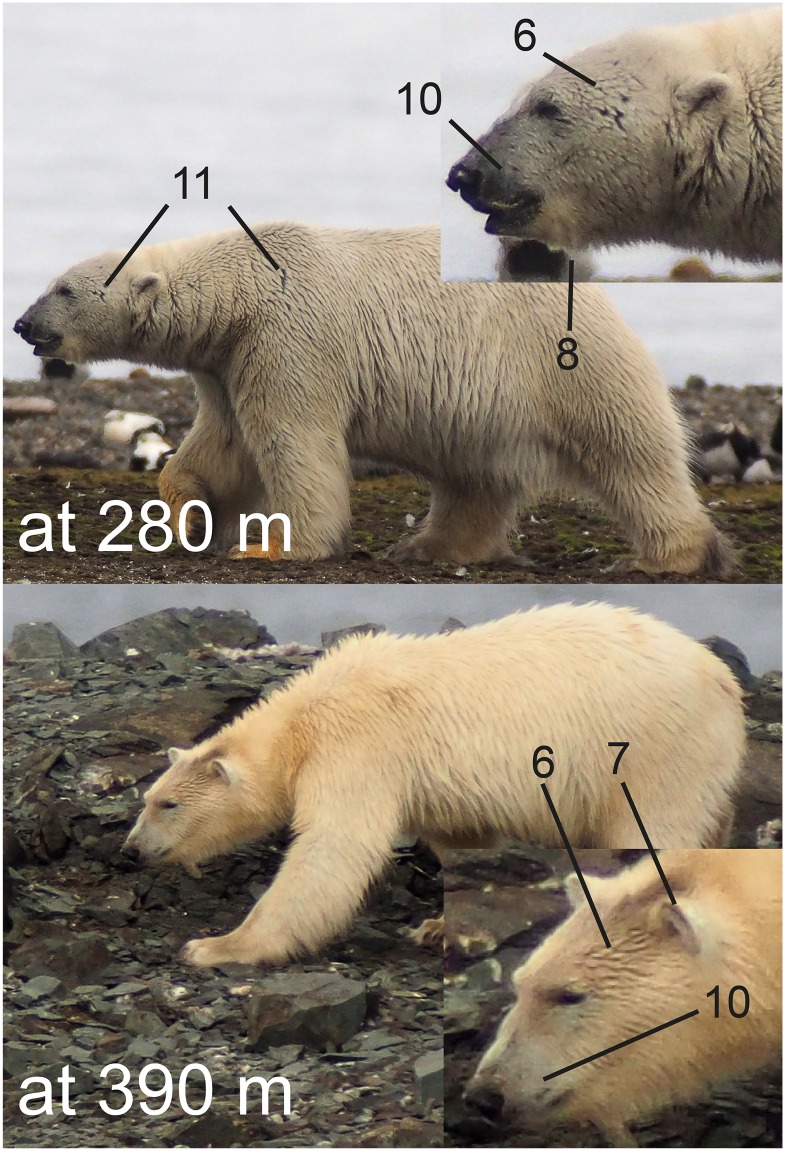
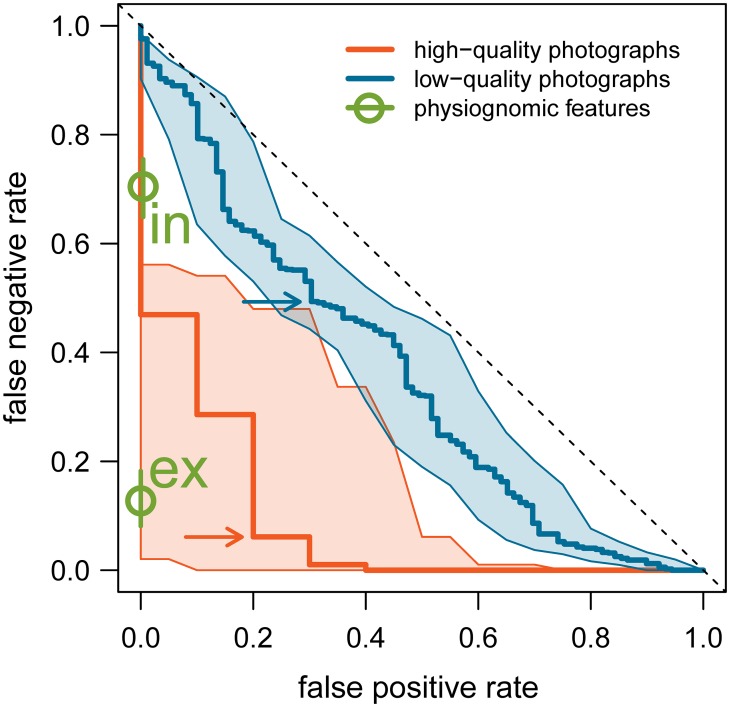
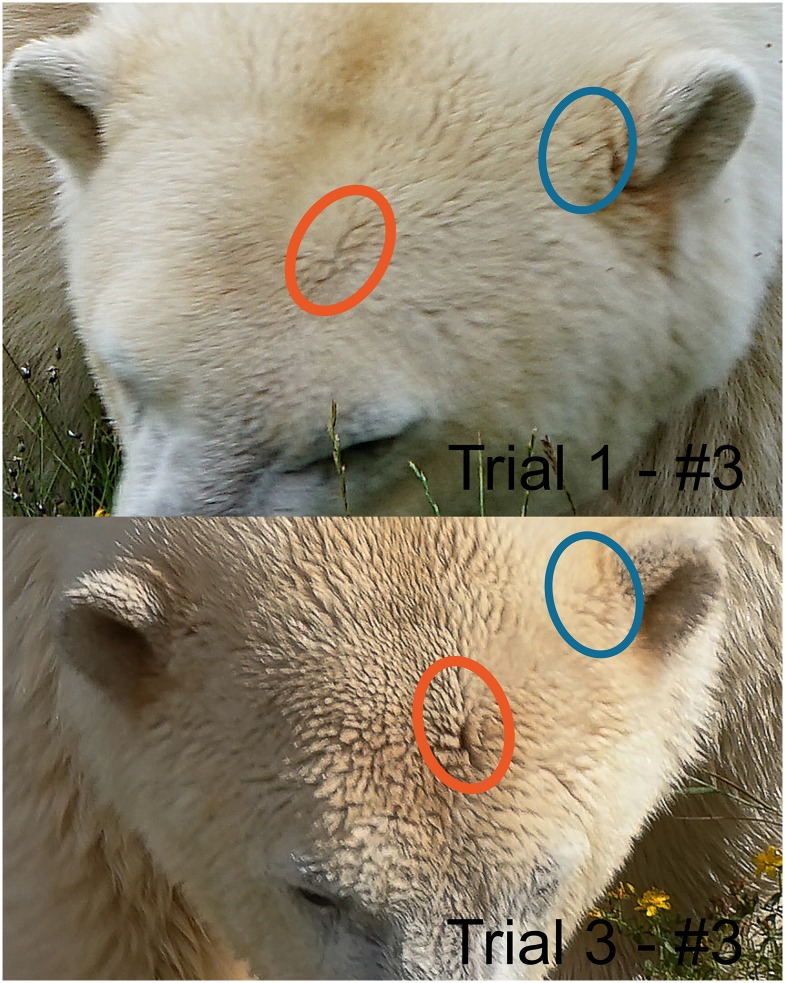
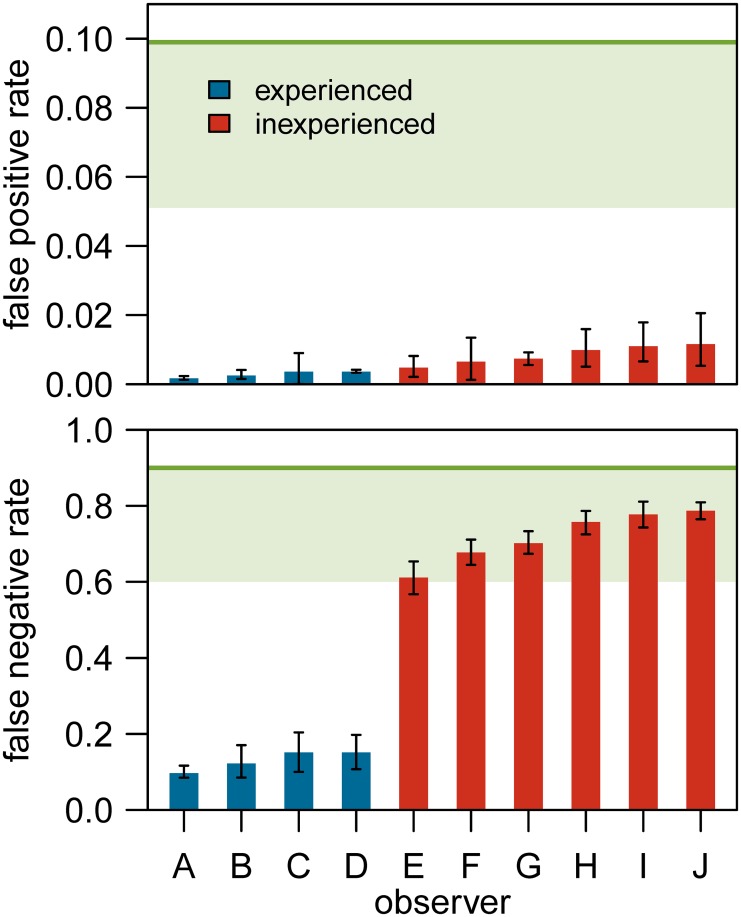
The need to recognise individuals in population and behavioural studies has stimulated the development of various identification methods. A commonly used method is to employ natural markers to distinguish individuals. In particular, the automated processing of photographs of study animals has gained interest due to the speed of processing and the ability to handle a high volume of records. However, automated processing requires high-quality photographs, which means that they need to be taken from a specific angle or at close distances. Polar bears Ursus maritimus, for example, may be identified by automated analysis of whisker spot patterns. However, to obtain photographs of adequate quality, the animals need to be closer than is usually possible without risk to animal or observer. In this study we tested the accuracy of an alternative method to identify polar bears at further distances. This method is based on distinguishing a set of physiognomic characteristics, which can be recognised from photographs taken in the field at distances of up to 400 m. During five trials, sets of photographs of 15 polar bears from six zoos, with each individual bear portrayed on different dates, were presented for identification to ten test observers. Among observers the repeatability of the assessments was 0.68 (SE 0.011). Observers with previous training in photogrammetric techniques performed better than observers without training. Experience with observing polar bears in the wild did not improve skills to identify individuals on photographs. Among the observers with photogrammetric experience, the rate of erroneous assessment was on average 0.13 (SE 0.020). For the inexperienced group this was 0.72 (SE 0.018). Error rates obtained with automated whisker spot analysis were intermediate (0.26-0.58). We suggest that wildlife studies will benefit from applying several identification techniques to collect data under different conditions.
在人群和行为研究中识别个体的需求刺激了各种识别方法的发展。一种常用的方法是利用自然标记来区分个体。特别是,由于处理速度快且能够处理大量记录,因此研究动物照片的自动化处理引起了人们的兴趣。然而,自动化处理需要高质量的照片,这意味着它们需要从特定角度或近距离拍摄。例如,北极熊 Ursus maritimus 可以通过自动分析胡须斑点图案来识别。但是,为了获得足够质量的照片,动物需要比通常在没有动物或观察者危险的情况下更接近。在这项研究中,我们测试了一种在更远距离识别北极熊的替代方法的准确性。该方法基于区分一组可从野外拍摄的照片中识别出的特征,这些照片可以在 400 米的距离内拍摄。在五次试验中,从六个动物园的 15 只北极熊的照片中,每个个体熊都在不同的日期被描绘出来,展示给十位测试观察者进行识别。在观察者中,评估的可重复性为 0.68(SE 0.011)。具有摄影测量技术先前培训经验的观察者比没有培训经验的观察者表现更好。在野外观察北极熊的经验并没有提高识别照片中个体的技能。在有摄影经验的观察者中,错误评估的平均率为 0.13(SE 0.020)。对于没有经验的小组,这是 0.72(SE 0.018)。自动胡须斑点分析获得的错误率处于中间水平(0.26-0.58)。我们建议,野生动物研究将受益于应用几种识别技术在不同条件下收集数据。