Department of Neurochemistry, Maj Institute of Pharmacology, Polish Academy of Sciences, Smętna 12, 31-343, Kraków, Poland.
Psychopharmacology (Berl). 2020 Jun;237(6):1577-1593. doi: 10.1007/s00213-020-05484-1. Epub 2020 Feb 20.
Schizophrenia is a mental illness which is characterised by positive and negative symptoms and by cognitive impairments. While the major prevailing hypothesis is that altered dopaminergic and/or glutamatergic transmission contributes to this disease, there is evidence that the noradrenergic system also plays a role in its major symptoms.
In the present paper, we investigated the pro-cognitive effect of 1-methyl-1,2,3,4-tetrahydroisoquinoline (1MeTIQ) an endogenous neuroprotective compound, on ketamine-modelled schizophrenia in rats.
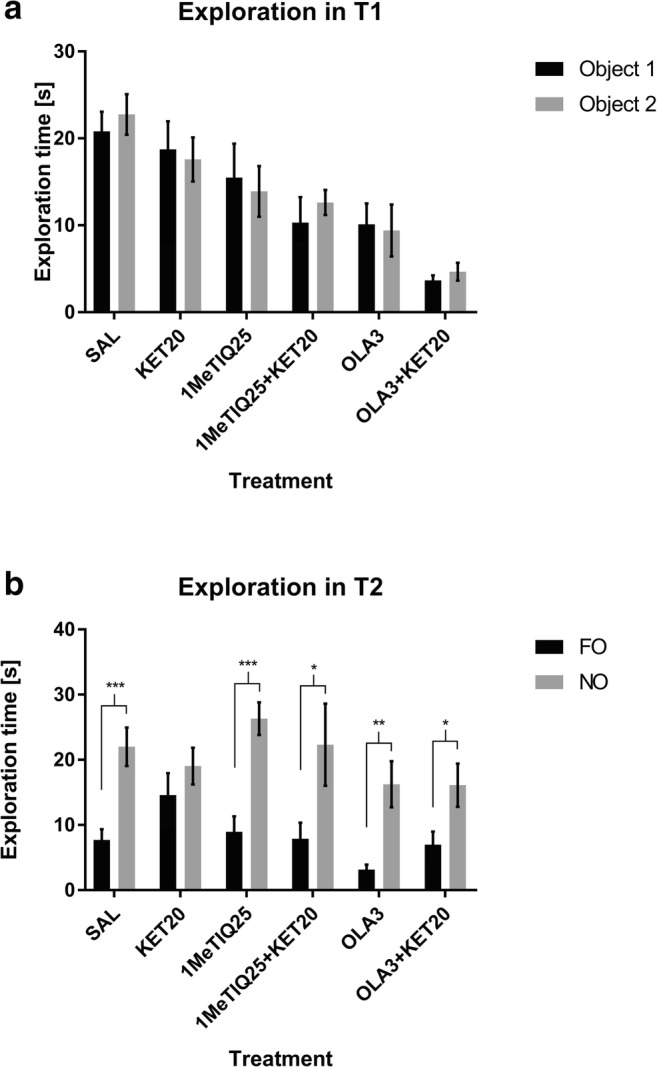
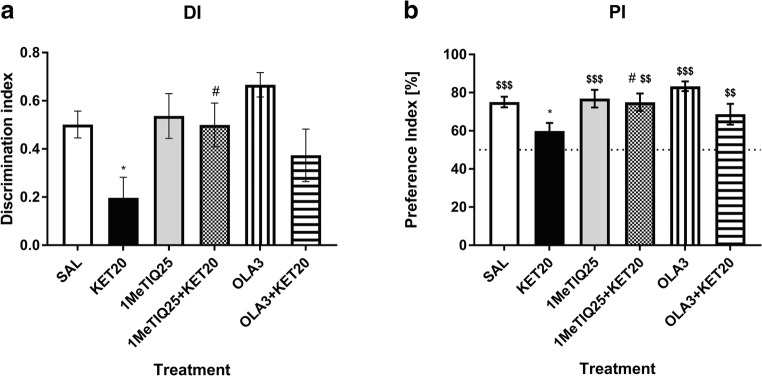
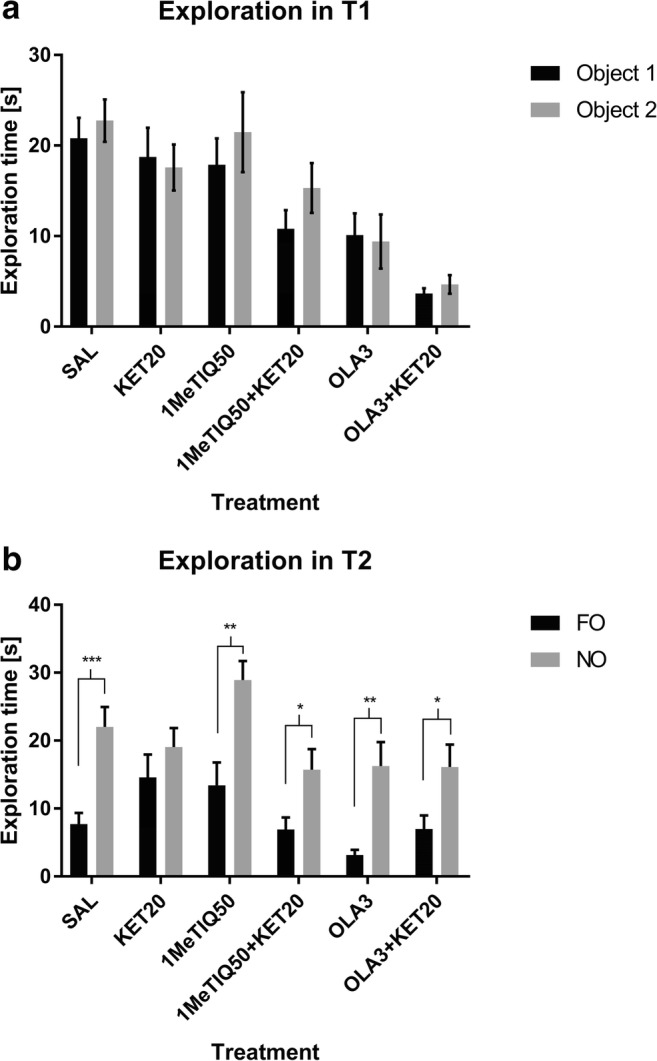
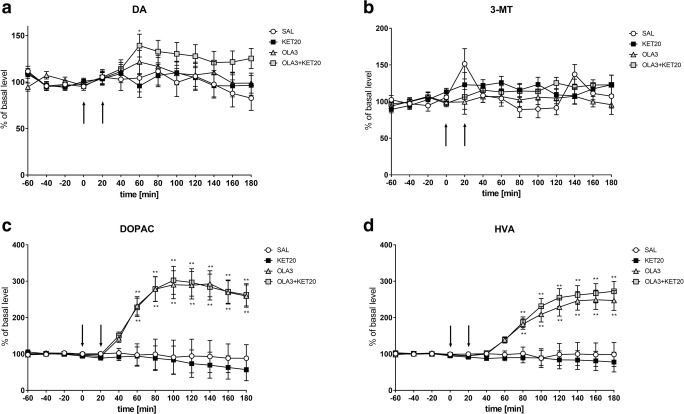
We used an antagonist of NMDA receptors (ketamine) to model memory deficit symptoms in rats. Using the novel object recognition (NOR) test, we investigated the pro-cognitive effect of 1MeTIQ. Additionally, olanzapine, an atypical antipsychotic drug, was used as a standard to compare the pro-cognitive effects of the substances. In vivo microdialysis studies allowed us to verify the changes in the release of monoamines and their metabolites in the rat striatum.
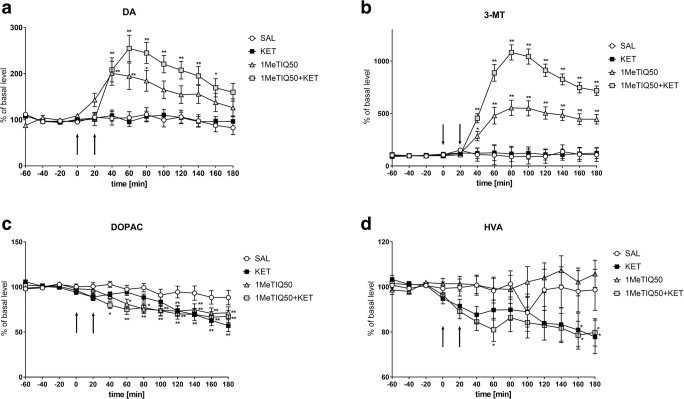
Our study demonstrated that 1MeTIQ, similarly to olanzapine, exhibits a pro-cognitive effect in NOR test and enhances memory disturbed by ketamine treatment. Additionally, in vivo microdialysis studies have shown that ketamine powerfully increased noradrenaline release in the rat striatum, while 1MeTIQ and olanzapine completely antagonised this neurochemical effect.
1MeTIQ, as a possible pro-cognitive drug, in contrast to olanzapine, expresses beneficial neuroprotective activity in the brain, increasing concentration of the extraneuronal dopamine metabolite, 3-methoxytyramine (3-MT), which plays an important physiological role in the brain as an inhibitory regulator of catecholaminergic activity. Moreover, we first demonstrated the essential role of noradrenaline release in memory disturbances observed in the ketamine-model of schizophrenia, and its possible participation in negative symptoms of the schizophrenia.
精神分裂症是一种以阳性和阴性症状以及认知障碍为特征的精神疾病。虽然多巴胺能和/或谷氨酸能传递改变导致这种疾病的主要流行假说,但有证据表明去甲肾上腺素系统也在其主要症状中发挥作用。
在本文中,我们研究了内源性神经保护化合物 1-甲基-1,2,3,4-四氢异喹啉(1MeTIQ)对大鼠氯胺酮模型精神分裂症的认知作用。
我们使用 NMDA 受体拮抗剂(氯胺酮)来模拟大鼠记忆缺陷症状。我们使用新物体识别(NOR)测试来研究 1MeTIQ 的认知作用。此外,奥氮平作为一种非典型抗精神病药物,被用作比较这些物质认知作用的标准。体内微透析研究允许我们验证单胺及其代谢物在大鼠纹状体中的释放变化。
我们的研究表明,1MeTIQ 与奥氮平相似,在 NOR 测试中表现出认知作用,并增强了氯胺酮治疗引起的记忆障碍。此外,体内微透析研究表明,氯胺酮在大鼠纹状体中强烈增加去甲肾上腺素的释放,而 1MeTIQ 和奥氮平完全拮抗这种神经化学作用。
1MeTIQ 作为一种可能的认知增强药物,与奥氮平相反,在大脑中表现出有益的神经保护活性,增加了 3-甲氧酪胺(3-MT)的浓度,3-MT 作为一种外源性多巴胺代谢物,在大脑中作为儿茶酚胺活性的抑制调节剂发挥着重要的生理作用。此外,我们首次证明了去甲肾上腺素释放在氯胺酮诱导的精神分裂症模型中观察到的记忆障碍中的重要作用,以及它可能参与精神分裂症的阴性症状。