Valouzi Hajar, Hashemi Seyedeh-Shahrzad, Wylie Stephen J, Ahadiyat Ali, Golnaraghi Alireza
Department of Plant Protection, Faculty of Agricultural Sciences and Food Industries, Science and Research Branch, Islamic Azad University, Tehran, Iran.
Plant Biotechnology Research Group - Virology, State Agricultural Biotechnology Centre, Murdoch University, Perth, WA 6150, Australia.
Plant Pathol J. 2020 Feb;36(1):87-97. doi: 10.5423/PPJ.OA.10.2019.0268. Epub 2020 Feb 1.
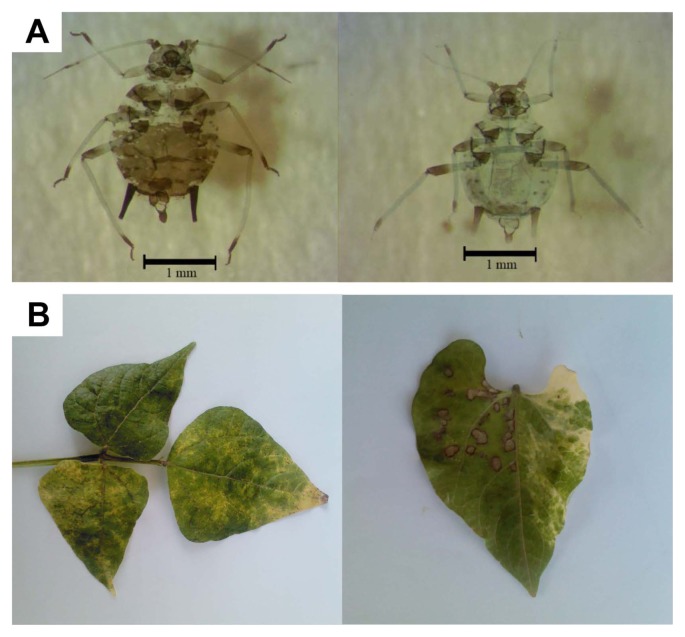
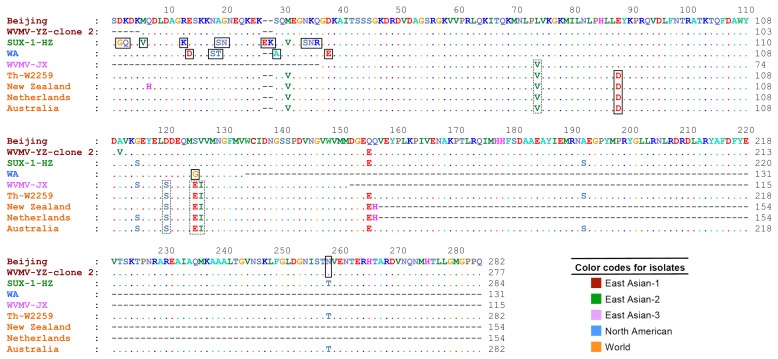
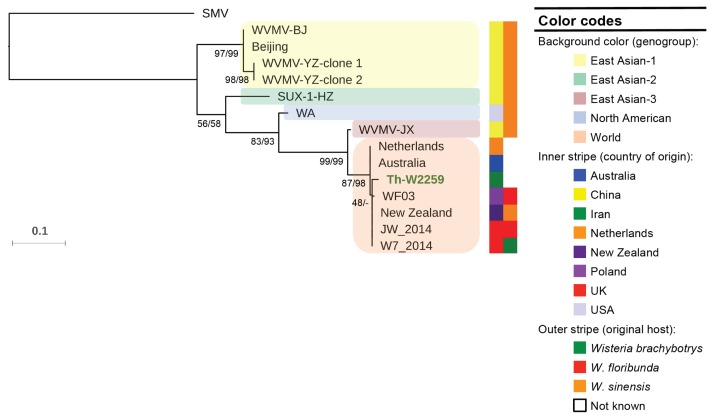
The development of reverse transcription-polymerase chain reaction using degenerate primers against conserved regions of most potyviral genomes enabled sampling of the potyvirome. However, these assays usually involve sampling potential host plants, but identifying infected plants when they are asymptomatic is challenging, and many plants, especially wild ones, contain inhibitors to DNA amplification. We used an alternative approach which utilized aphid vectors and indicator plants to identify potyviruses capable of infecting common bean (). Aphids were collected from a range of asymptomatic leguminous weeds and trees in Iran, and transferred to bean seedlings under controlled conditions. Bean plants were tested serologically for potyvirus infections four-weeks post-inoculation. The serological assay and symptomatology together indicated the presence of one potyvirus, and symptomology alone implied the presence of an unidentified virus. The partial genome of the potyvirus, encompassing the complete coat protein gene, was amplified using generic potyvirus primers. Sequence analysis of the amplicon confirmed the presence of an isolate of Wisteria vein mosaic virus (WVMV), a virus species not previously identified from Western Asia. Phylogenetic analyses of available WVMV sequences categorized them into five groups: East Asian-1 to 3, North American and World. The Iranian isolate clustered with those in the World group. Multiple sequence alignment indicated the presence of some genogroup-specific amino acid substitutions among the isolates studied. Chinese isolates were sister groups of other isolates and showed higher nucleotide distances as compared with the others, suggesting a possible Eastern-Asian origin of WVMV, the main region where might have originated.
利用针对大多数马铃薯Y病毒属病毒基因组保守区域的简并引物开发的逆转录聚合酶链反应,使得对马铃薯Y病毒组进行采样成为可能。然而,这些检测方法通常需要对潜在的寄主植物进行采样,但在感染植物无症状时进行鉴定具有挑战性,而且许多植物,尤其是野生植物,含有DNA扩增抑制剂。我们采用了一种替代方法,利用蚜虫载体和指示植物来鉴定能够感染普通豆的马铃薯Y病毒。从伊朗一系列无症状的豆科杂草和树木上采集蚜虫,并在可控条件下将其转移到豆苗上。接种四周后,对豆科植物进行马铃薯Y病毒感染的血清学检测。血清学检测和症状学共同表明存在一种马铃薯Y病毒,仅症状学表明存在一种未鉴定的病毒。使用通用的马铃薯Y病毒引物扩增了该马铃薯Y病毒的部分基因组,该基因组包含完整的外壳蛋白基因。对扩增子的序列分析证实存在紫藤脉花叶病毒(WVMV)的一个分离株,这是一种此前未在西亚发现的病毒种类。对现有WVMV序列的系统发育分析将它们分为五组:东亚-1至3组、北美组和世界组。伊朗分离株与世界组的分离株聚类在一起。多序列比对表明,在所研究的分离株中存在一些基因组特异性的氨基酸替换。中国分离株是其他分离株的姐妹组,与其他分离株相比显示出更高的核苷酸距离,这表明WVMV可能起源于东亚,这是其可能起源的主要地区。