Department of Plant Protection, College of Agriculture, Shiraz University, Shiraz, Iran.
School of Agriculture and Food Sciences, The University of Queensland, Gatton, Queensland, Australia.
Mol Plant Pathol. 2020 May;21(5):605-621. doi: 10.1111/mpp.12926. Epub 2020 Feb 25.
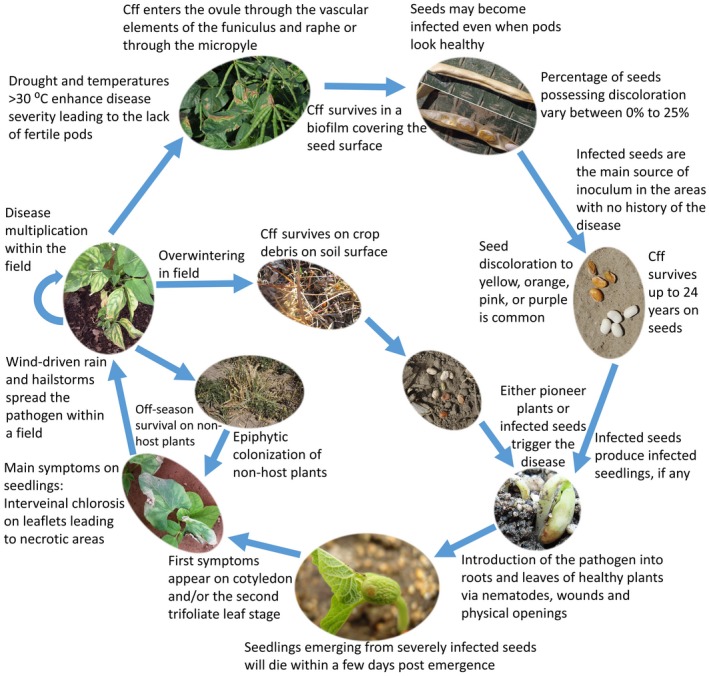
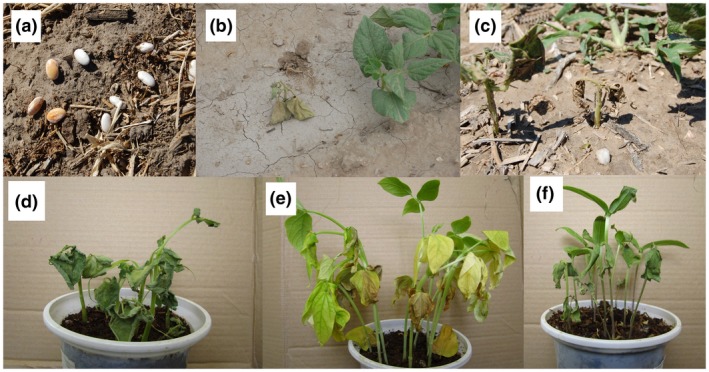
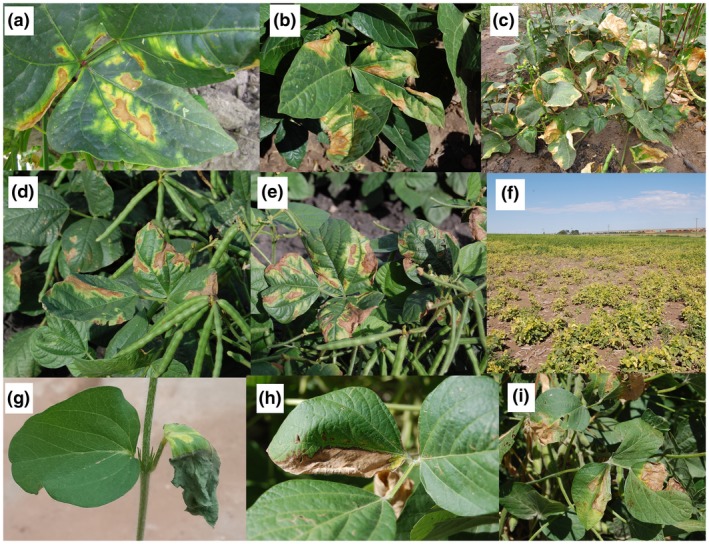
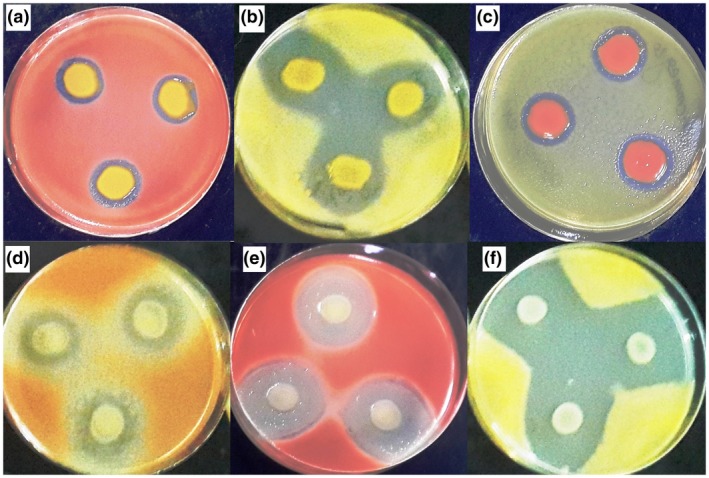
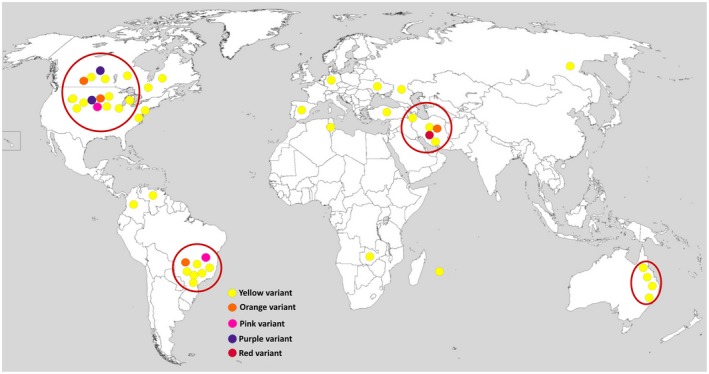
Bacterial wilt and tan spot of dry beans (family Fabaceae), caused by Curtobacterium flaccumfaciens pv. flaccumfaciens, is an important emerging disease threatening the edible legume industry around the globe. The management of bacterial wilt has been a major problem since its original description in 1922. This is in part due to the seedborne nature of the pathogen allowing the bacterium to be transmitted long distances via infected seeds, as well as a lack of detailed molecular information concerning the pathogenicity repertoires and virulence determinates of the pathogen. Identification can also be difficult owing to the presence of five different colony colour variants (i.e., yellow, orange, pink, purple, and red) on culture media. In this review, we provide an overview of the aetiology, epidemiology, and management strategies of bacterial wilt disease. First, a comprehensive and comparative symptomology of the disease on different dry bean species is described. Then, the taxonomic history of the causal agent and utility of high-throughput sequencing-based approaches in the precise characterization of the pathogen is explained. Furthermore, we provide an updated outline on the global distribution of the pathogen, highlighting expansion of the causal agent into the areas with no history of the disease until the beginning of the current century. Finally, because there are limited options for use of conventional pesticides against the pathogen, we highlight the use of integrated pest management strategies, for example quarantine inspections, resistant cultivars, and crop sanitation, to combat the risk of bacterial wilt disease in the dry bean industry.
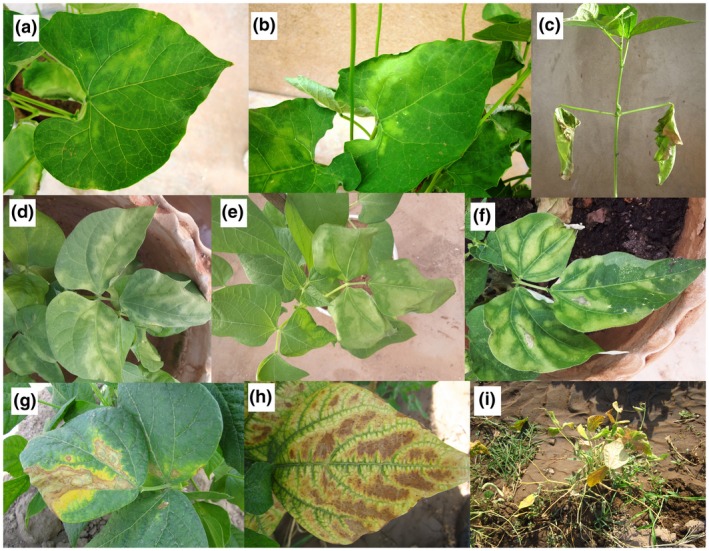
Interveinal chlorosis on leaflets leading to necrotic areas and systemic wilt. Seed discolouration to yellow, orange, pink, or purple is seen in white-seeded cultivars.
Causes bacterial wilt and tan spot disease on edible dry beans in the Fabaceae family, including common bean (Phaseolus vulgaris), cowpea (Vigna unguiculata), mungbean (Vigna radiata), soybean (Glycine max), as well as a number of weed species.
Bacteria; phylum Actinobacteria; order Actinomycetales; suborder: Micrococcineae; family Microbacteriaceae; genus Curtobacterium; species Curtobacterium flaccumfaciens.
Corynebacterium flaccumfaciens subsp. flaccumfaciens; Corynebacterium flaccumfaciens pv. flaccumfaciens, Corynebacterium flaccumfaciens, Phytomonas flaccumfaciens, Bacterium flaccumfaciens.
Multicoloured (yellow, orange, pink, purple, and red), gram-positive, aerobic, curved rod, nonspore-forming, polar flagellated, motile cells.
Widespread in America (Brazil, Canada, and the USA), Australia, and Iran. Restricted occurrence in Africa and Europe.
EPPO A2 list no. 48, EU Annex II⁄B.
豆类作物(豆科)的细菌性萎蔫病和褐斑病是由短密杆菌引起的,这是一种全球范围内严重威胁可食用豆科作物产业的新兴疾病。自 1922 年首次描述以来,细菌性萎蔫病的防治一直是一个主要问题。这在一定程度上是由于病原菌的种子传播特性,使细菌能够通过感染的种子远距离传播,此外,关于病原菌的致病谱和毒力决定因素的详细分子信息也很缺乏。由于在培养介质上存在五种不同的菌落颜色变体(即黄色、橙色、粉红色、紫色和红色),因此鉴定也可能很困难。在本综述中,我们概述了细菌性萎蔫病的病因、流行病学和管理策略。首先,描述了不同菜豆物种上疾病的综合和比较症状。然后,解释了病原菌的分类历史和高通量测序方法在病原菌精确特征描述中的应用。此外,我们提供了有关该病原体全球分布的最新概述,突出显示该病原体在本世纪初之前已扩展到以前没有该病发生历史的地区。最后,由于对该病原菌的常规农药使用选择有限,我们强调了综合虫害管理策略的应用,例如检疫检查、抗性品种和作物卫生,以应对菜豆产业中细菌性萎蔫病的风险。
病害症状:叶片叶脉间褪绿导致坏死区,并出现系统性萎蔫。在白色种子品种中,种子变色为黄色、橙色、粉红色或紫色。
寄主范围:引起豆科食用干豆的细菌性萎蔫病和褐斑病,包括普通菜豆(菜豆)、豇豆(豇豆)、绿豆(绿豆)、大豆(大豆)以及一些杂草物种。
病原菌的分类地位:细菌;放线菌门;放线菌目;微球菌亚目;微杆菌科;短密杆菌属;短密杆菌。
同义词:棒杆菌属 flaccumfaciens 亚种 flaccumfaciens;flaccumfaciens 棒杆菌;flaccumfaciens 棒杆菌,植生假单胞菌;flaccumfaciens 杆菌。
微生物特性:多色(黄色、橙色、粉红色、紫色和红色)、革兰氏阳性、需氧、弯曲杆状、非孢子形成、极生鞭毛、能动细胞。
分布:广泛分布于美洲(巴西、加拿大和美国)、澳大利亚和伊朗。在非洲和欧洲的分布有限。
植物卫生分类:欧洲植物保护组织 A2 清单第 48 号,欧盟附件 II/B。