Fan Shengjun, Price Trevor, Huang Wei, Plue Michelle, Warren Jonathan, Sundaramoorthy Pasupathi, Paul Barry, Feinberg Daniel, MacIver Nancie, Chao Nelson, Sipkins Dorothy, Kang Yubin
Division of Hematologic Malignancies and Cellular Therapy Department of Medicine Duke University Medical Center Durham NC 27710 USA.
Shared Materials Instrumentation Facility Pratt School of Engineering Duke University Durham NC 27708 USA.
Adv Sci (Weinh). 2020 Jan 23;7(5):1900860. doi: 10.1002/advs.201900860. eCollection 2020 Mar.
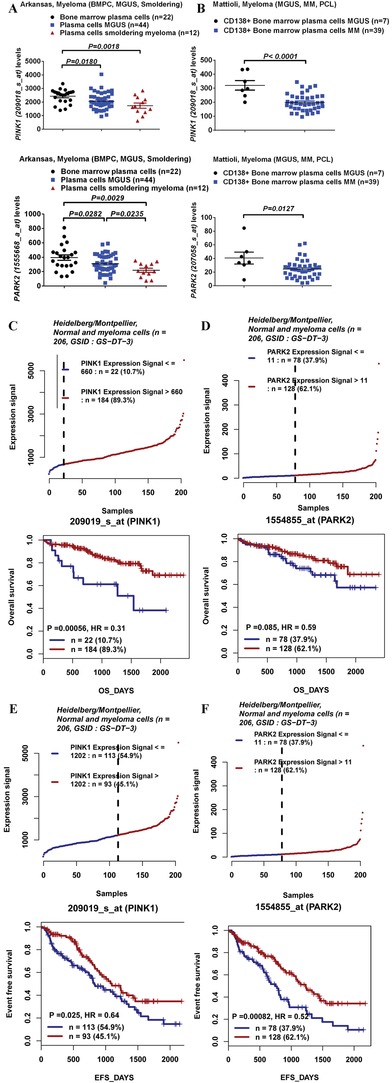
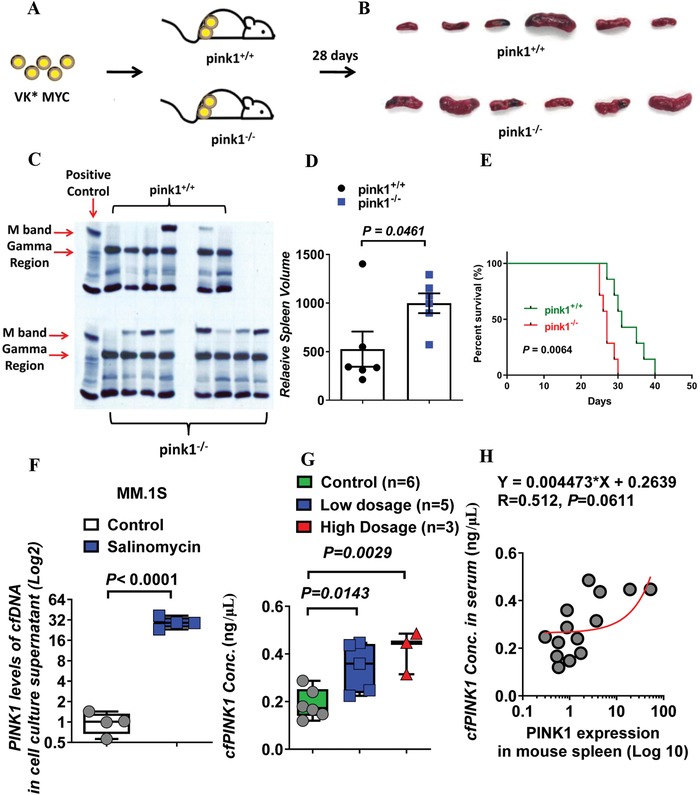
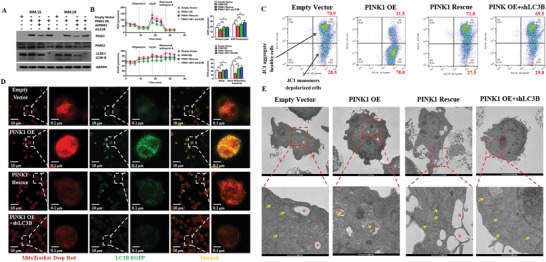
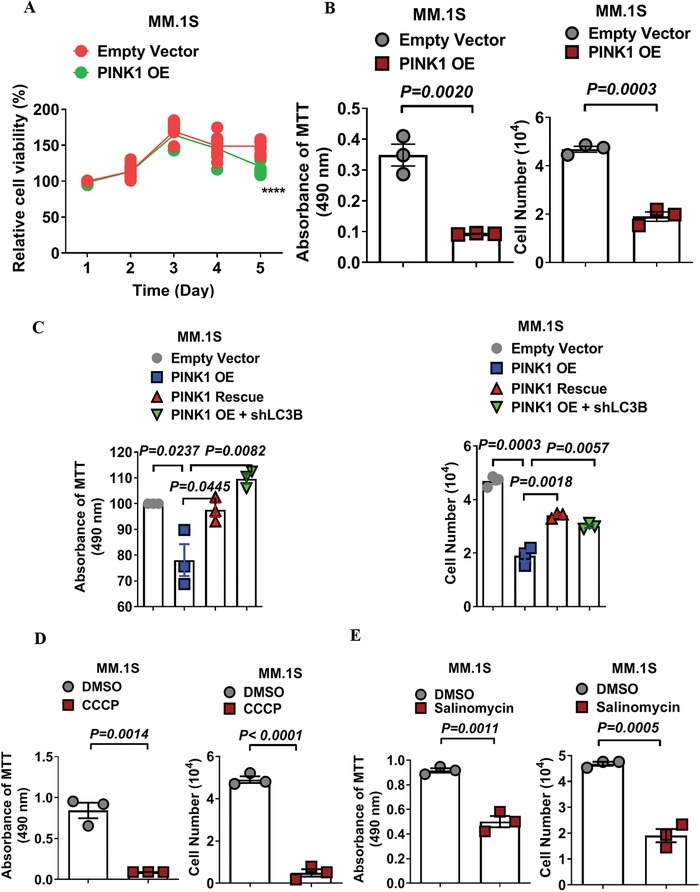
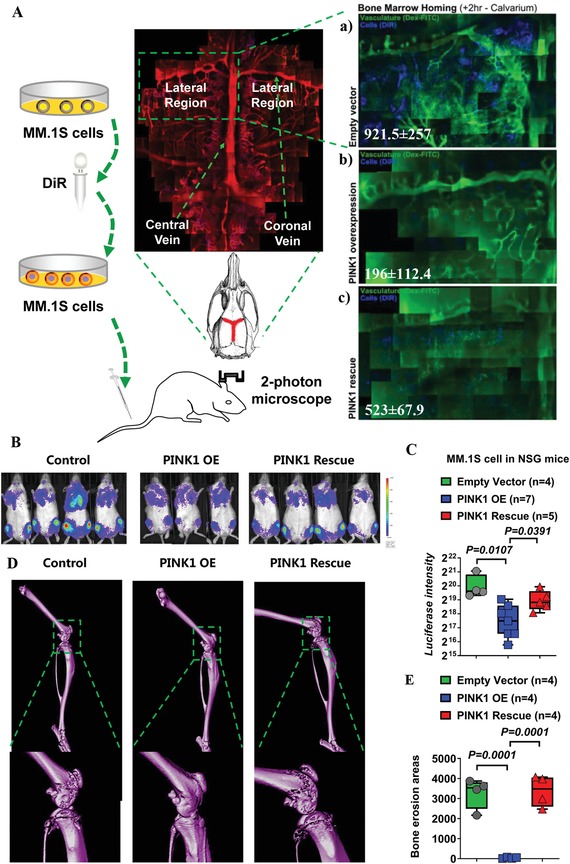
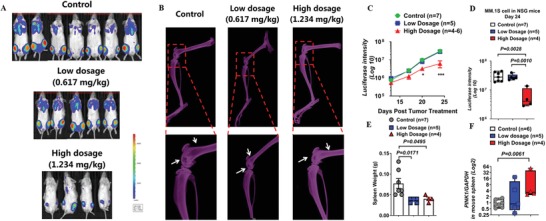
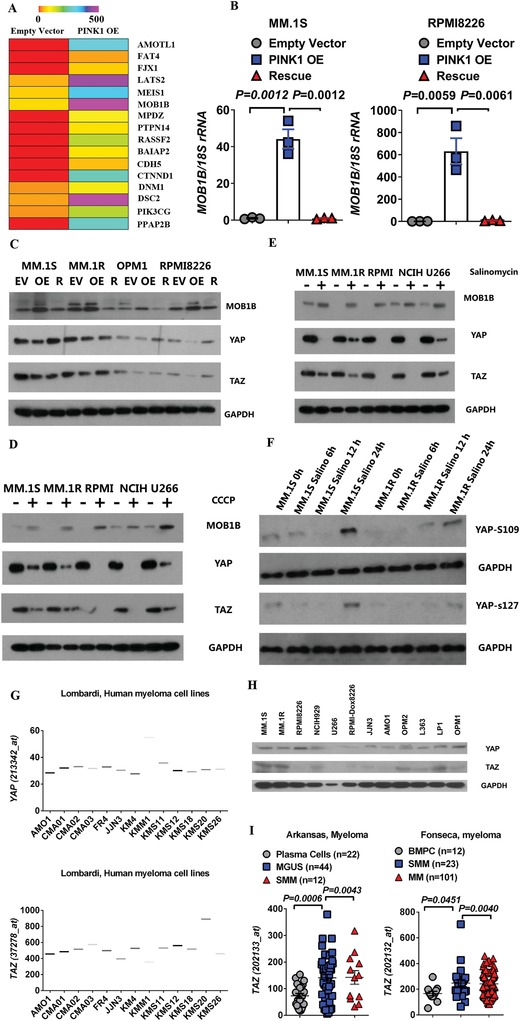
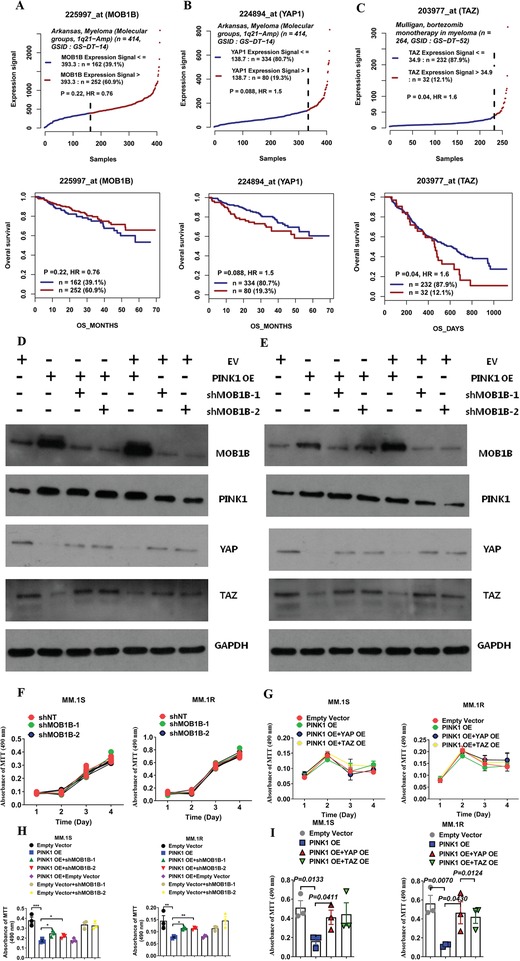
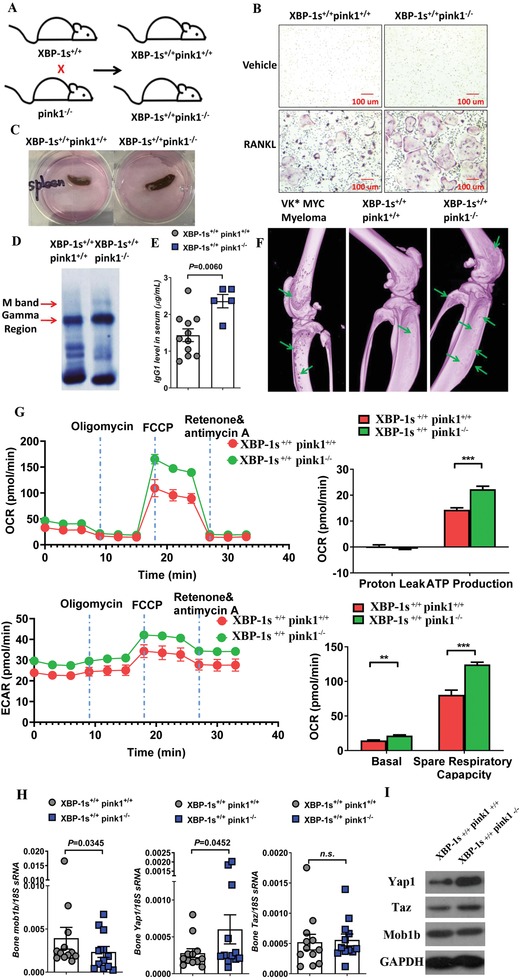
The roles of mitochondrial dysfunction in carcinogenesis remain largely unknown. The effects of PTEN-induced putative kinase 1 (PINK1)-dependent mitophagy on the pathogenesis of multiple myeloma (MM) are determined. The levels of the PINK1-dependent mitophagy markers and parkin RBR E3 ubiquitin protein ligase ( in CD138 plasma cells are reduced in patients with MM and correlate with clinical outcomes in myeloma patients. Moreover, the induction of PINK1-dependent mitophagy with carbonylcyanide--chlorophenylhydrazone (CCCP) or salinomycin, or overexpression of PINK1 leads to inhibition of transwell migration, suppression of myeloma cell homing to calvarium, and decreased osteolytic bone lesions. Furthermore, genetic deletion of accelerates myeloma development in a spontaneous X-box binding protein-1 spliced isoform () transgenic myeloma mouse model and in VK*MYC transplantable myeloma recipient mice. Additionally, treatment with salinomycin shows significant antimyeloma activities in vivo in murine myeloma xenograft models. Finally, the effects of PINK1-dependent mitophagy on myeloma pathogenesis are driven by the activation of the Mps one binder kinase activator (MOB1B)-mediated Hippo pathway and the subsequent downregulation of Yes-associated protein (YAP)/transcriptional co-activator with PDZ-binding motif (TAZ) expression. These data provide direct evidence that PINK1-dependent mitophagy plays a critical role in the pathogenesis of MM and is a potential therapeutic target.
线粒体功能障碍在致癌过程中的作用在很大程度上仍不清楚。我们确定了PTEN诱导的假定激酶1(PINK1)依赖性线粒体自噬对多发性骨髓瘤(MM)发病机制的影响。MM患者CD138浆细胞中PINK1依赖性线粒体自噬标志物和帕金RBR E3泛素蛋白连接酶的水平降低,且与骨髓瘤患者的临床结果相关。此外,用羰基氰化物-间氯苯腙(CCCP)或沙林霉素诱导PINK1依赖性线粒体自噬,或过表达PINK1,会导致Transwell迁移受到抑制、骨髓瘤细胞归巢至颅骨受到抑制以及溶骨性骨病变减少。此外,在自发的X盒结合蛋白1剪接异构体()转基因骨髓瘤小鼠模型和VK*MYC可移植骨髓瘤受体小鼠中,的基因缺失加速了骨髓瘤的发展。另外,在小鼠骨髓瘤异种移植模型中,沙林霉素治疗在体内显示出显著的抗骨髓瘤活性。最后,PINK1依赖性线粒体自噬对骨髓瘤发病机制的影响是由Mps1结合激酶激活剂(MOB1B)介导的Hippo通路的激活以及随后Yes相关蛋白(YAP)/含PDZ结合基序的转录共激活因子(TAZ)表达的下调所驱动的。这些数据提供了直接证据,表明PINK1依赖性线粒体自噬在MM发病机制中起关键作用,并且是一个潜在的治疗靶点。