
软骨管在椎体成骨与生长中的作用。
Role of cartilage canals in osteogenesis and growth of the vertebral centra.
作者信息
Chandraraj S, Briggs C A
机构信息
Phillip Institute of Technology, Victoria, Australia.
出版信息
J Anat. 1988 Jun;158:121-36.
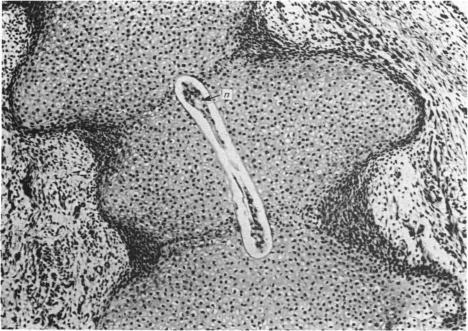
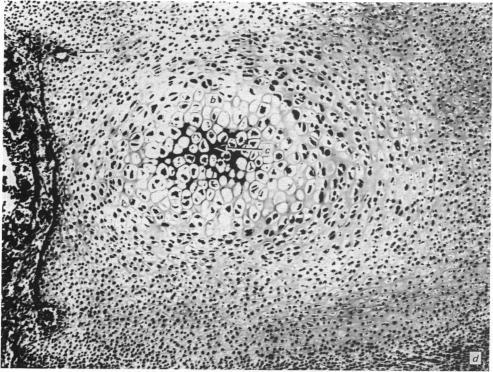
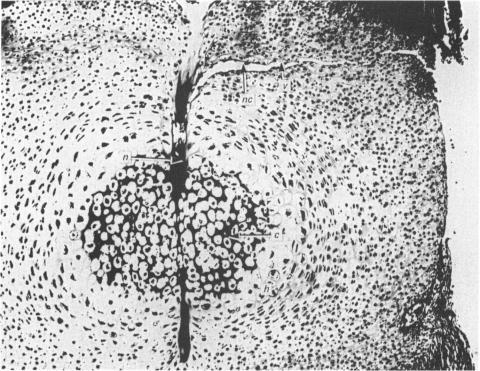
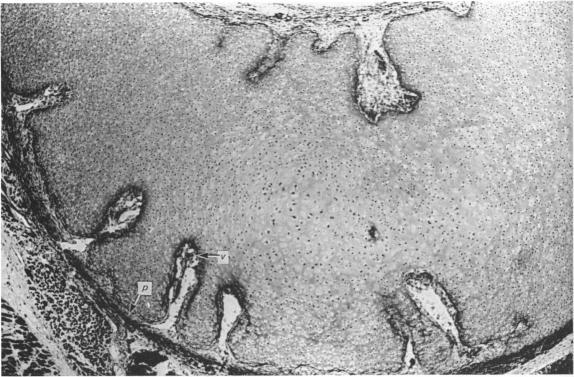
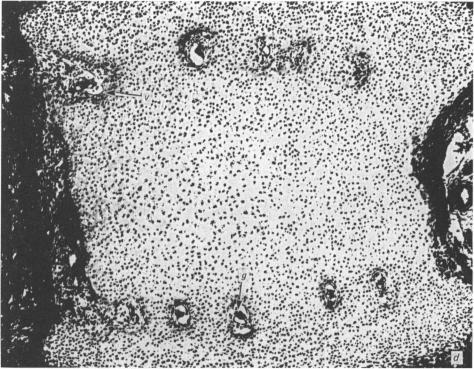
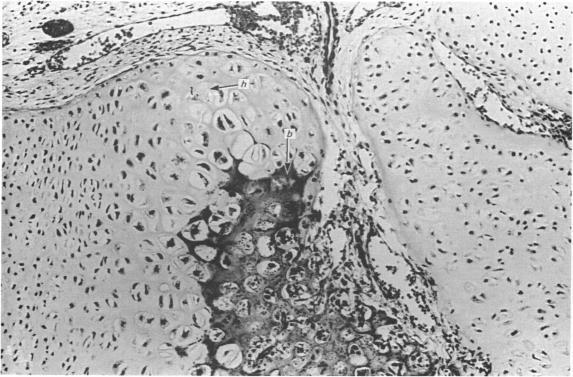
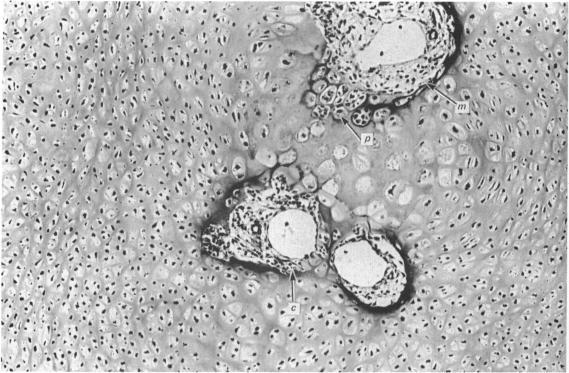
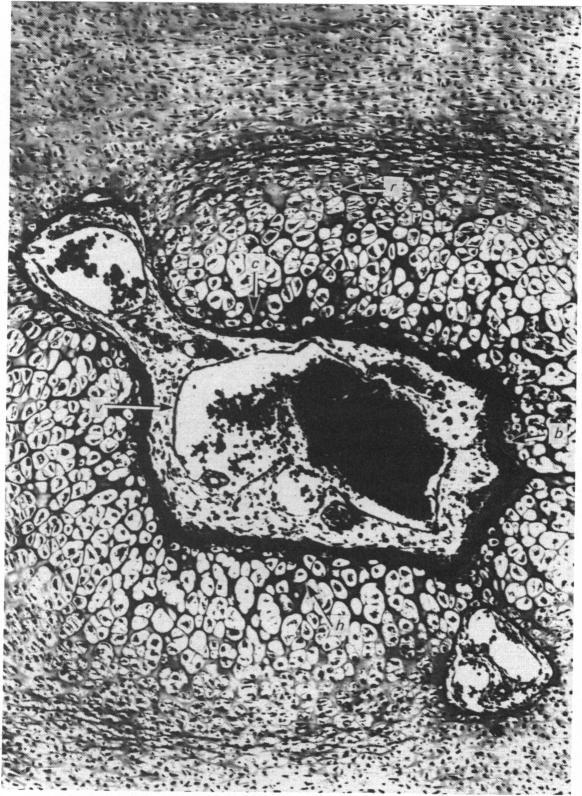
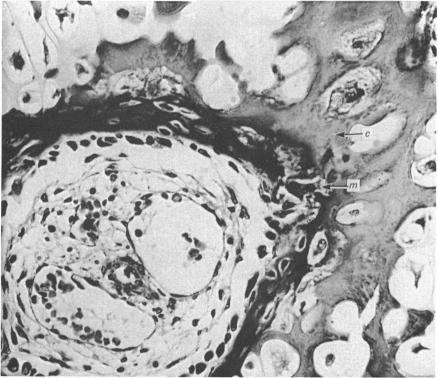
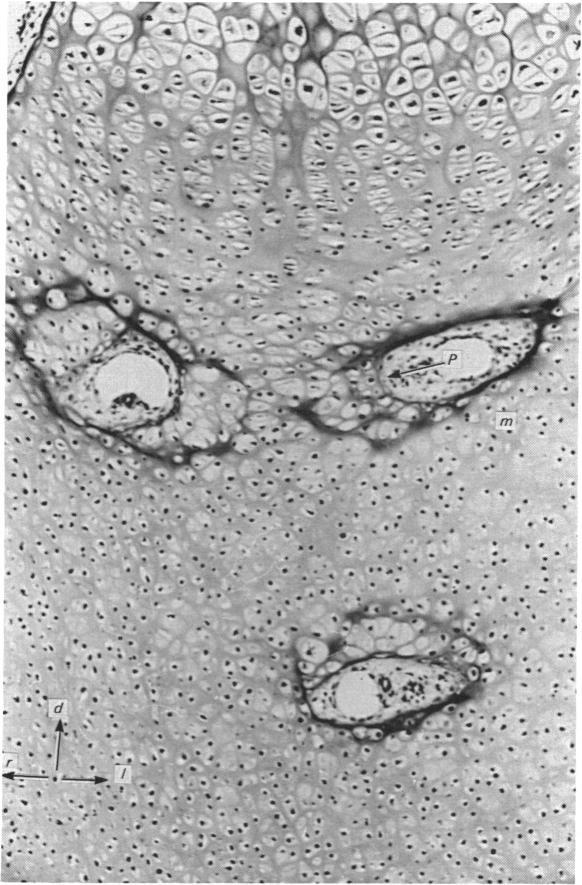
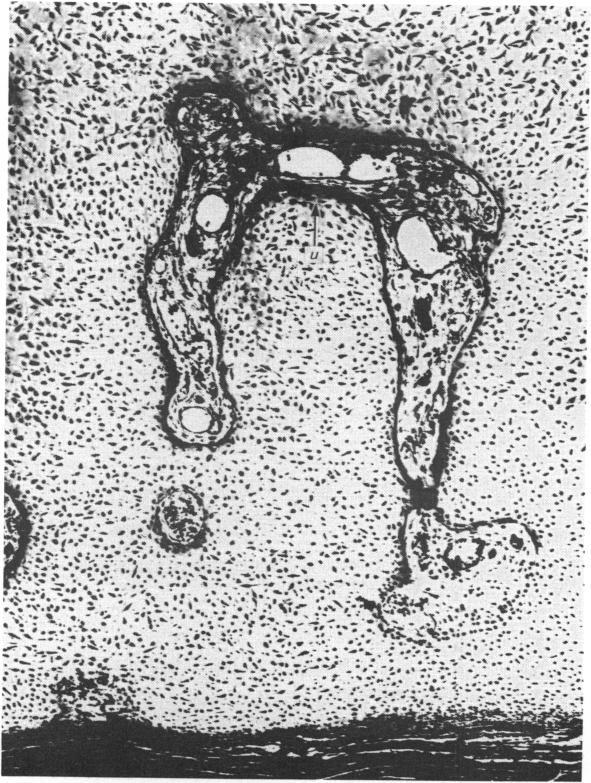
Bone formation in the vertebral centra commences within the centrum and is in this respect analogous to the secondary ossification which occurs in the epiphysis of a long bone. Bone tissue first appears at about the 85 mm C.R. stage and not in the 55 mm C.R. length embryo; at the latter stage blood vessels and calcification alone were observed. The connective tissue cells within the cartilage canal appear to assist osteogenesis by providing osteogenic cells which lay down bone in the walls of the cartilage canal, and provide cells which remove calcified cartilage found at the periphery of the canal; they assist growth by producing an appreciable number of chondrocytes that permit lateral expansion of the centra. Osteogenesis appears to occur in multiple foci within the growth plate of the older embryos and could account for the rapid rate of growth of vertebrae. Bone formation occurs in both mineralised and unmineralised matrix (as seen on the walls of the cartilage canals). The blood vessels within the growing vertebra tend to follow the zone of cartilage hypertrophy.
椎体中心的骨形成始于椎体内部,在这方面类似于长骨骨骺中发生的次级骨化。骨组织大约在头臀长85毫米阶段首次出现,而不是在头臀长55毫米的胚胎中;在后者阶段,仅观察到血管和钙化。软骨管内的结缔组织细胞似乎通过提供成骨细胞来协助骨生成,这些成骨细胞在软骨管壁上沉积骨,并提供清除在软骨管周边发现的钙化软骨的细胞;它们通过产生大量软骨细胞来协助生长,这些软骨细胞允许椎体横向扩展。骨生成似乎发生在较老胚胎生长板内的多个部位,这可以解释椎体的快速生长速度。骨形成发生在矿化和未矿化的基质中(如在软骨管壁上所见)。正在生长的椎体内的血管倾向于沿着软骨肥大区分布。



 Zotero 插件