UMR PAM Université de Bourgogne/AgroSup Dijon, Institut Universitaire de la Vigne et du Vin, Jules Guyot, Dijon, France.
Comprehensive Foodomics Platform, Technische Universität München, Freising, Germany.
Sci Rep. 2020 Apr 8;10(1):6073. doi: 10.1038/s41598-020-63182-6.
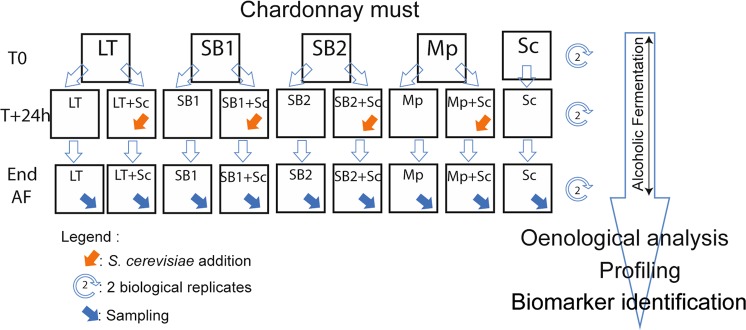
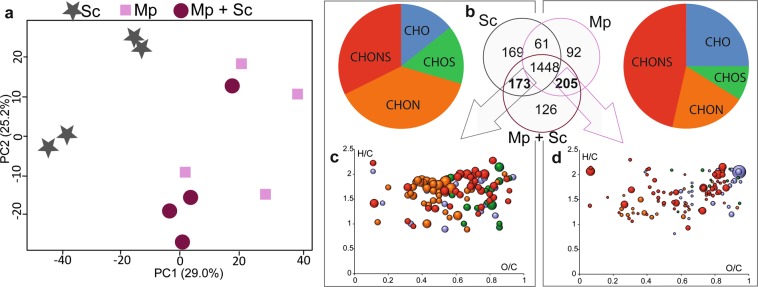
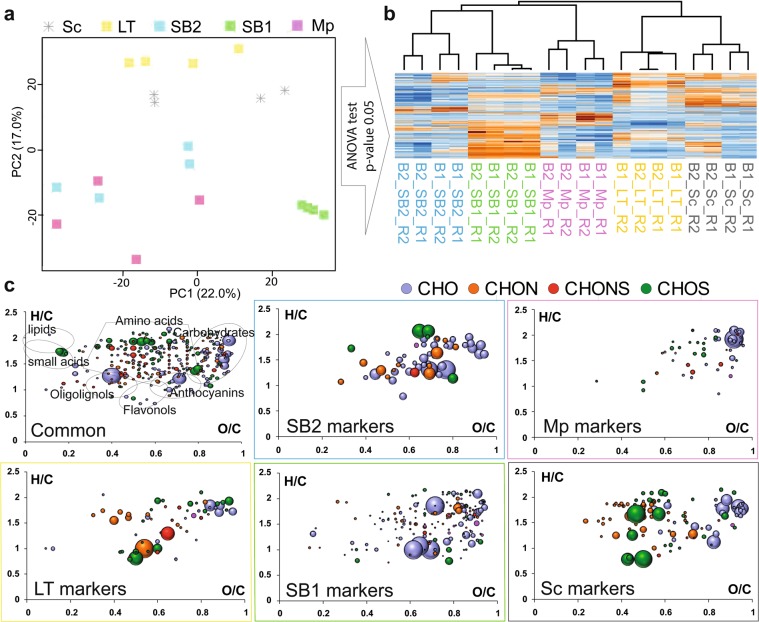
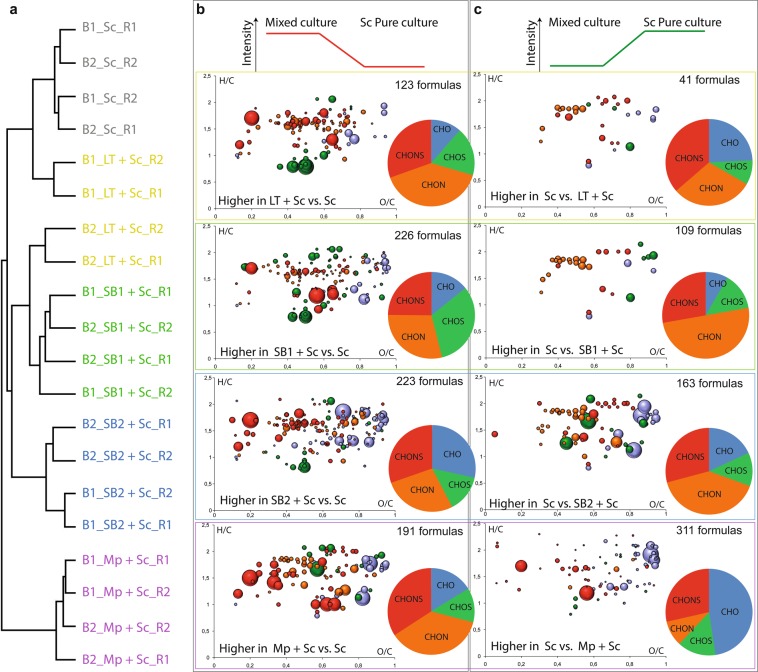
As a complex microbial ecosystem, wine is a particularly interesting model for studying interactions between microorganisms as fermentation can be done by microbial consortia, a unique strain or mixed culture. The effect of a specific yeast strain on its environments is unique and characterized by its metabolites and their concentration. With its great resolution and excellent mass accuracy, ultrahigh resolution mass spectrometry (uHRMS) is the perfect tool to analyze the yeast metabolome at the end of alcoholic fermentation. This work reports the change in wine chemical composition from pure and mixed culture fermentation with Lachancea thermotolerans, Starmerella bacillaris, Metschnikowia pulcherrima and S. cerevisiae. We could clearly differentiate wines according to the yeast strain used in single cultures and markers, which reflect important differences between the yeast species, were extracted and annotated. Moreover, uHRMS revealed underlining intra species metabolomics differences, showing differences at the strain level between the two Starmerella bacillaris. Non volatile metabolomics analysis of single and sequential fermentations confirmed that mixed fermentations lead to a different composition. Distinct metabolites appeared in wines from sequential fermentation compared to single fermentation. This suggests that interactions between yeasts are not neutral.
作为一个复杂的微生物生态系统,葡萄酒是研究微生物相互作用的一个特别有趣的模型,因为发酵可以通过微生物群落、单一菌株或混合培养来完成。特定酵母菌株对其环境的影响是独特的,其特征在于其代谢物及其浓度。超高分辨率质谱 (uHRMS) 具有出色的分辨率和优异的质量精度,是分析酒精发酵结束时酵母代谢组的完美工具。这项工作报告了纯培养和混合培养发酵中 Lachancea thermotolerans、Starmerella bacillaris、Metschnikowia pulcherrima 和 S. cerevisiae 对葡萄酒化学成分的影响。我们可以根据单一培养和标记物中使用的酵母菌株清楚地区分葡萄酒,并且提取和注释了反映酵母物种之间重要差异的标记物。此外,uHRMS 揭示了种内代谢组学差异的基础,显示了两种 Starmerella bacillaris 菌株水平的差异。单发酵和顺序发酵的非挥发性代谢组学分析证实,混合发酵会导致不同的组成。与单发酵相比,顺序发酵的葡萄酒中出现了不同的代谢物。这表明酵母之间的相互作用并非中性。