Servicio de Genética, Ramón y Cajal Institute of Health Research (IRYCIS) and Biomedical Network Research Centre on Rare Diseases (CIBERER), 28034, Madrid, Spain.
Molecular Otolaryngology and Renal Research Laboratories, Department of Otolaryngology, Head & Surgery, University of Iowa, Iowa City, Iowa, 52242, USA.
Sci Rep. 2020 Apr 10;10(1):6213. doi: 10.1038/s41598-020-63256-5.
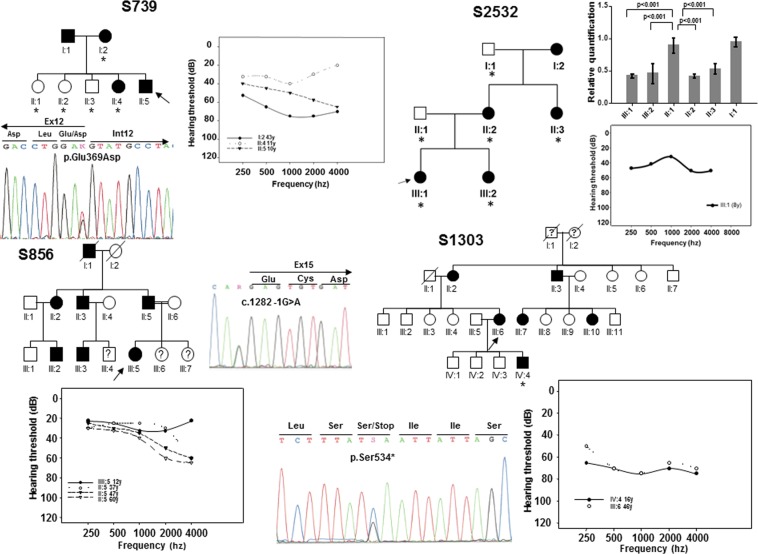
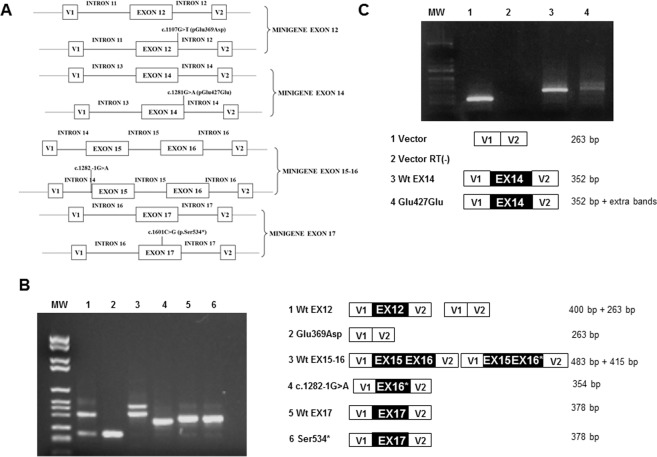
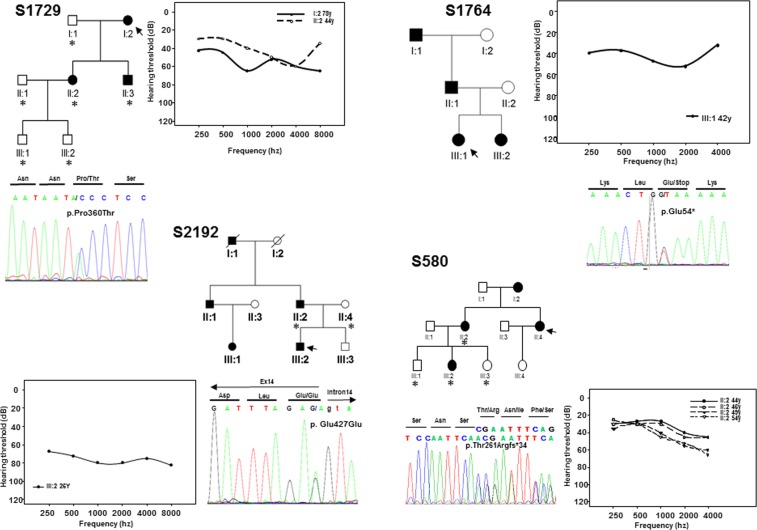
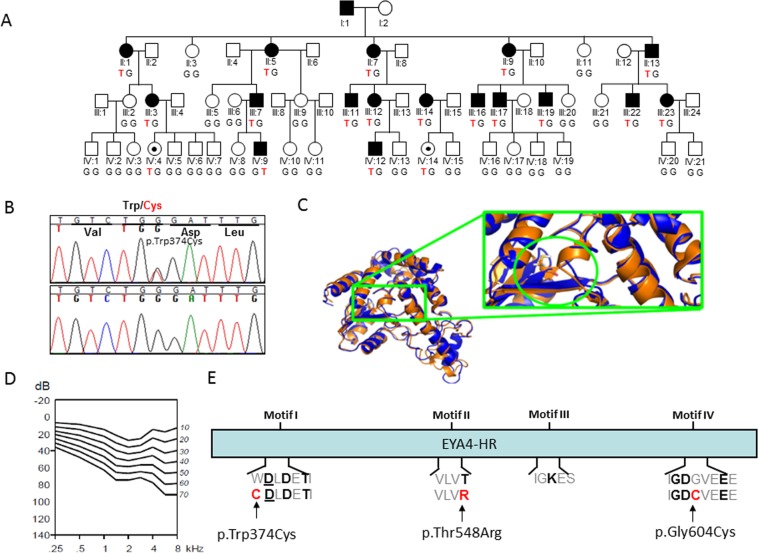
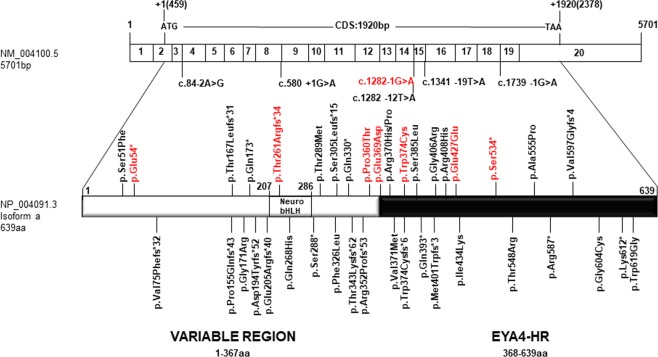
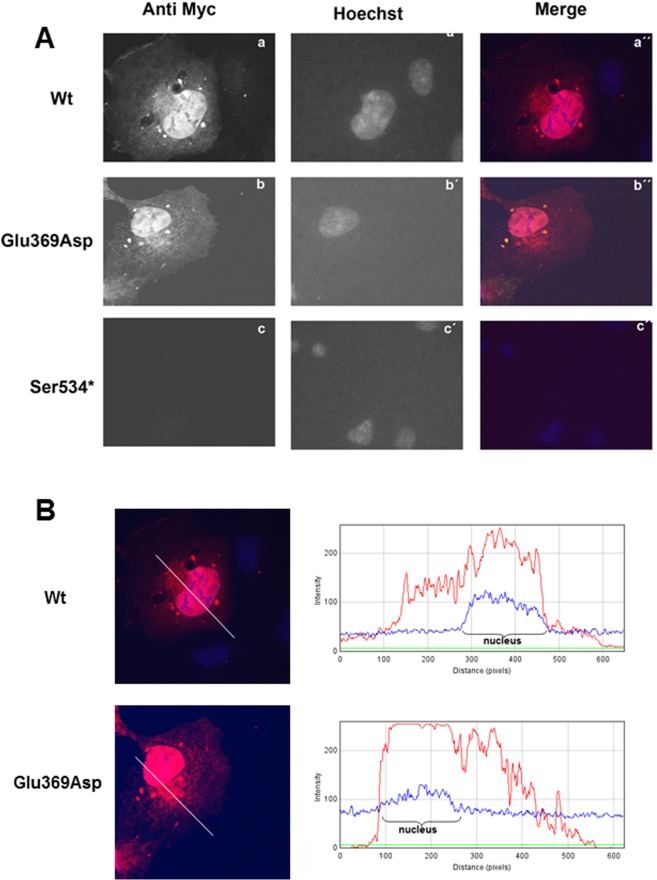
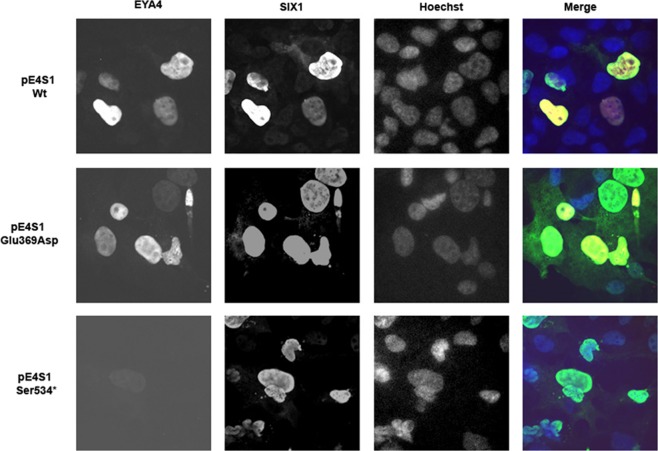
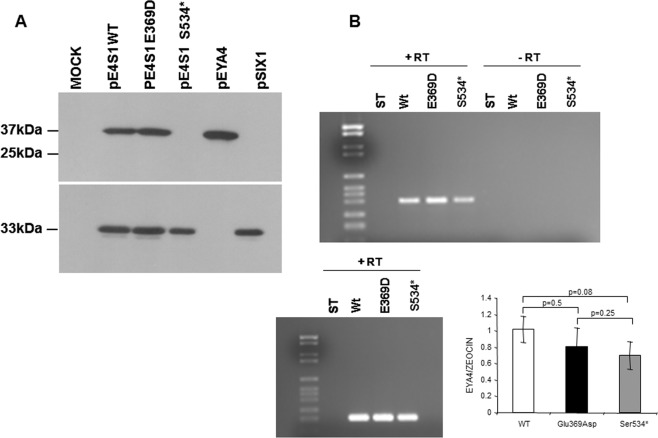
The mutational spectrum of many genes and their contribution to the global prevalence of hereditary hearing loss is still widely unknown. In this study, we have performed the mutational screening of EYA4 gene by DHLPC and NGS in a large cohort of 531 unrelated Spanish probands and one Australian family with autosomal dominant non-syndromic hearing loss (ADNSHL). In total, 9 novel EYA4 variants have been identified, 3 in the EYA4 variable region (c.160G > T; p.Glu54*, c.781del; p.Thr261Argfs34 and c.1078C > A; p.Pro360Thr) and 6 in the EYA-HR domain (c.1107G > T; p.Glu369Asp, c.1122G > T; p.Trp374Cys, c.1281G > A; p.Glu427Glu, c.1282-1G > A, c.1601C > G; p.S534 and an heterozygous copy number loss encompassing exons 15 to 17). The contribution of EYA4 mutations to ADNSHL in Spain is, therefore, very limited (~1.5%, 8/531). The pathophysiology of some of these novel variants has been explored. Transient expression of the c-myc-tagged EYA4 mutants in mammalian COS7 cells revealed absence of expression of the p.S534* mutant, consistent with a model of haploinsufficiency reported for all previously described EYA4 truncating mutations. However, normal expression pattern and translocation to the nucleus were observed for the p.Glu369Asp mutant in presence of SIX1. Complementary in silico analysis suggested that c.1107G > T (p.Glu369Asp), c.1281G > A (p.Glu427Glu) and c.1282-1G > A variants alter normal splicing. Minigene assays in NIH3T3 cells further confirmed that all 3 variants caused exon skipping resulting in frameshifts that lead to premature stop codons. Our study reports the first likely pathogenic synonymous variant linked to DFNA10 and provide further evidence for haploinsufficiency as the common underlying disease-causing mechanism for DFNA10-related hearing loss.
许多基因的突变谱及其对遗传性听力损失全球患病率的贡献仍知之甚少。在这项研究中,我们通过 DHLPC 和 NGS 对 531 名无关西班牙先证者和一个常染色体显性非综合征性听力损失(ADNSHL)的澳大利亚家系进行了 EYA4 基因的突变筛查。总共发现了 9 个新的 EYA4 变异体,其中 3 个位于 EYA4 可变区(c.160G>T;p.Glu54*,c.781del;p.Thr261Argfs34 和 c.1078C>T;p.Pro360Thr),6 个位于 EYA-HR 结构域(c.1107G>T;p.Glu369Asp,c.1122G>T;p.Trp374Cys,c.1281G>A;p.Glu427Glu,c.1282-1G>A,c.1601C>G;p.S534 和一个包含外显子 15 至 17 的杂合性拷贝数缺失)。因此,EYA4 突变对西班牙 ADNSHL 的贡献非常有限(约 1.5%,8/531)。已经对其中一些新变异体的病理生理学进行了探索。在哺乳动物 COS7 细胞中转染 c-myc 标记的 EYA4 突变体后,发现 p.S534* 突变体的表达缺失,这与所有先前描述的 EYA4 截断突变所报道的杂合子不足模型一致。然而,在存在 SIX1 的情况下,观察到 p.Glu369Asp 突变体的正常表达模式和向核内转移。互补的计算机分析表明,c.1107G>T(p.Glu369Asp),c.1281G>A(p.Glu427Glu)和 c.1282-1G>A 变体改变了正常剪接。NIH3T3 细胞中的小基因试验进一步证实,所有 3 个变体均导致外显子跳跃,从而导致移码并导致提前终止密码子。我们的研究报告了首个与 DFNA10 相关的可能致病同义变异体,并提供了进一步的证据,证明杂合子不足是导致与 DFNA10 相关听力损失的常见致病机制。