Brain Institute, Federal University of Rio Grande do Norte, Natal (RN), Brazil.
Department of Psychology, Federal University of Rio Grande do Norte, Natal (RN), Brazil.
PLoS One. 2020 May 13;15(5):e0232660. doi: 10.1371/journal.pone.0232660. eCollection 2020.
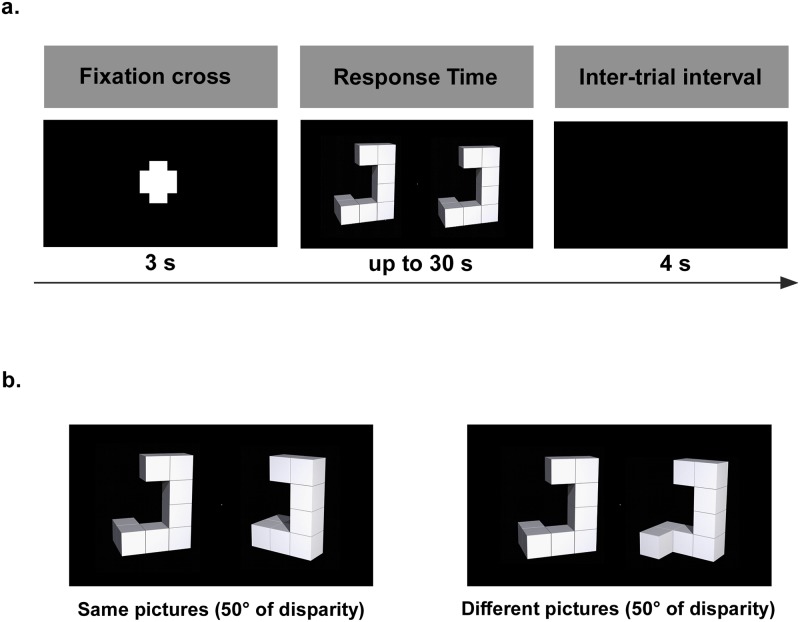
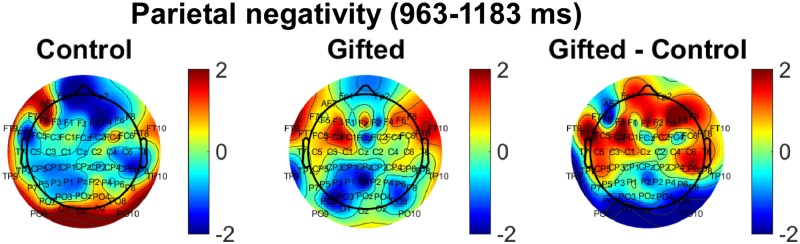
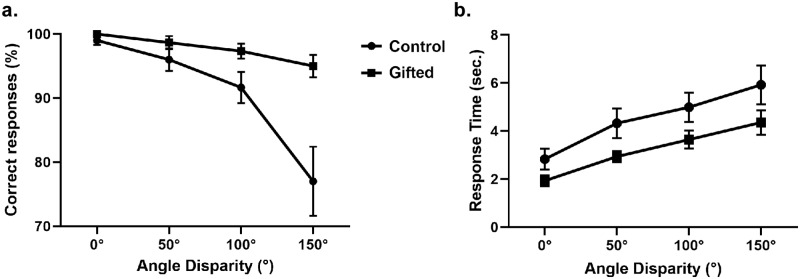
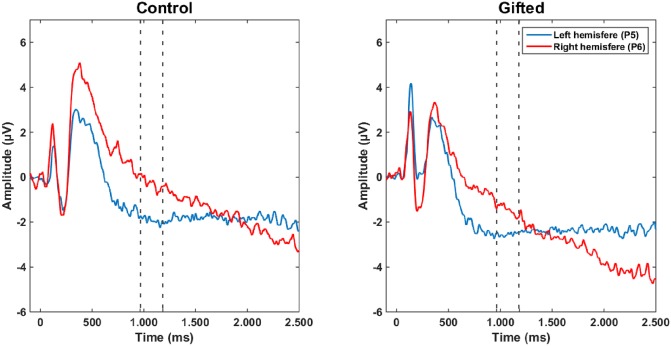
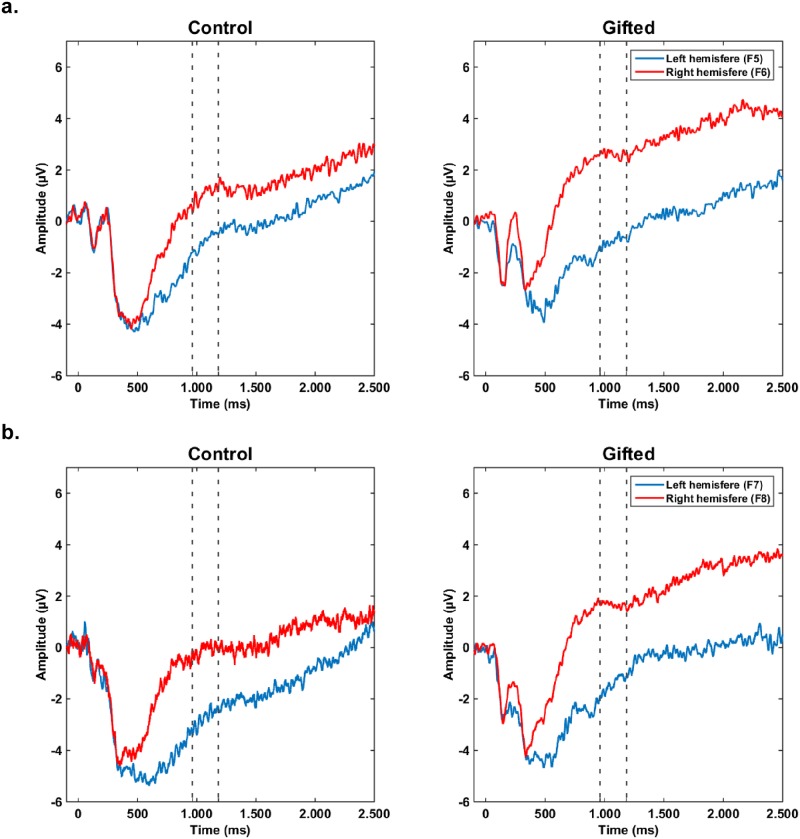
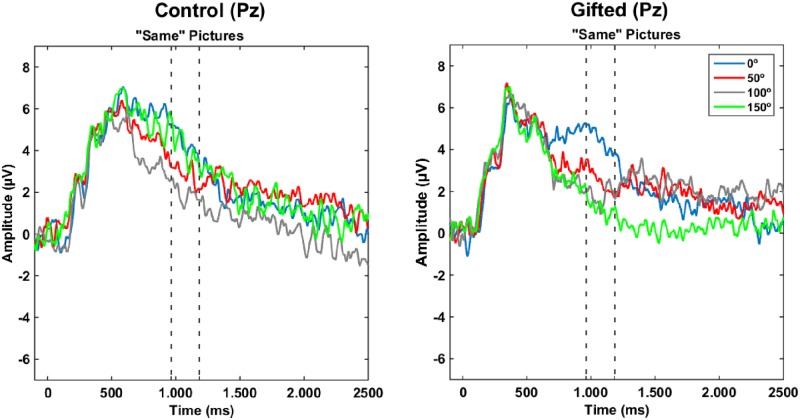
Visual-spatial abilities are usually neglected in academic settings, even though several studies have shown that their predictive power in science, technology, engineering, and mathematics domains exceeds that of math and verbal ability. This neglect means that many spatially talented youths are not identified and nurtured, at a great cost to society. In the present work, we aim to identify behavioral and electrophysiological markers associated with visual spatial-ability in intellectually gifted adolescents (N = 15) compared to age-matched controls (N = 15). The participants performed a classic three-dimensional mental rotation task developed by Shepard and Metzler (1971) [33] while event-related potentials were measured in both frontal and parietal regions of interest. While response time was similar in the two groups, gifted subjects performed the test with greater accuracy. There was no indication of interhemispheric asymmetry of ERPs over parietal regions in both groups, although interhemispheric differences were observed in the frontal lobes. Moreover, intelligence quotient and working memory measures predicted variance in ERP's amplitude in the right parietal and frontal hemispheres. We conclude that while gifted adolescents do not display a different pattern of electroencephalographic activity over the parietal cortex while performing the mental rotation task, their performance is correlated with the amplitude of ERPs in the frontal cortex during the execution of this task.
视觉空间能力在学术环境中通常被忽视,尽管有几项研究表明,它们在科学、技术、工程和数学领域的预测能力超过了数学和语言能力。这种忽视意味着许多具有空间天赋的年轻人没有被发现和培养,这给社会带来了巨大的损失。在本工作中,我们旨在确定与智力超常青少年(N=15)相比,与视觉空间能力相关的行为和电生理标记物,与年龄匹配的对照组(N=15)。参与者在经典的三维心理旋转任务中表现出相似的反应时间,该任务由 Shepard 和 Metzler(1971)[33]开发,同时在前额和顶叶感兴趣区域测量事件相关电位。虽然两组的反应时间相似,但天才组的测试准确性更高。两组中都没有表明顶叶区域的 ERP 存在半球间不对称性,尽管在前额叶观察到了半球间差异。此外,智商和工作记忆测量预测了右顶叶和额叶半球 ERP 幅度的变化。我们得出结论,虽然在执行心理旋转任务时,天才青少年的顶叶皮层没有显示出不同的脑电图活动模式,但他们的表现与执行此任务时额叶皮层中 ERP 的幅度相关。