
天然和人工 N9-细胞分裂素缀合物:从合成到生物活性再到合成。
Naturally Occurring and Artificial N9-Cytokinin Conjugates: From Synthesis to Biological Activity and Back.
机构信息
Department of Chemical Biology and Genetics, Centre of the Region Haná for Biotechnological and Agricultural Research, Faculty of Science, Palacký University, Šlechtitelů 27, CZ-783 71 Olomouc, Czech Republic.
Laboratory of Growth Regulators, Palacký University & Institute of Experimental Botany ASCR, Šlechtitelů 27, CZ-783 71 Olomouc, Czech Republic.
出版信息
Biomolecules. 2020 May 29;10(6):832. doi: 10.3390/biom10060832.
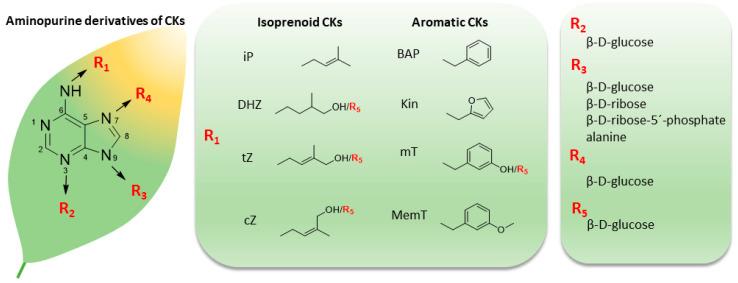
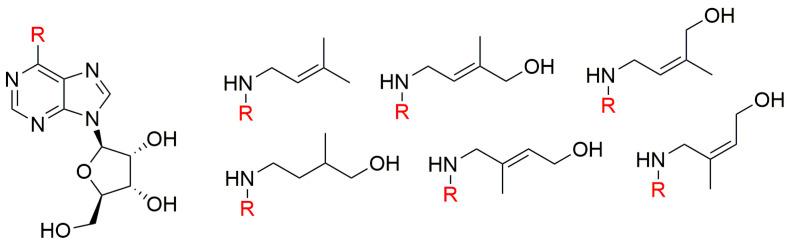
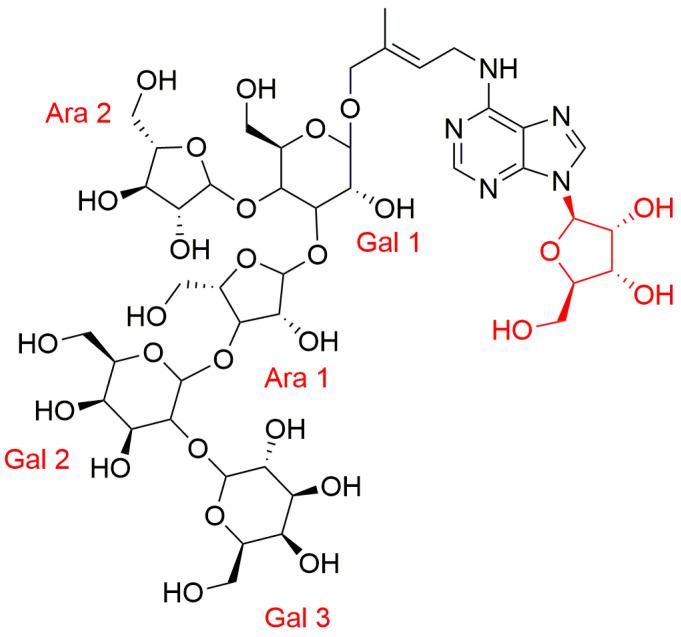
Cytokinins and their sugar or non-sugar conjugates are very active growth-promoting factors in plants, although they occur at very low concentrations. These compounds have been identified in numerous plant species. This review predominantly focuses on 9-substituted adenine-based cytokinin conjugates, both artificial and endogenous, sugar and non-sugar, and their roles in plants. Acquired information about their biological activities, interconversions, and metabolism improves understanding of their mechanisms of action and functions in planta. Although a number of 9-substituted cytokinins occur endogenously, many have also been prepared in laboratories to facilitate the clarification of their physiological roles and the determination of their biological properties. Here, we chart advances in knowledge of 9-substituted cytokinin conjugates from their discovery to current understanding and reciprocal interactions between biological properties and associated structural motifs. Current organic chemistry enables preparation of derivatives with better biological properties, such as improved anti-senescence, strong cell division stimulation, shoot forming, or more persistent stress tolerance compared to endogenous or canonical cytokinins. Many artificial cytokinin conjugates stimulate higher mass production than naturally occurring cytokinins, improve rooting, or simply have high stability or bioavailability. Thus, knowledge of the biosynthesis, metabolism, and activity of 9-substituted cytokinins in various plant species extends the scope for exploiting both natural and artificially prepared cytokinins in plant biotechnology, tissue culture, and agriculture.
细胞分裂素及其糖或非糖缀合物是植物中非常活跃的促生长因子,尽管它们的浓度非常低。这些化合物已在许多植物物种中被鉴定出来。本综述主要关注 9-取代腺嘌呤基细胞分裂素缀合物,包括人工和内源性的、糖和非糖的,以及它们在植物中的作用。关于它们的生物活性、相互转化和代谢的信息的获得,有助于理解它们的作用机制及其在植物中的功能。尽管一些 9-取代细胞分裂素内源性存在,但许多也在实验室中制备,以促进澄清其生理作用和确定其生物特性。在这里,我们从发现到当前的理解,以及生物特性和相关结构模体之间的相互作用,绘制了 9-取代细胞分裂素缀合物知识的进展图。当前的有机化学能够制备出具有更好生物特性的衍生物,例如改善的抗衰老、强烈的细胞分裂刺激、芽形成或更强的耐胁迫能力,与内源性或典型细胞分裂素相比。许多人工细胞分裂素缀合物比天然细胞分裂素刺激更高的产量增加,促进生根,或者仅仅具有高稳定性或生物利用度。因此,各种植物物种中 9-取代细胞分裂素的生物合成、代谢和活性的知识扩展了在植物生物技术、组织培养和农业中利用天然和人工制备的细胞分裂素的范围。






 Zotero 插件