Hussain Tabassum, Koyro Hans-Werner, Zhang Wensheng, Liu Xiaotong, Gul Bilquees, Liu Xiaojing
Center for Agricultural Resources Research, Institute of Genetics and Developmental Biology, Chinese Academy of Sciences, Shijiazhuang, China.
Dr. Muhammad Ajmal Khan Institute of Sustainable Halophyte Utilization, University of Karachi, Karachi, Pakistan.
Front Plant Sci. 2020 May 29;11:481. doi: 10.3389/fpls.2020.00481. eCollection 2020.
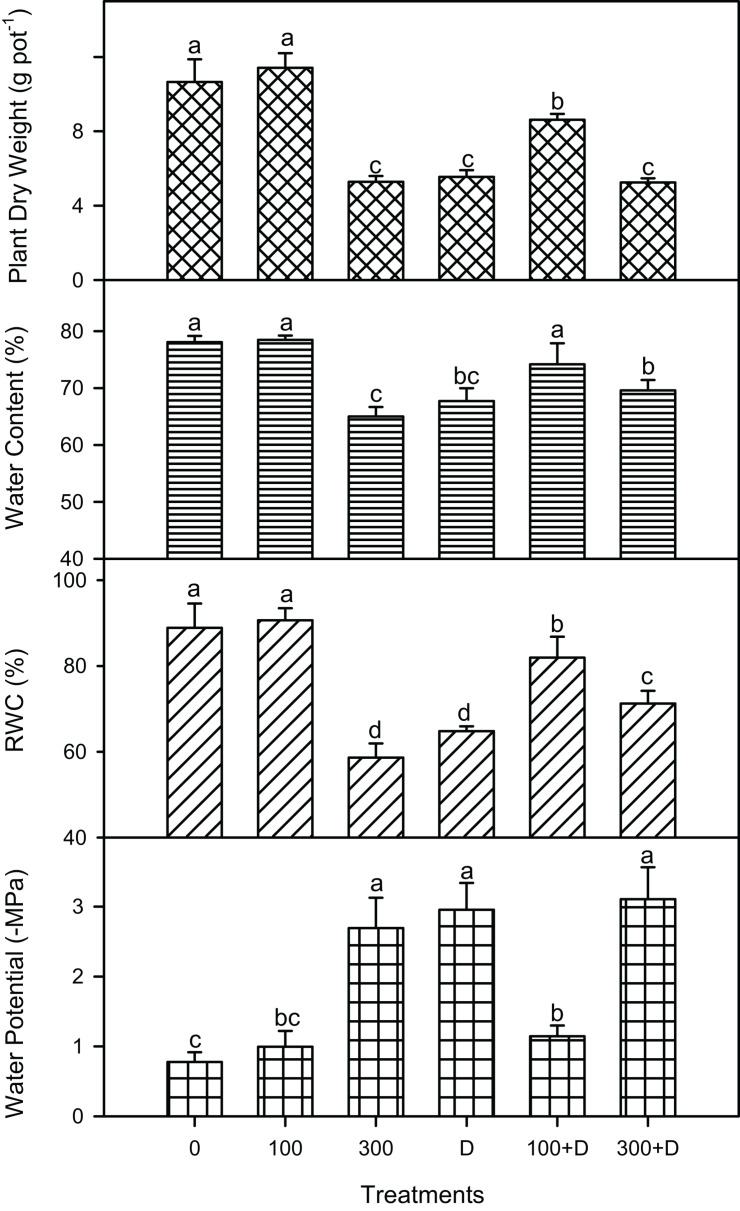
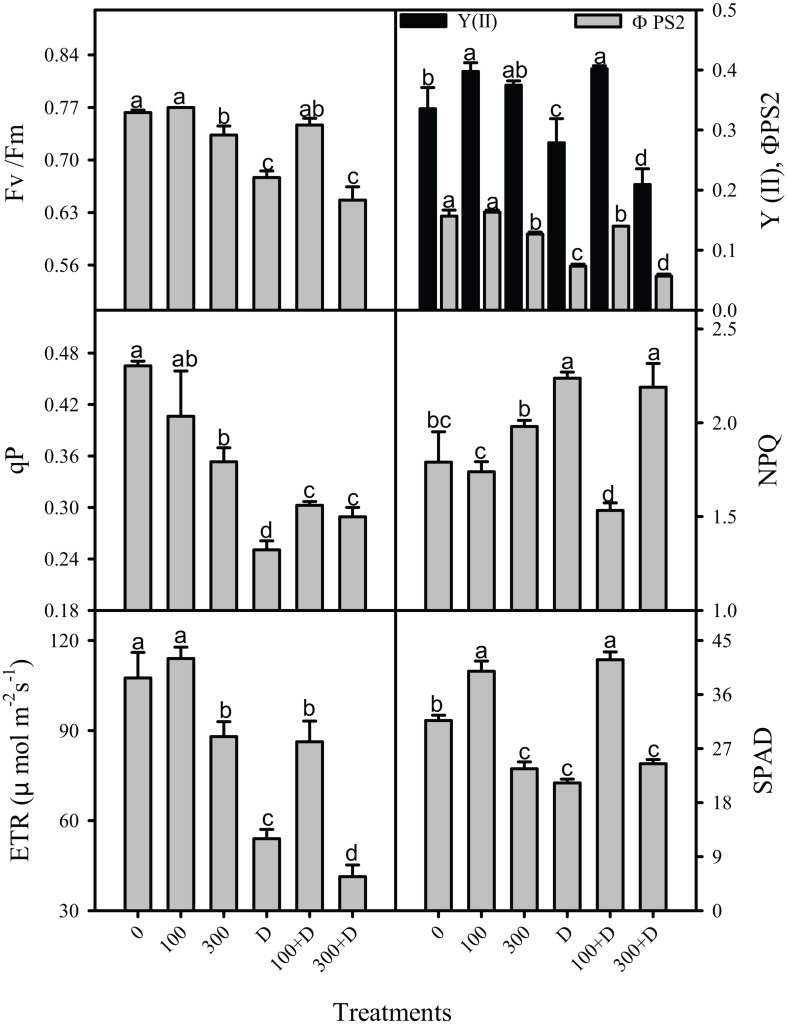
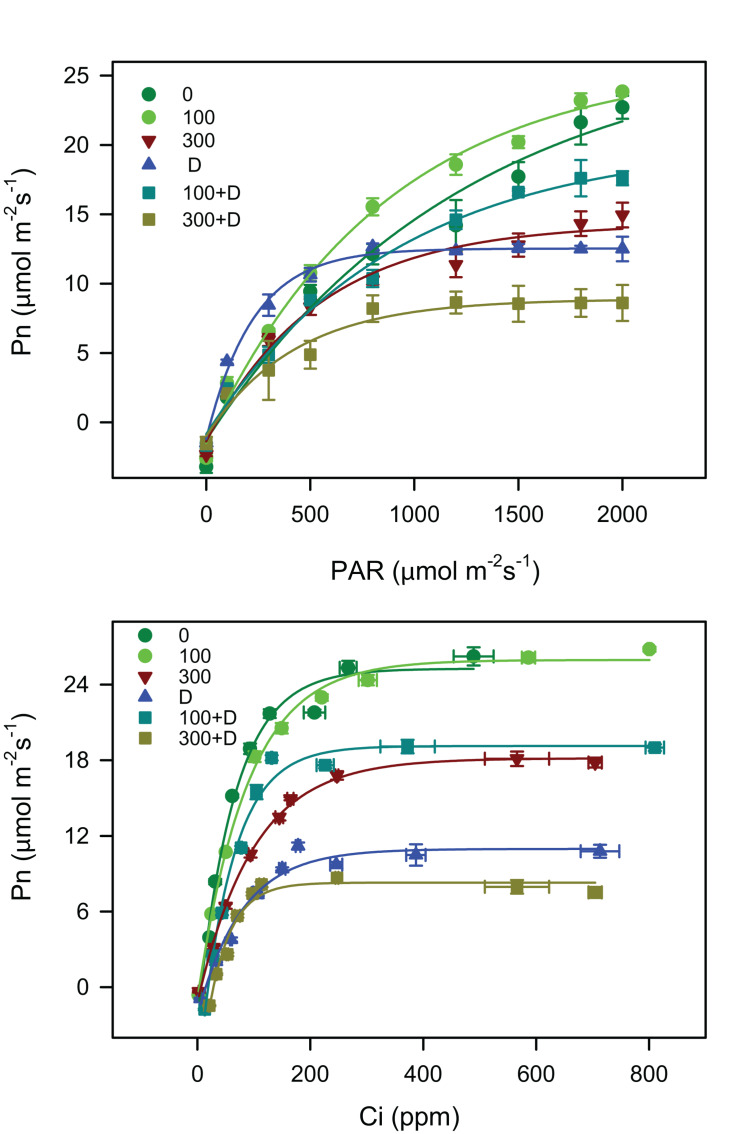
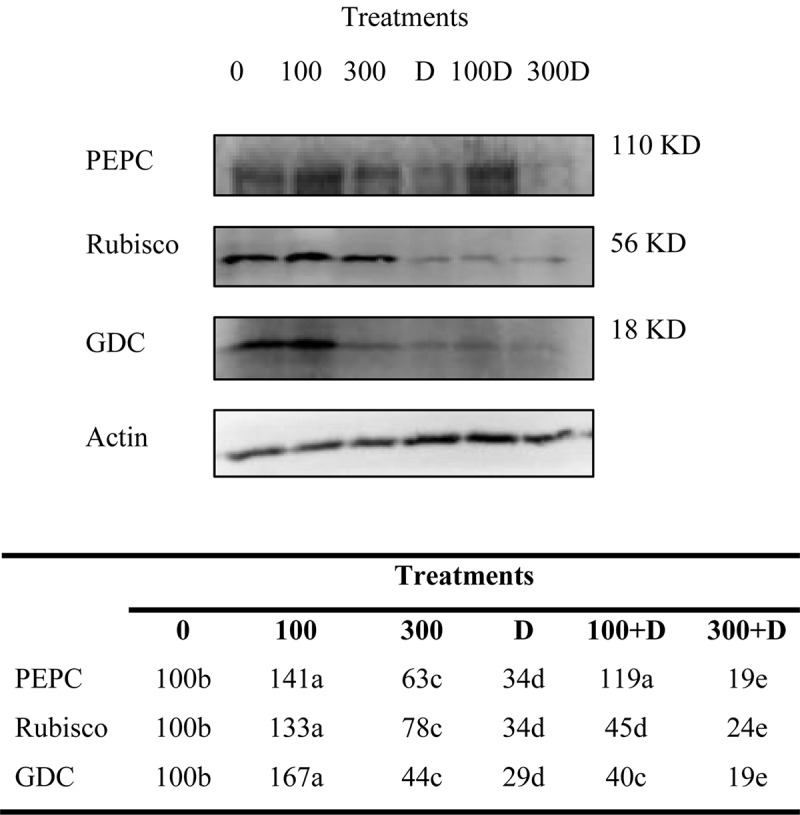
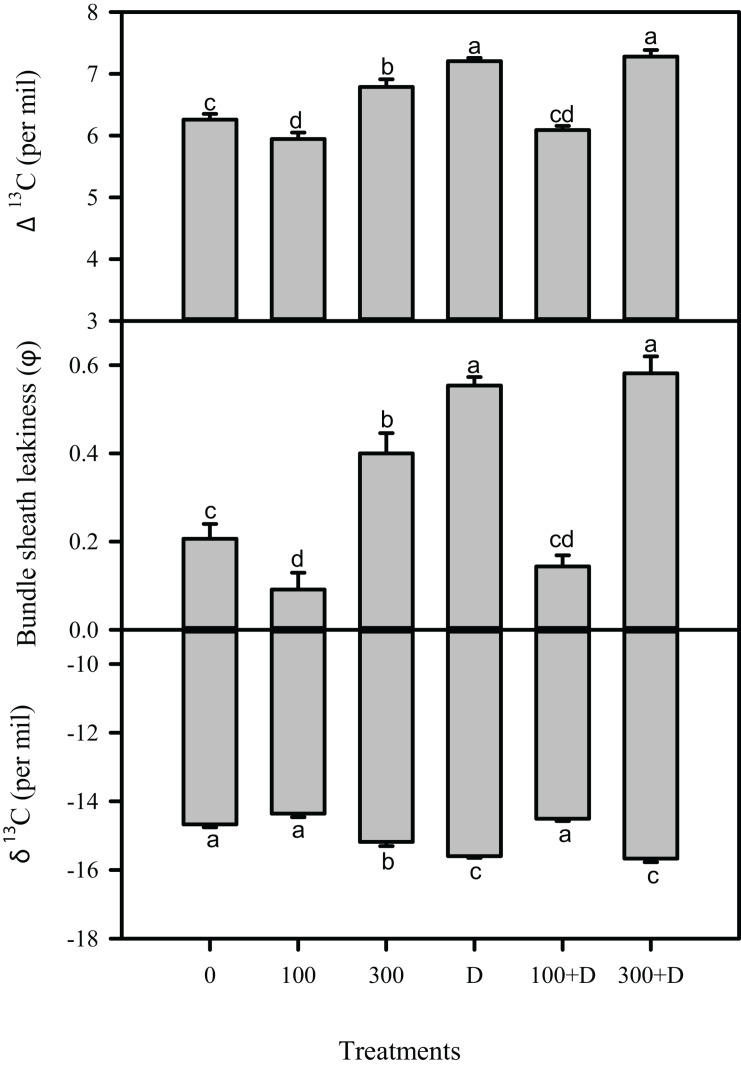
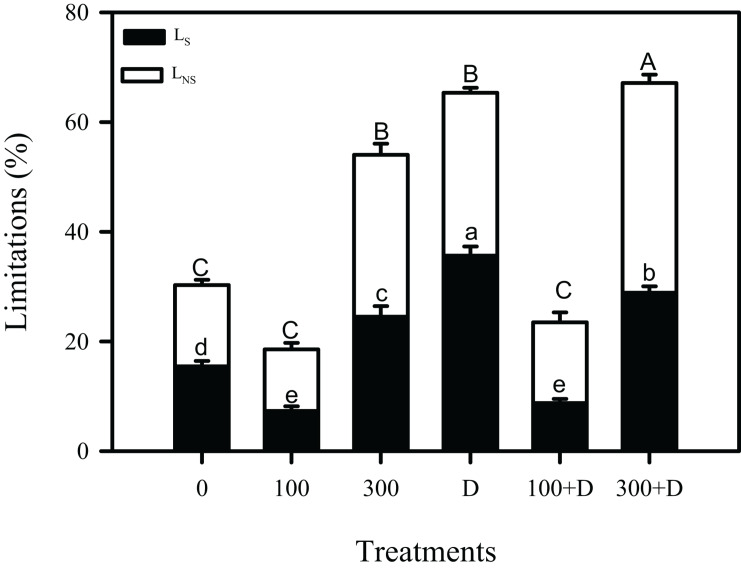
Salinity and drought are two often simultaneously occurring abiotic stresses that limit the production of food crops worldwide. This study aimed to distinguish between the separate and combined impacts of drought and salinity on the plant response. was cultivated in a greenhouse under the following growth conditions: control, 100 mM NaCl (100) and 300 mM NaCl (300) salinity, drought (D; 30% irrigation), and two combinations of salinity and drought (100 + D and 300 + D). The growth response was as follows: 0 ≈ 100 > 100 + D > > D ≈ 300 ≈ 300 + D. Growth correlated directly with photosynthesis. The net photosynthesis, stomatal conductance, intercellular CO, transpiration, ribulose 1,5-bisphosphate carboxylase (Rubisco), ribulose 1,5-bisphosphate (RuBP) regeneration, and triose phosphate utilization protein (e.g., phosphoenolpyruvate carboxylase) were highest in the control and declined most at 300 + D, while 100 + D performed significantly better as compared to drought. Maximum and actual photosystem II (PSII) efficiencies, along with photochemical quenching during light harvesting, resemble the plant growth and contemporary CO/HO gas exchange parameters in the given treatments. Plant improves water use efficiency under salt and drought treatments, which reflects the high water conservation ability of . Our findings indicate that the combination of low salinity with drought was able to minimize the deleterious effects of drought alone on growth, chlorophyll content, cell integrity, photosynthesis, leaf water potential, and water deficit. This synergetic effect demonstrates the positive role of Na and Cl in carbon assimilation and osmotic adjustment. In contrast, the combination of high salinity and drought enforced the negative response of plants in comparison to single stress, demonstrating the antagonistic impact of water availability and ion toxicity.
盐度和干旱是两种经常同时出现的非生物胁迫,它们限制了全球粮食作物的产量。本研究旨在区分干旱和盐度对植物反应的单独影响和综合影响。在温室中于以下生长条件下进行种植:对照、100 mM NaCl(100)和300 mM NaCl(300)盐度、干旱(D;30%灌溉量)以及盐度与干旱的两种组合(100 + D和300 + D)。生长反应如下:0≈100 > 100 + D > > D≈300≈300 + D。生长与光合作用直接相关。净光合作用、气孔导度、细胞间CO₂、蒸腾作用、1,5 - 二磷酸核酮糖羧化酶(Rubisco)、1,5 - 二磷酸核酮糖(RuBP)再生以及磷酸丙糖利用蛋白(如磷酸烯醇式丙酮酸羧化酶)在对照中最高,在300 + D时下降最多,而100 + D与干旱相比表现明显更好。最大和实际光系统II(PSII)效率以及光捕获期间的光化学猝灭类似于给定处理中的植物生长和当代CO₂/H₂O气体交换参数。植物在盐和干旱处理下提高了水分利用效率,这反映了[植物名称未给出]的高保水能力。我们的研究结果表明,低盐度与干旱的组合能够将干旱单独对生长、叶绿素含量、细胞完整性、光合作用、叶片水势和水分亏缺的有害影响降至最低。这种协同效应证明了Na⁺和Cl⁻在碳同化和渗透调节中的积极作用。相反,高盐度和干旱的组合与单一胁迫相比增强了植物的负面反应,表明了水分可利用性和离子毒性的拮抗影响。