
不同柄式非骨水泥髋关节置换术后骨重建的长期随访。
Long-term follow-up of bone remodelling after cementless hip arthroplasty using different stems.
机构信息
Orthopaedic Professorship of the University Hospital Jena, Orthopaedic Department Waldkliniken Eisenberg, Klosterlausnitzer Str. 81, 07607, Eisenberg, Germany.
University Hospital Jena, Department of Trauma-, Hand- and Reconstructive Surgery, Am Klinikum 1, 07747, Jena, Germany.
出版信息
Sci Rep. 2020 Jun 23;10(1):10143. doi: 10.1038/s41598-020-67189-x.
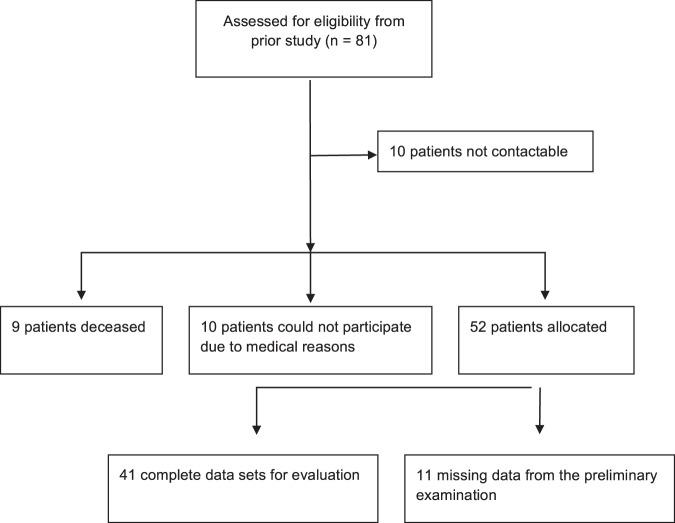
The present paper is concerned with the investigation of the phenomenon of long-term bone remodelling on cementless hip replacements. Changes in bone density in the periprosthetic region around the stem, measured by dual X-ray absorptiometry (DXA), were used as a measure of the osseous adaptation reaction. A postoperative follow-up of the use of four different types of prostheses of varying design after on average 13.3 (11.4-14.5) years. Specifically, the prostheses assessed in this study were the CLS/Spotorno stem with the Allofit cup by Zimmer, the Vision 2000 stem with the Duraloc cup by DePuy Synthes, the AlphaFit stem with the AlphaLock cup by Corin and the Mayo stem with the Trilogy cup by Zimmer. For the DXA measurement, the femur was divided into the zones suggested by Gruen et al. On the femur, there was a significant reduction in bone mineral density (BMD) in the proximal Region Of Interest (ROI) 1 (p = 0.003) and 7 (p < 0.001), whilst there was a significant increase in ROI 4 (p = 0.03). A greater degree of bone atrophy was seen in patients aged 60 years and older and in female patients. A remarkable finding when comparing the stems was a significantly greater reduction in BMD in ROI 6 (p = 0.003) in the case of the Vision 2000 stem and a markedly, but not statistically significantly smaller reduction in BMD in ROI 7 (p = 0.18) in the case of the short-stem Mayo-type prosthesis. The best clinical results were found with the use of the latter. The investigations provide a starting point for establishing a differential indication in the choice of prosthesis types, depending on age and sex, the use of short-stem prostheses, as well as the administration of bone-effective drugs for the prevention of stress shielding.
本文研究了非骨水泥髋关节置换术后长期骨重塑现象。通过双能 X 线吸收法(DXA)测量骨密度的变化来测量骨密度,以作为骨适应性反应的指标。对 4 种不同设计的假体在平均 13.3 年(11.4-14.5 年)后的术后随访。本研究评估的假体包括 Zimmer 的 CLS/Spotorno 柄与 Allofit 杯、DePuy Synthes 的 Vision 2000 柄与 Duraloc 杯、Corin 的 AlphaFit 柄与 AlphaLock 杯和 Zimmer 的 Mayo 柄与 Trilogy 杯。对于 DXA 测量,股骨被分为 Gruen 等人提出的区域。在股骨近端 ROI 1(p = 0.003)和 7(p < 0.001)区,骨矿物质密度(BMD)显著降低,而 ROI 4(p = 0.03)显著增加。在 60 岁及以上的患者和女性患者中,骨萎缩程度更大。一个显著的发现是,与其他类型的假体相比,Vision 2000 假体的 ROI 6(p = 0.003)的 BMD 显著降低,而 Mayo 短柄假体的 ROI 7(p = 0.18)的 BMD 则显著降低,但统计学上不显著。后者的临床效果最好。这些研究为根据年龄和性别选择假体类型、使用短柄假体以及为预防应力遮挡而使用骨效药物的差异性适应证提供了依据。



 Zotero 插件