Gastroenterology, Basil Hetzel Institute for Translational Health Research, Woodville South, South Australia, Australia
Surgery, The University of Adelaide - North Terrace Campus, Adelaide, South Australia, Australia.
BMJ Open Gastroenterol. 2020 Jun;7(1). doi: 10.1136/bmjgast-2020-000388.
Wnt-β-catenin signalling is essential for intestinal stem cells. Our aim was to investigate the relationship between intestinal stem cells and crypt fission which peaks during infancy.
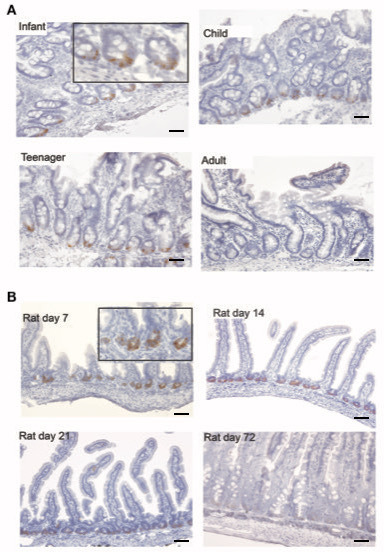
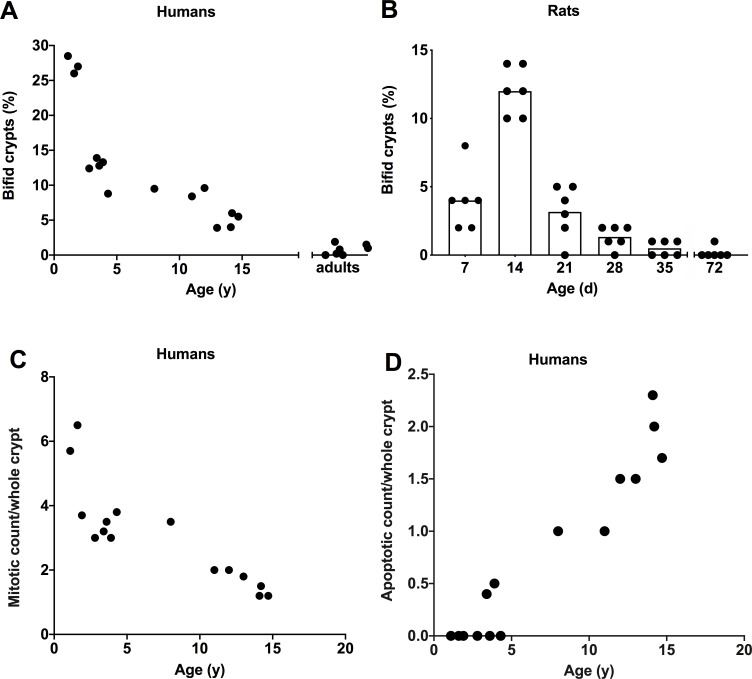
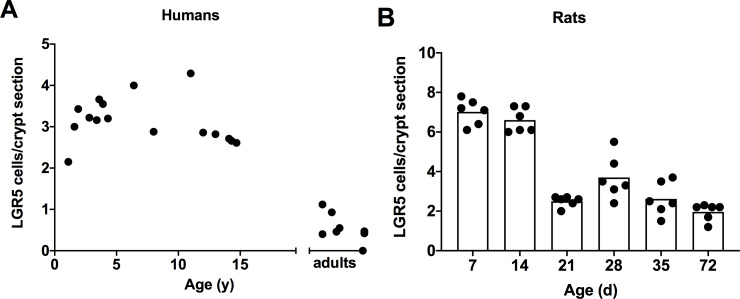
Duodenal biopsies were obtained during endoscopy to assess the severity of reflux oesophagitis of 15 infants, children and teenagers, which would not affect the duodenum. Samples of small intestine were also obtained from rats 7-72 days of life. Crypt fission was assessed using microdissection of 100 whole crypts and recording the percentage of bifid crypts. Intestinal LGR5+ stem cells were identified by in situ hybridisation. Rats were treated with Dickkopf to block Wnt-β-catenin signalling.
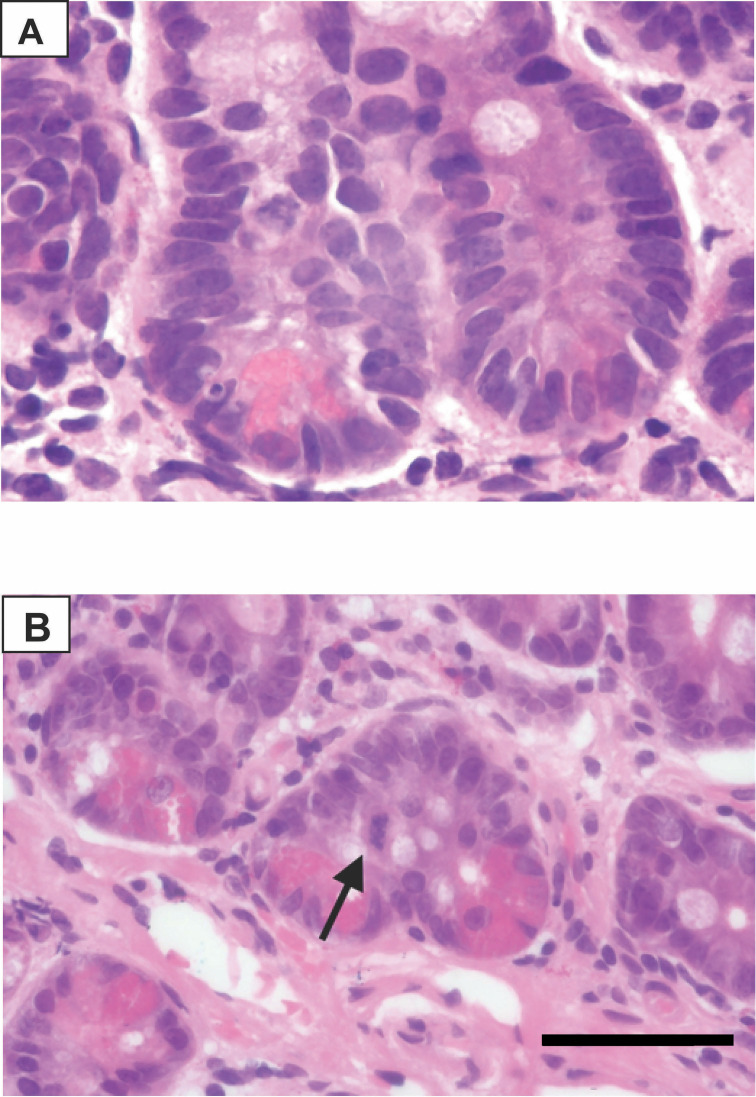
Crypt fission peaked during infancy before declining after 3-4 years in humans and after 21 days of life in rats. Occasional mitotic figures were seen in bifid crypts during early fission. Stem cells were elevated for a greater period during infancy and childhood in humans. Clustering of Paneth cells was present around the stem cells at the crypt base. Dickkopf reduced the number of stem cells and crypt fission to 45% and 29%, respectively, of control values, showing dependence of both crypt fission and Lgr5+ stem cells on Wnt signalling. However, Dickkopf did not decrease mitotic count per crypt, indicating a difference in signalling between stem cells and their progeny in the transit amplifying zone.
Crypt fission peaks during infancy and is dependent on intestinal stem cells. This is relatively hidden by 'a cloak of invisibility' due to the low proliferation of stem cells.
Wnt-β-连环蛋白信号通路对肠干细胞至关重要。本研究旨在探讨肠干细胞与隐窝裂变之间的关系,后者在婴儿期达到高峰。
通过内镜获取 15 名婴儿、儿童和青少年的十二指肠活检,以评估反流性食管炎的严重程度,这些患者的十二指肠不受影响。还从 7-72 日龄的大鼠获取小肠样本。通过对 100 个完整隐窝进行显微解剖,并记录双歧隐窝的百分比,评估隐窝裂变。通过原位杂交鉴定肠 LGR5+干细胞。用 Dickkopf 阻断 Wnt-β-连环蛋白信号通路来处理大鼠。
隐窝裂变在婴儿期达到高峰,然后在人类中 3-4 岁后下降,在大鼠中 21 天后下降。早期裂变时,双歧隐窝中偶尔可见有丝分裂图。在人类中,干细胞在婴儿期和儿童期的升高时间更长。潘氏细胞簇位于隐窝底部的干细胞周围。Dickkopf 将干细胞数量和隐窝裂变分别减少至对照值的 45%和 29%,表明隐窝裂变和 Lgr5+干细胞均依赖于 Wnt 信号。然而,Dickkopf 并没有减少每个隐窝的有丝分裂计数,这表明干细胞与其在过渡扩增区的后代之间的信号传导存在差异。
隐窝裂变在婴儿期达到高峰,并且依赖于肠干细胞。由于干细胞的增殖率较低,因此这种情况被“隐形斗篷”隐藏起来。