
恶性疟原虫 IMP 特异性核苷酸酶的结构与催化调节。
Structure and catalytic regulation of Plasmodium falciparum IMP specific nucleotidase.
机构信息
Molecular Microbiology and Structural Biochemistry, UMR5086 CNRS-University of Lyon, Lyon, 69007, France.
Division of Structural Biology, Henry Wellcome Building for Genomic Medicine, University of Oxford, Oxford, OX3 7BN, UK.
出版信息
Nat Commun. 2020 Jun 26;11(1):3228. doi: 10.1038/s41467-020-17013-x.
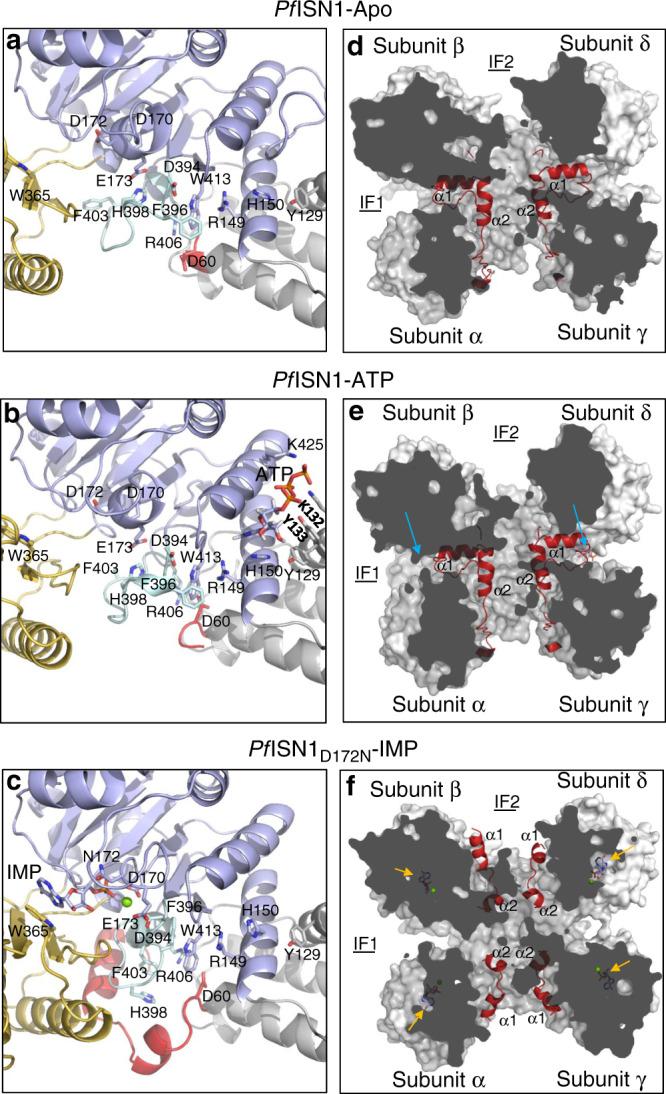
Plasmodium falciparum (Pf) relies solely on the salvage pathway for its purine nucleotide requirements, making this pathway indispensable to the parasite. Purine nucleotide levels are regulated by anabolic processes and by nucleotidases that hydrolyse these metabolites into nucleosides. Certain apicomplexan parasites, including Pf, have an IMP-specific-nucleotidase 1 (ISN1). Here we show, by comprehensive substrate screening, that PfISN1 catalyzes the dephosphorylation of inosine monophosphate (IMP) and is allosterically activated by ATP. Crystal structures of tetrameric PfISN1 reveal complex rearrangements of domain organization tightly associated with catalysis. Immunofluorescence microscopy and expression of GFP-fused protein indicate cytosolic localization of PfISN1 and expression in asexual and gametocyte stages of the parasite. With earlier evidence on isn1 upregulation in female gametocytes, the structures reported in this study may contribute to initiate the design for possible transmission-blocking agents.
疟原虫(Pf)完全依赖补救途径来满足其嘌呤核苷酸需求,这使得该途径对寄生虫来说不可或缺。嘌呤核苷酸水平受到合成代谢过程和将这些代谢物水解成核苷的核苷酸酶的调节。包括 Pf 在内的某些顶复门寄生虫具有 IMP 特异性核苷酸酶 1(ISN1)。在这里,我们通过全面的底物筛选表明,PfISN1 催化肌苷单磷酸 (IMP) 的去磷酸化,并且被 ATP 别构激活。四聚体 PfISN1 的晶体结构揭示了与催化紧密相关的结构域组织的复杂重排。免疫荧光显微镜和 GFP 融合蛋白的表达表明 PfISN1 的细胞质定位以及寄生虫无性体和配子体阶段的表达。由于之前有证据表明 isn1 在雌性配子体中上调,本研究中报道的结构可能有助于设计可能的传播阻断剂。


 Zotero 插件