Critical Path Institute, Tucson, Arizona, USA.
Clin Transl Sci. 2021 Jan;14(1):214-221. doi: 10.1111/cts.12845. Epub 2020 Aug 25.
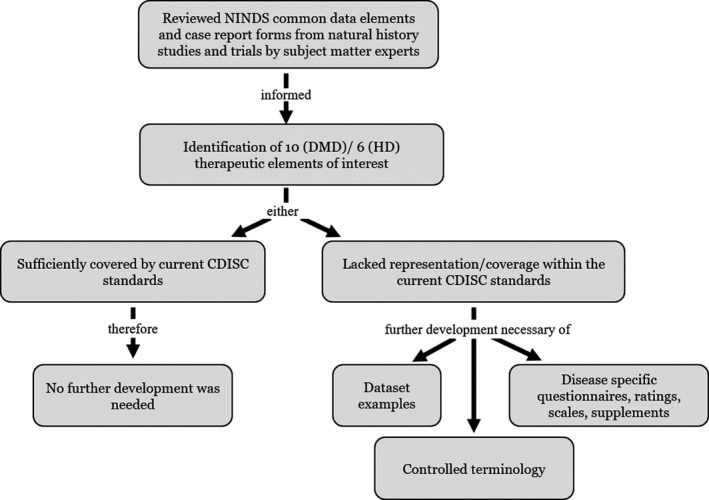
Interest in drug development for rare diseases has expanded dramatically since the Orphan Drug Act was passed in 1983, with 40% of new drug approvals in 2019 targeting orphan indications. However, limited quantitative understanding of natural history and disease progression hinders progress and increases the risks associated with rare disease drug development. Use of international data standards can assist in data harmonization and enable data exchange, integration into larger datasets, and a quantitative understanding of disease natural history. The US Food and Drug Administration (FDA) requires the use of Clinical Data Interchange Consortium (CDISC) Standards in new drug submissions to help the agency efficiently and effectively receive, process, review, and archive submissions, as well as to help integrate data to answer research questions. Such databases have been at the core of biomarker qualification efforts and fit-for-purpose models endorsed by the regulators. We describe the development of CDISC therapeutic area user guides for Duchenne muscular dystrophy and Huntington's disease through Critical Path Institute consortia. These guides describe formalized data structures and controlled terminology to map and integrate data from different sources. This will result in increased standardization of data collection and allow integration and comparison of data from multiple studies. Integration of multiple data sets enables a quantitative understanding of disease progression, which can help overcome common challenges in clinical trial design in these and other rare diseases. Ultimately, clinical data standardization will lead to a faster path to regulatory approval of urgently needed new therapies for patients.
自 1983 年《孤儿药法案》通过以来,人们对罕见病药物开发的兴趣大幅增加,2019 年 40%的新药批准针对孤儿适应症。然而,对自然史和疾病进展的定量理解有限,阻碍了进展,并增加了罕见病药物开发的风险。使用国际数据标准可以协助数据协调,并实现数据交换、纳入更大的数据集,以及对疾病自然史进行定量理解。美国食品和药物管理局(FDA)要求在新药申报中使用临床数据交换联盟(CDISC)标准,以帮助该机构高效、有效地接收、处理、审查和存档申报,并帮助整合数据以回答研究问题。此类数据库一直是生物标志物资格认定工作和监管机构认可的适用模型的核心。我们通过关键路径研究所(Criti-calPath Institute)联盟,描述了制定针对杜氏肌营养不良症和亨廷顿舞蹈病的 CDISC 治疗领域用户指南的过程。这些指南描述了正式的数据结构和受控术语,以映射和整合来自不同来源的数据。这将导致数据收集的标准化程度提高,并允许来自多个研究的数据的整合和比较。多个数据集的整合可以帮助我们对疾病进展进行定量理解,这有助于克服这些疾病和其他罕见病临床试验设计中的常见挑战。最终,临床数据标准化将为患者急需的新疗法更快地获得监管批准铺平道路。