Oeing Christian U, Mishra Sumita, Dunkerly-Eyring Brittany L, Ranek Mark J
Division of Cardiology, Department of Medicine, The Johns Hopkins Medical Institutions, Baltimore, MD, United States.
Department of Cardiology, Charité - University Medicine Berlin, Campus Virchow Klinikum (CVK), Berlin, Germany.
Front Physiol. 2020 Jul 28;11:858. doi: 10.3389/fphys.2020.00858. eCollection 2020.
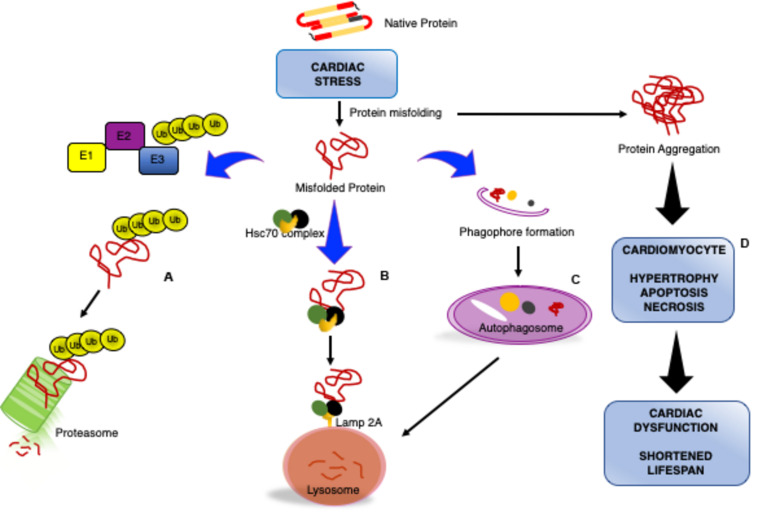
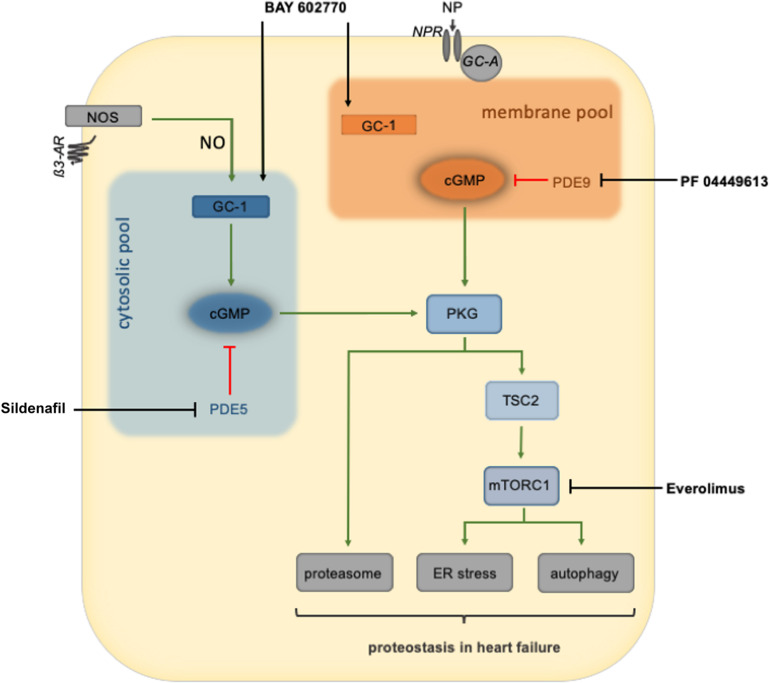
Impaired or insufficient protein kinase G (PKG) signaling and protein quality control (PQC) are hallmarks of most forms of cardiac disease, including heart failure. Their dysregulation has been shown to contribute to and exacerbate cardiac hypertrophy and remodeling, reduced cell survival and disease pathogenesis. Enhancement of PKG signaling and PQC are associated with improved cardiac function and survival in many pre-clinical models of heart disease. While many clinically used pharmacological approaches exist to stimulate PKG, there are no FDA-approved therapies to safely enhance cardiomyocyte PQC. The latter is predominantly due to our lack of knowledge and identification of proteins regulating cardiomyocyte PQC. Recently, multiple studies have demonstrated that PKG regulates PQC in the heart, both during physiological and pathological states. These studies tested already FDA-approved pharmacological therapies to activate PKG, which enhanced cardiomyocyte PQC and alleviated cardiac disease. This review examines the roles of PKG and PQC during disease pathogenesis and summarizes the experimental and clinical data supporting the utility of stimulating PKG to target cardiac proteotoxicity.
蛋白激酶G(PKG)信号传导受损或不足以及蛋白质质量控制(PQC)是包括心力衰竭在内的大多数形式心脏病的标志。它们的失调已被证明会导致并加剧心脏肥大和重塑、降低细胞存活率以及引发疾病。在许多心脏病临床前模型中,增强PKG信号传导和PQC与改善心脏功能和存活率相关。虽然存在许多临床上用于刺激PKG的药理学方法,但尚无FDA批准的疗法可安全增强心肌细胞的PQC。后者主要是由于我们缺乏对调节心肌细胞PQC的蛋白质的了解和识别。最近,多项研究表明,PKG在生理和病理状态下均调节心脏中的PQC。这些研究测试了已获FDA批准的激活PKG的药理学疗法,这些疗法增强了心肌细胞的PQC并减轻了心脏病。本综述探讨了PKG和PQC在疾病发病机制中的作用,并总结了支持刺激PKG以靶向心脏蛋白毒性效用的实验和临床数据。