Bitzer Michael, Ostermann Leonie, Horger Marius, Biskup Saskia, Schulze Martin, Ruhm Kristina, Hilke Franz, Öner Öznur, Nikolaou Konstantin, Schroeder Christopher, Riess Olaf, Fend Falko, Zips Daniel, Hinterleitner Martina, Zender Lars, Tabatabai Ghazaleh, Beha Janina, Malek Nisar P
Department of Internal Medicine I, Eberhard-Karls University, Tuebingen, Germany.
Cluster of Excellence, Image Guided and Functionally Instructed Tumor Therapies, Eberhard-Karls University, Tuebingen, Germany.
JCO Precis Oncol. 2020 Mar 30;4. doi: 10.1200/PO.19.00359. eCollection 2020.
Precision oncology connects highly complex diagnostic procedures with patient histories to identify individualized treatment options in interdisciplinary molecular tumor boards (MTBs). Detailed data on MTB-guided treatments and outcome with a focus on advanced GI cancers have not been reported yet.
Next-generation sequencing of tumor and normal tissue pairs was performed between April 2016 and February 2018. After identification of relevant molecular alterations, available clinical studies or in-label, off-label, or matched experimental treatment options were recommended. Follow-up data and a response assessment that was based on radiologic imaging were recorded.
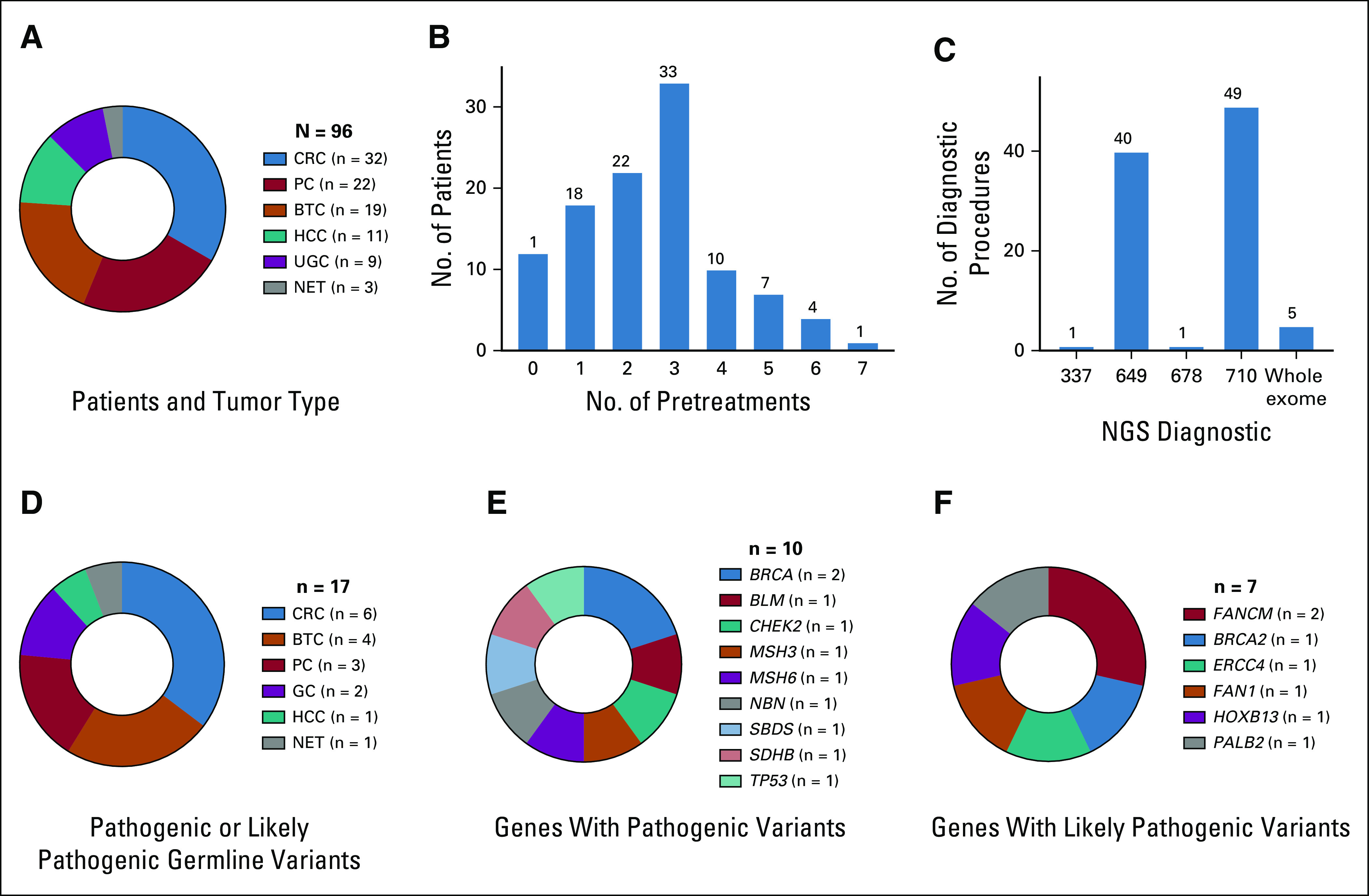
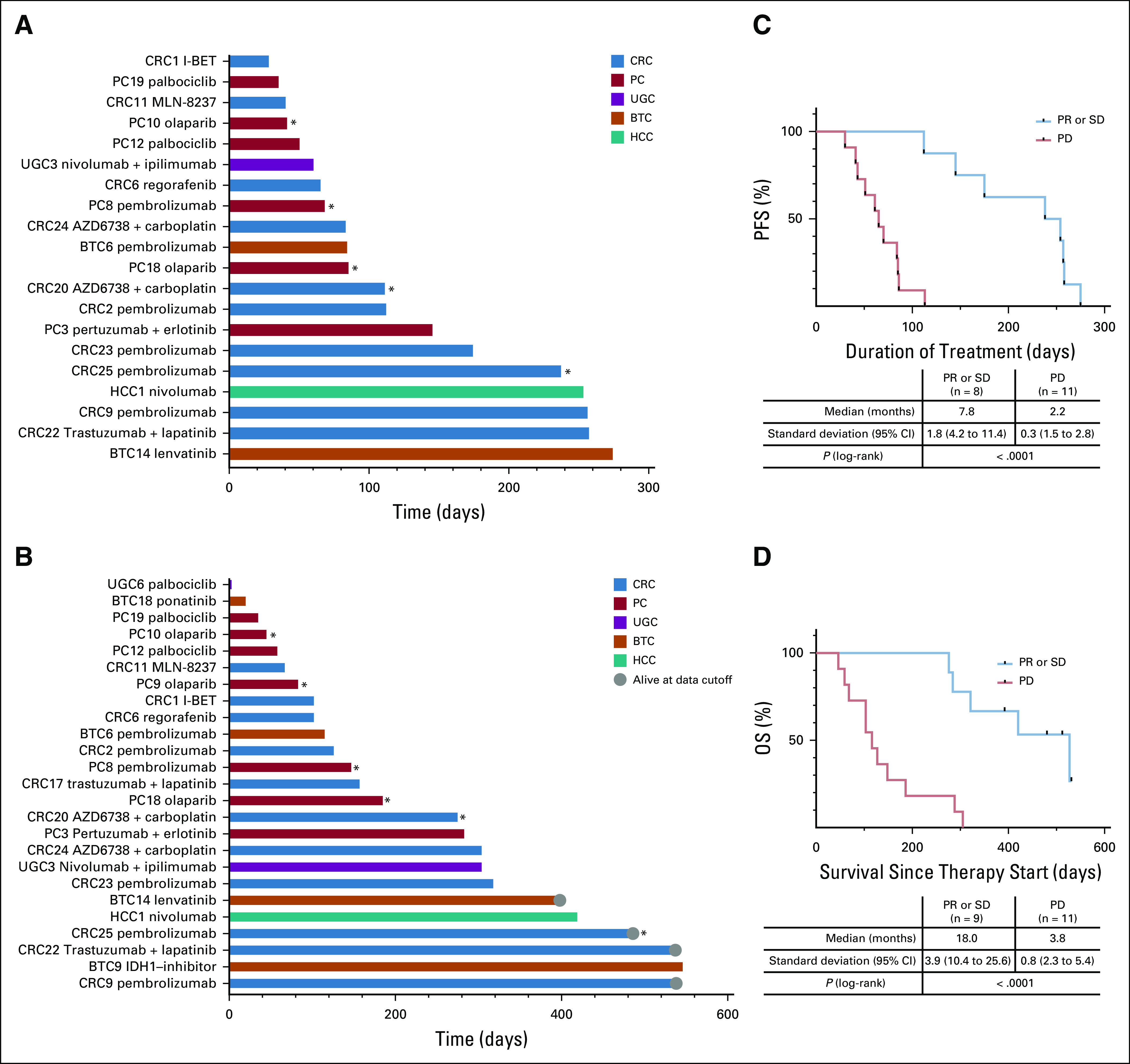
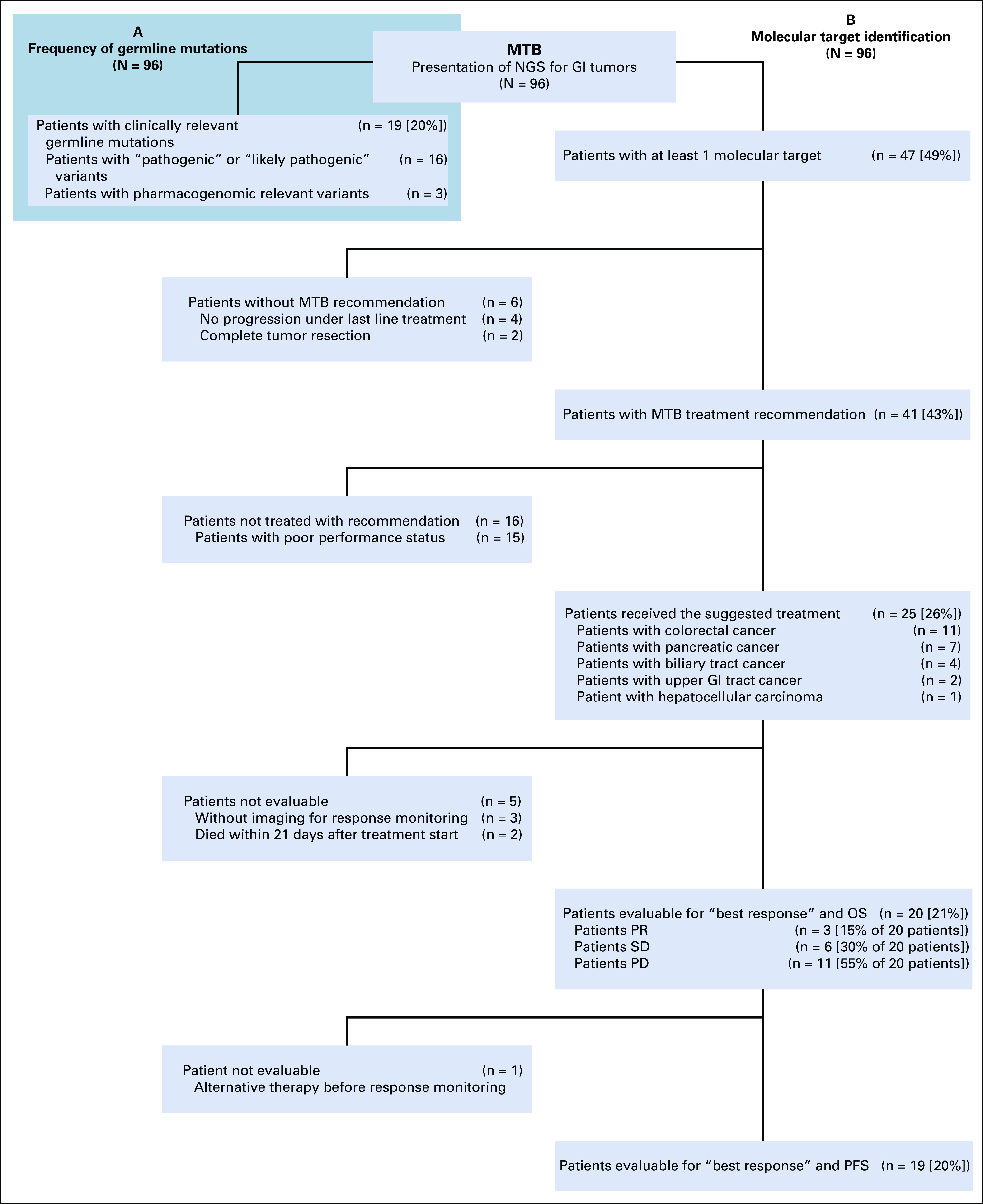
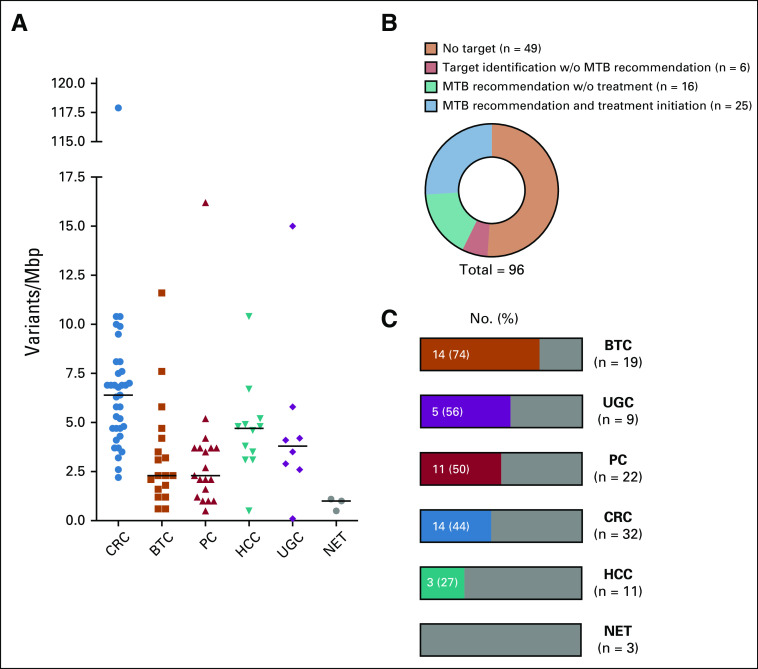
Ninety-six patients were presented to the MTB of Tuebingen University Hospital. Sixteen (17%) showed "pathogenic" or "likely pathogenic" germline variants. Recommendations on the basis of molecular alterations or tumor mutational burden were given for 41 patients (43%). Twenty-five received the suggested drug, and 20 were evaluable for best response assessment. Three patients (15%) reached a partial response (PR), and 6 (30%), stable disease (SD), whereas 11 (55%) had tumor progression (progressive disease). Median progression-free survival (PFS) for all treated and evaluable patients was 2.8 months (range, 1.0-9.0 months), and median overall survival (OS) of all treated patients was 5.2 months (range, 0.1 months to not reached). Patients with SD for ≥ 3 months or PR compared with progressive disease showed both a statistically significant longer median PFS (7.8 months [95% CI, 4.2 to 11.4 months] 2.2 months [95% CI, 1.5 to 2.8 months], < .0001) and median OS (18.0 months [95% CI, 10.4 to 25.6 months] 3.8 months [95% CI, 2.3 to 5.4 months], < .0001).
Next-generation sequencing diagnostics of advanced GI cancers identified a substantial number of pathogenic or likely pathogenic germline variants and unique individual treatment options. Patients with PR or SD in the course of MTB-recommended treatments seemed to benefit with respect to PFS and OS.
精准肿瘤学将高度复杂的诊断程序与患者病史相结合,以在跨学科分子肿瘤委员会(MTB)中确定个体化的治疗方案。关于MTB指导下的治疗以及以晚期胃肠道癌症为重点的治疗结果的详细数据尚未见报道。
在2016年4月至2018年2月期间对肿瘤组织和正常组织配对样本进行了二代测序。在确定相关分子改变后,推荐可用的临床研究或标签内、标签外或匹配的实验性治疗方案。记录随访数据以及基于放射影像学的疗效评估。
96例患者被提交至图宾根大学医院的MTB。16例(17%)显示“致病性”或“可能致病性”胚系变异。基于分子改变或肿瘤突变负荷对41例患者(43%)给出了建议。25例接受了建议的药物治疗,20例可进行最佳疗效评估。3例患者(15%)达到部分缓解(PR),6例(30%)病情稳定(SD),而11例(55%)出现肿瘤进展(疾病进展)。所有接受治疗且可评估的患者的中位无进展生存期(PFS)为2.8个月(范围1.0 - 9.0个月),所有接受治疗患者的中位总生存期(OS)为5.2个月(范围0.1个月至未达到)。与疾病进展相比,病情稳定≥3个月或部分缓解的患者的中位PFS(7.8个月[95%CI,4.2至11.4个月]对2.2个月[95%CI,1.5至2.8个月],P <.0001)和中位OS(18.0个月[95%CI,10.4至25.6个月]对3.8个月[95%CI,2.3至5.4个月],P <.0001)均具有统计学显著差异。
晚期胃肠道癌症的二代测序诊断发现了大量致病性或可能致病性胚系变异以及独特的个体化治疗方案。在MTB推荐治疗过程中达到部分缓解或病情稳定水平的患者似乎在PFS和OS方面有所获益。