Department of Chemical and Biological Engineering, University of Colorado Boulder, Boulder, CO 80303, USA.
Department of Tropical Medicine, Medical Microbiology & Pharmacology, John A. Burns School of Medicine, University of Hawai'i at Manoa, Honolulu, HI 96813, USA.
J Pharm Sci. 2020 Dec;109(12):3716-3727. doi: 10.1016/j.xphs.2020.09.011. Epub 2020 Sep 12.
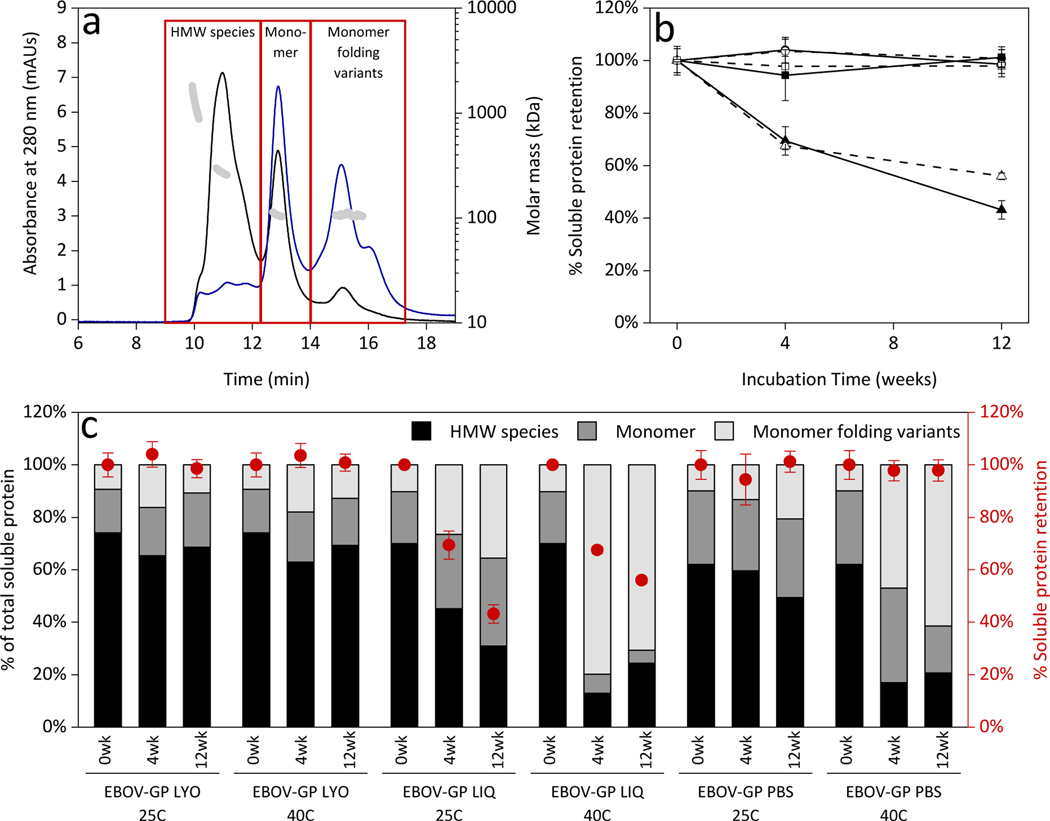
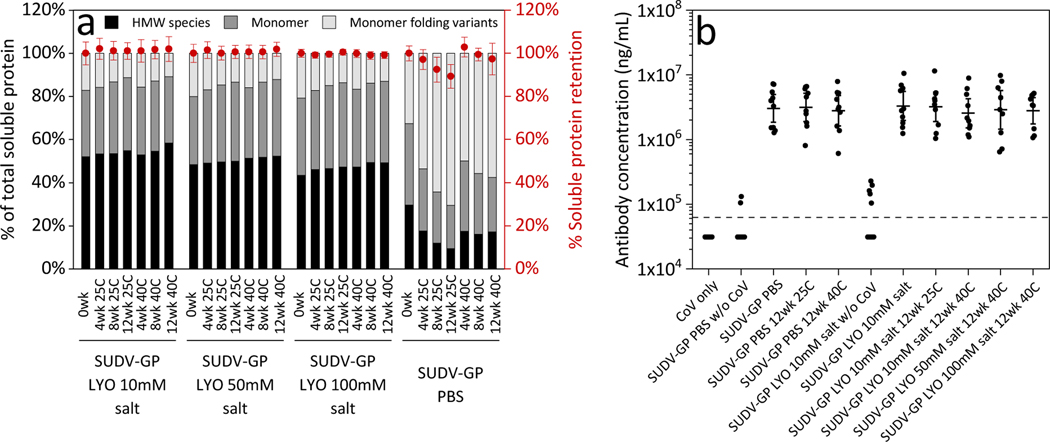
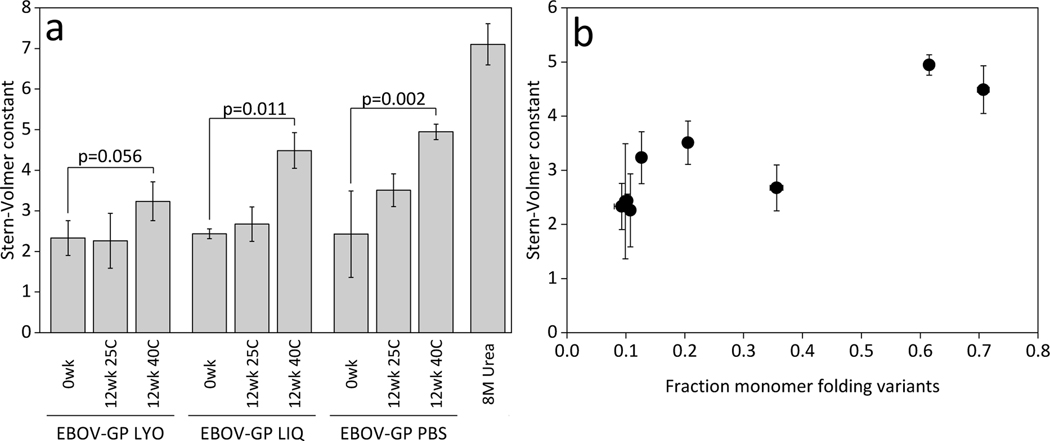
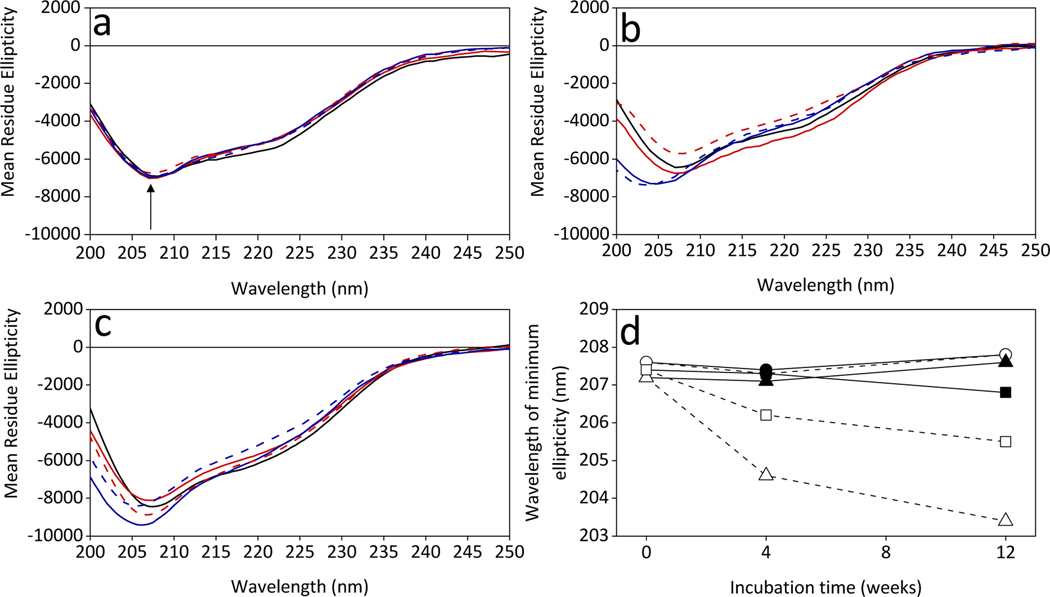
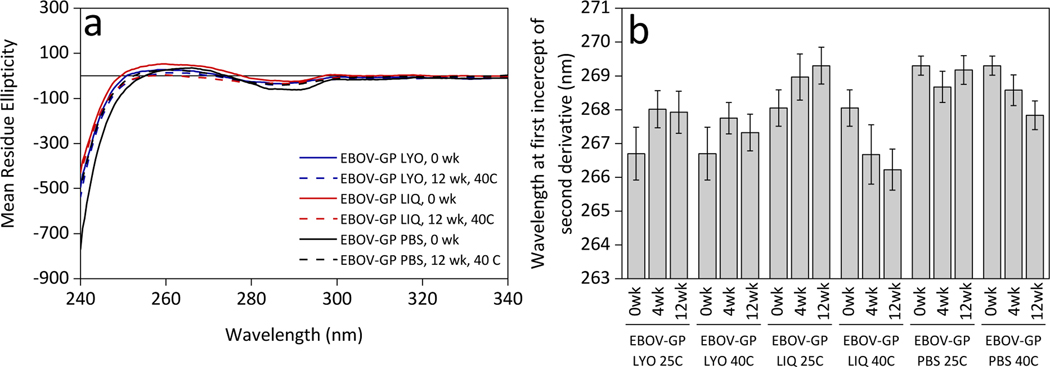
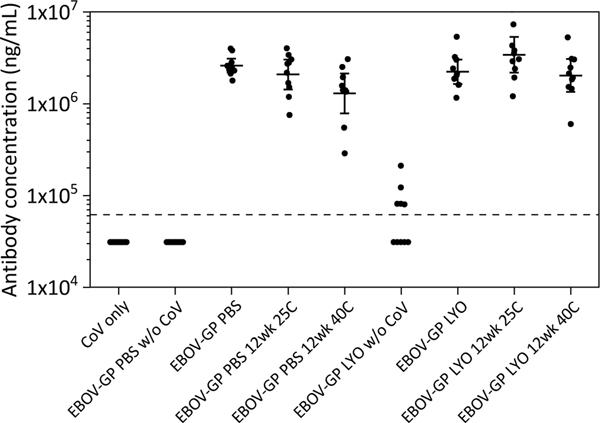
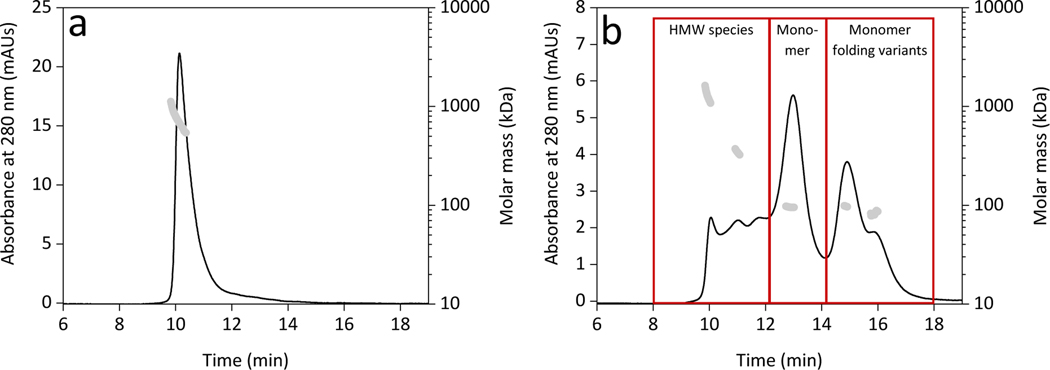
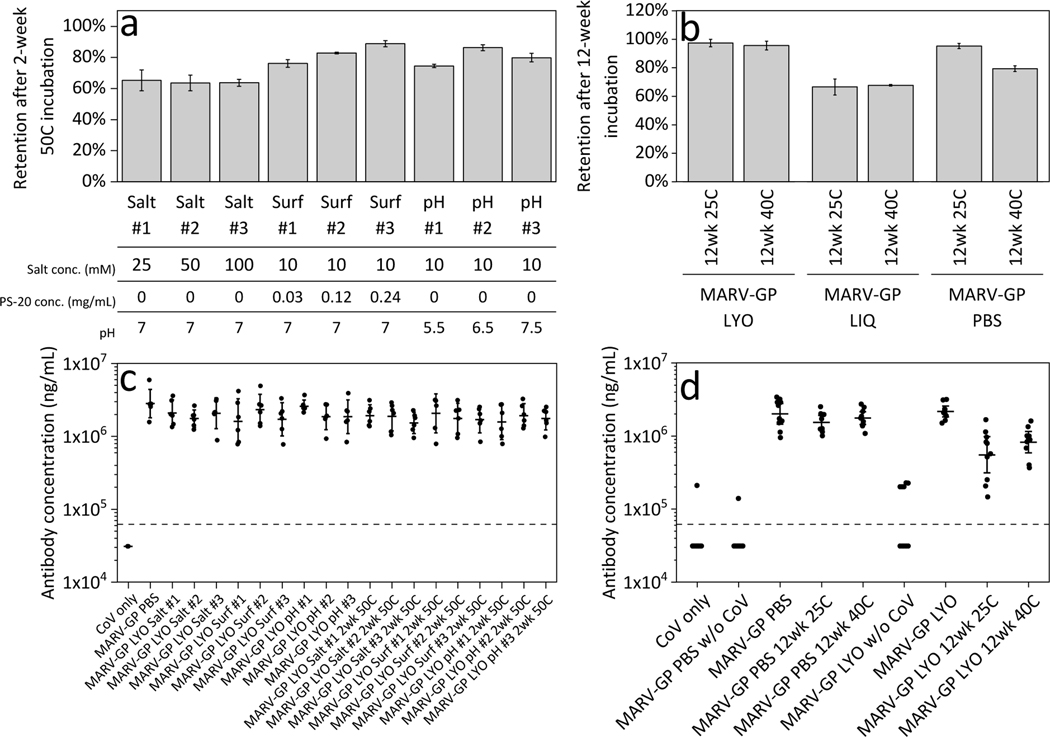
The filoviruses Zaire ebolavirus (EBOV), Marburg marburgvirus (MARV), and Sudan ebolavirus (SUDV) are some of the most lethal infectious agents known. To date, the Zaire ebolavirus vaccine (ERVEBO®) is the only United States Food and Drug Administration (FDA) approved vaccine available for any species of filovirus. However, the ERVEBO® vaccine requires cold-chain storage not to exceed -60 °C. Such cold-chain requirements are difficult to maintain in low- and middle-income countries where filovirus outbreaks originate. To improve the thermostability of filovirus vaccines in order to potentially relax or eliminate these cold-chain requirements, monovalent subunit vaccines consisting of glycoproteins from EBOV, MARV, and SUDV were stabilized within amorphous disaccharide glasses through lyophilization. Lyophilized formulations and liquid controls were incubated for up to 12 weeks at 50 °C to accelerate degradation. To identify a stability-indicating assay appropriate for monitoring protein degradation and immunogenicity loss during these accelerated stability studies, filovirus glycoprotein secondary, tertiary, and quaternary structures and vaccine immunogenicity were measured. Size-exclusion chromatography was the most sensitive indicator of glycoprotein stability in the various formulations for all three filovirus immunogens. Degradation of the test vaccines during accelerated stability studies was reflected in changes in quaternary structure, which were discernible with size-exclusion chromatography. Filovirus glycoproteins in glassy lyophilized formulations retained secondary, tertiary, and quaternary protein structure over the incubation period, whereas the proteins within liquid controls both aggregated to form higher molecular weight species and dissociated from their native quaternary structure to form a variety of structurally-perturbed lower molecular weight species.
丝状病毒中的扎伊尔埃博拉病毒(EBOV)、马尔堡马尔堡病毒(MARV)和苏丹埃博拉病毒(SUDV)是已知最致命的传染性病原体之一。迄今为止,唯一获得美国食品和药物管理局(FDA)批准的丝状病毒疫苗是针对任何丝状病毒物种的埃博拉疫苗(ERVEBO®)。然而,ERVEBO®疫苗需要冷藏储存,不得超过-60°C。在低中等收入国家,这些冷藏要求很难维持,而丝状病毒爆发正是源自这些国家。为了提高丝状病毒疫苗的热稳定性,从而有可能放宽或消除这些冷藏要求,通过冷冻干燥将由 EBOV、MARV 和 SUDV 的糖蛋白组成的单价亚单位疫苗稳定在无定形二糖玻璃中。冷冻干燥制剂和液体对照物在 50°C 下孵育长达 12 周,以加速降解。为了确定一种适合监测这些加速稳定性研究中蛋白质降解和免疫原性丧失的稳定性指示测定法,测量了丝状病毒糖蛋白的二级、三级和四级结构以及疫苗的免疫原性。对于所有三种丝状病毒免疫原,在各种制剂中,尺寸排阻色谱法是糖蛋白稳定性最敏感的指标。在加速稳定性研究中,测试疫苗的降解反映在四级结构的变化中,这些变化可以通过尺寸排阻色谱法识别。在玻璃状冷冻干燥制剂中的丝状病毒糖蛋白在孵育期间保留了二级、三级和四级蛋白质结构,而液体对照物中的蛋白质则聚集形成更高分子量的物质,并从其天然四级结构解离形成各种结构受到干扰的低分子量物质。