
新型冠状病毒肺炎重症患者临床特征及死亡危险因素的性别差异:一项回顾性研究
Sex differences in clinical characteristics and risk factors for mortality among severe patients with COVID-19: a retrospective study.
作者信息
Su Wating, Qiu Zhen, Zhou Lu, Hou Jiabao, Wang Yafeng, Huang Fengnan, Zhang Yi, Jia Yifan, Zhou Jun, Liu Danyong, Xia Zhengyuan, Xia Zhong-Yuan, Lei Shaoqing
机构信息
Department of Anesthesiology, Renmin Hospital of Wuhan University, Wuhan, China.
Department of Pain Medicine, Renmin Hospital of Wuhan University, Wuhan, China.
出版信息
Aging (Albany NY). 2020 Oct 13;12(19):18833-18843. doi: 10.18632/aging.103793.
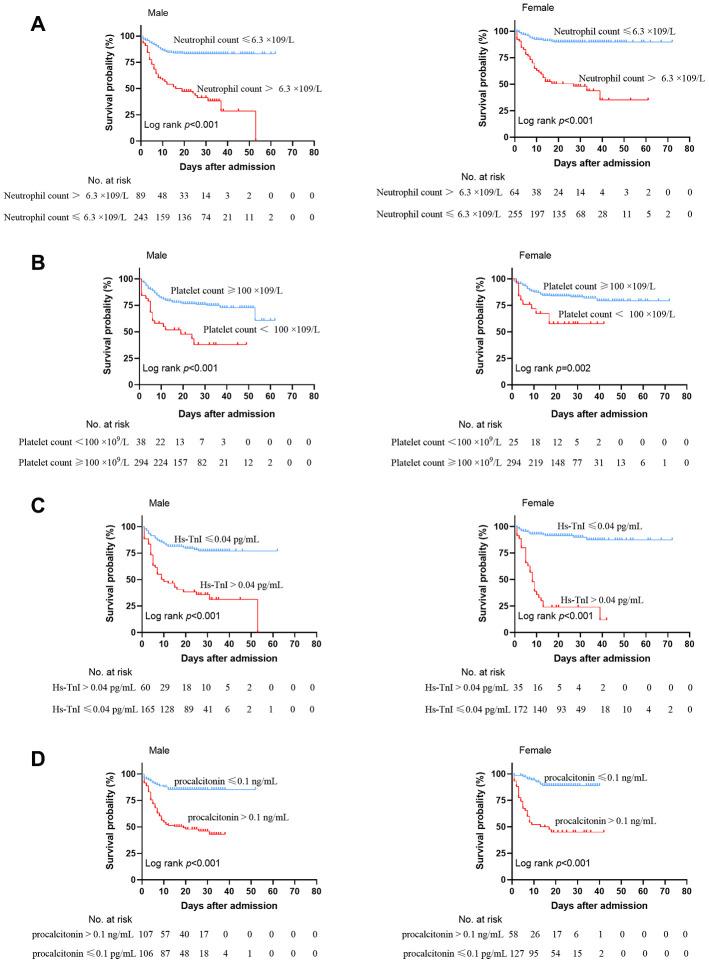
The coronavirus disease 2019 (COVID-19) became a global pandemic. Males, compared to females, seem to be more susceptible to COVID-19, but related evidence is scarce, especially in severe patients. We explored sex differences in clinical characteristics and potential risk factors for mortality in severe COVID-19 patients. In this retrospective cohort study, we included all severe COVID-19 patients admitted to Eastern Renmin Hospital of Wuhan University, Wuhan, China, with a definitive clinical outcome as of Apr 10, 2020. Of the included 651 patients, 332 were male, and 319 were female. Males and females did not differ in age and underlying comorbidities. Males were more likely than females to report fever and develop serious complications, including acute respiratory distress syndrome, secondary infection, acute cardiac injury, coagulopathy, acute kidney injury and arrhythmia. Further, males had much higher mortality relative to females. Multivariable regression showed neutrophilia (odds ratio 6.845, 95% CI 1.227-38.192, =0.028), thrombocytopenia (19.488, 3.030-25.335, =0.002), hypersensitive troponin I greater than 0.04 pg/mL (6.058, 1.545-23.755, =0.010), and procalcitonin greater than 0.1 ng/mL (6.350, 1.396-28.882, =0.017) on admission were associated with in-hospital death. With either of these risk factors, the cumulative survival rate was relatively lower in males than in females. In conclusion, males are more likely than females to develop serious complications and progress to death. The potential risk factors of neutrophilia, thrombocytopenia, hypersensitive troponin I greater than 0.04 pg/mL and procalcitonin more than 0.1 ng/mL may help clinicians to identify patients with poor outcomes at an early stage, especially in males.
2019冠状病毒病(COVID-19)已成为全球大流行疾病。与女性相比,男性似乎更容易感染COVID-19,但相关证据稀少,尤其是在重症患者中。我们探讨了重症COVID-19患者的临床特征性别差异及死亡的潜在危险因素。在这项回顾性队列研究中,我们纳入了武汉大学人民医院东院收治的所有重症COVID-19患者,截至2020年4月10日有明确的临床结局。纳入的651例患者中,332例为男性,319例为女性。男性和女性在年龄及基础合并症方面无差异。男性比女性更易出现发热及发生严重并发症,包括急性呼吸窘迫综合征、继发感染、急性心脏损伤、凝血功能障碍、急性肾损伤及心律失常。此外,男性的死亡率远高于女性。多变量回归显示,入院时中性粒细胞增多(比值比6.845,95%置信区间1.227 - 38.192,P = 0.028)、血小板减少(19.488,3.030 - 25.335,P = 0.002)、超敏肌钙蛋白I大于0.04 pg/mL(6.058,1.545 - 23.755,P = 0.010)及降钙素原大于0.1 ng/mL(6.350,1.396 - 28.882,P = 0.017)与院内死亡相关。存在这些危险因素之一时,男性的累积生存率相对低于女性。总之,男性比女性更易发生严重并发症并进展至死亡。中性粒细胞增多、血小板减少、超敏肌钙蛋白I大于0.04 pg/mL及降钙素原大于0.1 ng/mL这些潜在危险因素可能有助于临床医生早期识别预后不良的患者,尤其是男性患者。
 Zotero 插件