Osteopathy, School of Health and Biomedical Sciences, RMIT University, Bundoora, VIC, 3083, Australia.
Chiropractic, School of Health and Biomedical Sciences, RMIT University, Bundoora, VIC, 3083, Australia.
Chiropr Man Therap. 2020 Oct 19;28(1):53. doi: 10.1186/s12998-020-00344-3.
The hip abductor muscle group stabilises the pelvis during gait to prevent excessive pelvic drop. Hip abductor weakness has been linked to musculoskeletal conditions such as chronic low-back pain. As such, it is important that practitioners can correctly diagnose hip abductor weakness in a clinical setting. Although the Trendelenburg test is commonly used by practitioners, the validity of this test to assess hip abductor weakness in the absence of musculoskeletal injury remains questionable. The aim of this study was to determine the validity of the Trendelenburg test, as observed by a practitioner, to assess frontal plane pelvic motion and hip abductor strength in a population without intra-articular hip disorders.
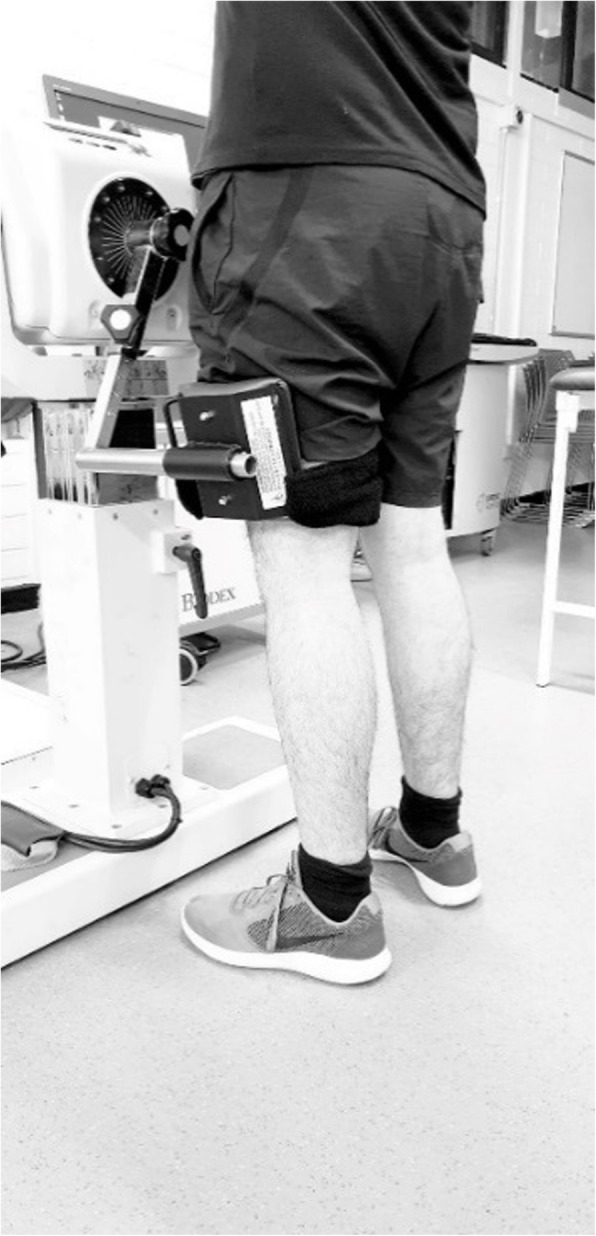
This study was performed between June 14th and October 16th 2019. Eighteen participants were recruited for this study. Peak normalised isometric and isokinetic hip abductor torque were measured bilaterally (n = 36) using the Biodex System 4 isokinetic dynamometer. Each participant performed the Trendelenburg test bilaterally (n = 36) while a graduate year chiropractic practitioner assessed for a "positive" or "negative" sign. The test was simultaneously recorded using Vicon 3-Dimensional motion capture to measure frontal plane pelvic motion and elevation. Correlation analyses were performed between the measures of peak hip abductor torque and pelvic motion to determine if any relationship existed. Agreement between the practitioner and 3-Dimensional analysis was calculated using the kappa (κ) statistic.
Weak, non-significant correlations were found between hip abductor strength and pelvic motion before outlier removal. Significant (p < 0.05) yet weak correlations were found after outlier removal, except for isometric hip abductor strength. Weak agreement was found between the chiropractic practitioner and 3-Dimesnional analysis for the Trendelenburg test assessment (κ = 0.22-0.25).
This study found no significant relationship between normalised peak isometric and isokinetic hip abductor torque and frontal plane pelvic motion during the Trendelenburg test in a healthy young adult population. There was also poor agreement between the practitioner and pelvic motion assessments. Caution should be used when using this test, in the absence of intra-articular hip pathology, to assesses hip abductor weakness. Before any definitive conclusion can be made, studies with a larger sample size should be performed.
髋关节外展肌群在步态中稳定骨盆,以防止骨盆过度下降。髋关节外展肌无力与肌肉骨骼疾病有关,如慢性下腰痛。因此,临床医生能够正确诊断髋关节外展肌无力是非常重要的。虽然从业者通常使用臀中肌试验,但在没有肌肉骨骼损伤的情况下,该试验评估髋关节外展肌无力的有效性仍存在疑问。本研究的目的是确定在没有关节内髋关节疾病的人群中,从业者观察到的臀中肌试验评估矢状面骨盆运动和髋关节外展肌力量的有效性。
本研究于 2019 年 6 月 14 日至 10 月 16 日进行。这项研究招募了 18 名参与者。使用 Biodex 系统 4 等动测力计双侧测量峰值正常化等长和等速髋关节外展肌扭矩(n=36)。每位参与者双侧进行臀中肌试验(n=36),同时由一名研究生水平的整脊从业者评估是否存在“阳性”或“阴性”征。同时使用 Vicon 三维运动捕捉记录测试,以测量矢状面骨盆运动和抬高。对髋关节外展肌峰值扭矩和骨盆运动的测量值进行相关分析,以确定是否存在任何关系。使用κ(κ)统计计算从业者和三维分析之间的一致性。
在剔除离群值之前,髋关节外展肌力量与骨盆运动之间存在微弱、无统计学意义的相关性。剔除离群值后,除等长髋关节外展肌力量外,相关性有显著(p<0.05)但仍较弱。在臀中肌试验评估方面,整脊从业者与三维分析之间的一致性较弱(κ=0.22-0.25)。
本研究在健康年轻成年人中发现,在臀中肌试验中,正常化峰值等长和等速髋关节外展肌扭矩与矢状面骨盆运动之间没有显著关系。从业者和骨盆运动评估之间的一致性也很差。在没有关节内髋关节病理的情况下,使用该测试评估髋关节外展肌无力时应谨慎。在得出任何明确结论之前,应进行样本量更大的研究。