
车辆振动及其他非线性运动导致的汽车雷达传感器信号退化
The Degradation of Automotive Radar Sensor Signals Caused by Vehicle Vibrations and other Nonlinear Movements.
作者信息
Hau Florian, Baumgärtner Florian, Vossiek Martin
机构信息
Mercedes-Benz Cars Development, 71063 Sindelfingen, Germany.
Institute of Microwaves and Photonics (LHFT), Friedrich-Alexander-Universität Erlangen-Nürnberg (FAU), 91058 Erlangen, Germany.
出版信息
Sensors (Basel). 2020 Oct 30;20(21):6195. doi: 10.3390/s20216195.
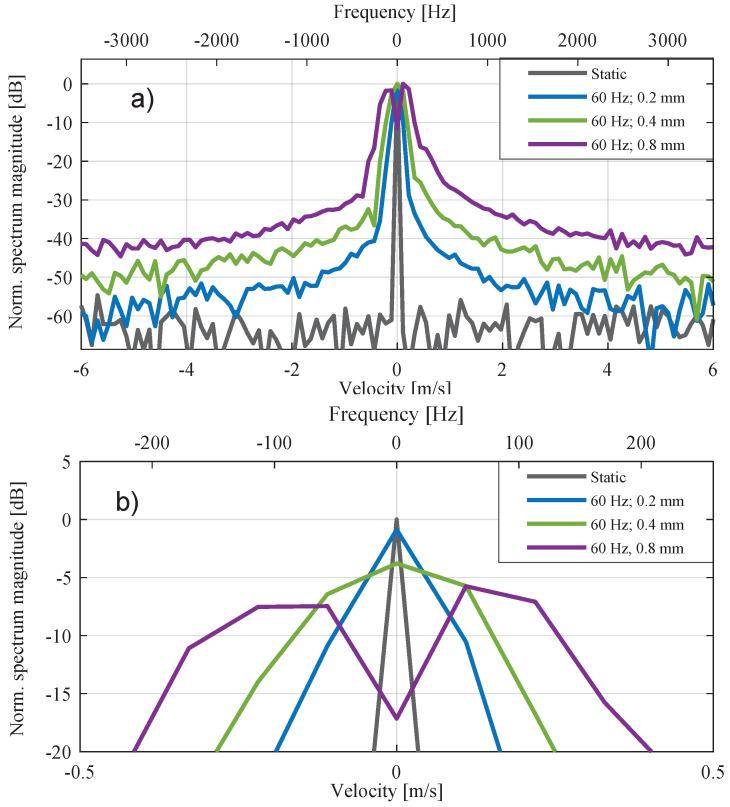
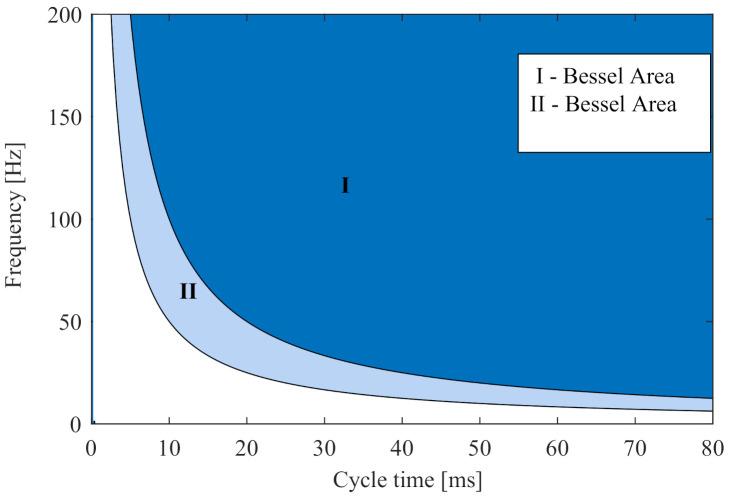
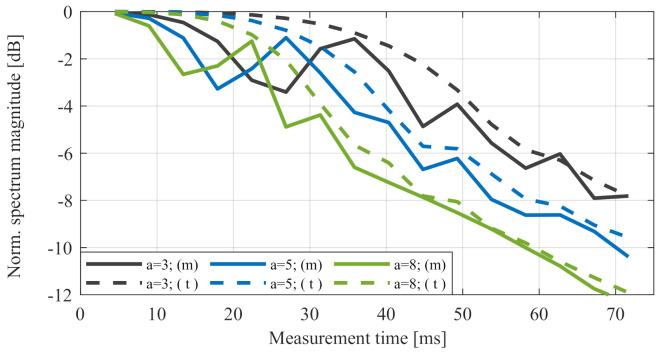
As the demands on modern radar systems with respect to accuracy, reliability, and availability increase, a detailed assessment of the influence of nonlinear movements has become necessary. In particular, from the point of view of radar, different types of movements, such as any kind of acceleration, braking situation, or vehicle vibration, are essential parts of any traffic scenario. These unavoidable motions, in which the relative velocity changes within one measurement cycle, are called nonlinear movements. These nonlinearities contribute to intermediate frequencies, which are comparable to the extensively described nonlinearities of a frequency ramp. This additional contribution to the intermediate signal has a direct effect on the signal-to-noise ratio and thus on the accuracy and probability of target detection. This paper presents a study of various types of nonlinear motion and a detailed definition of the resulting parameters based on a variety of vehicle-based measurements. An advanced signal model of frequency-modulated continuous wave (FMCW) radar is introduced and verified in addition to a detailed mathematical description of spectral signal behaviour in sinusoidal motions and linear acceleration. The theoretical and experimental results in idealised point targets are transferred to real complex road users. Furthermore, by applying established automotive signal processing steps in the form of an ordered statistical constant false alarm rate (OS CFAR), the consequences of determining the noise level are also shown. In combination with the already introduced signal behaviour, these results enabled general description of the signal-to-noise ratio of nonlinear movements in complex traffic scenarios.
随着对现代雷达系统在精度、可靠性和可用性方面的要求不断提高,对非线性运动影响进行详细评估变得十分必要。特别是从雷达的角度来看,不同类型的运动,如任何形式的加速、制动情况或车辆振动,都是任何交通场景的重要组成部分。这些不可避免的运动,即在一个测量周期内相对速度发生变化,被称为非线性运动。这些非线性会导致中频,这与频率斜坡中广泛描述的非线性相当。对中频信号的这种额外贡献直接影响信噪比,进而影响目标检测的精度和概率。本文基于各种车辆测量数据,对各类非线性运动进行了研究,并对由此产生的参数给出了详细定义。除了对正弦运动和线性加速度中频谱信号行为进行详细的数学描述外,还引入并验证了调频连续波(FMCW)雷达的高级信号模型。将理想化点目标的理论和实验结果应用于实际复杂道路使用者。此外,通过以有序统计恒虚警率(OS CFAR)的形式应用既定的汽车信号处理步骤,还展示了确定噪声水平的后果。结合已介绍的信号行为,这些结果使得能够对复杂交通场景中非线性运动的信噪比进行一般性描述。







 Zotero 插件