Bortnikov Evgeniy O, Semenov Sergey N
Department of Organic Chemistry, Weizmann Institute of Science, 234 Herzl Street, Rehovot 7610001, Israel.
J Org Chem. 2021 Jan 1;86(1):782-793. doi: 10.1021/acs.joc.0c02350. Epub 2020 Nov 13.
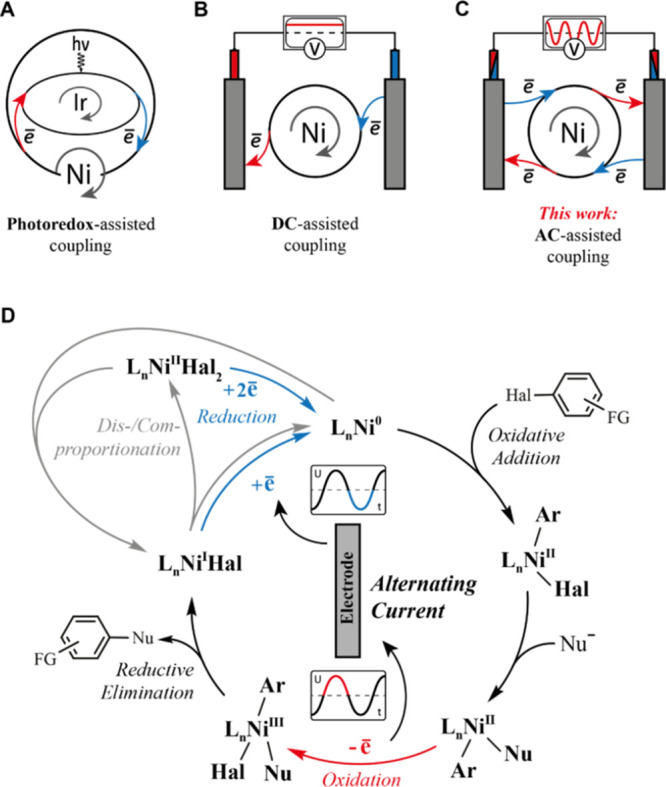
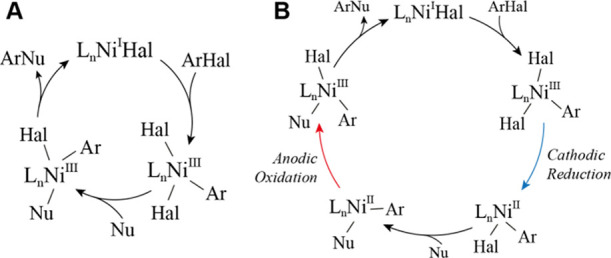
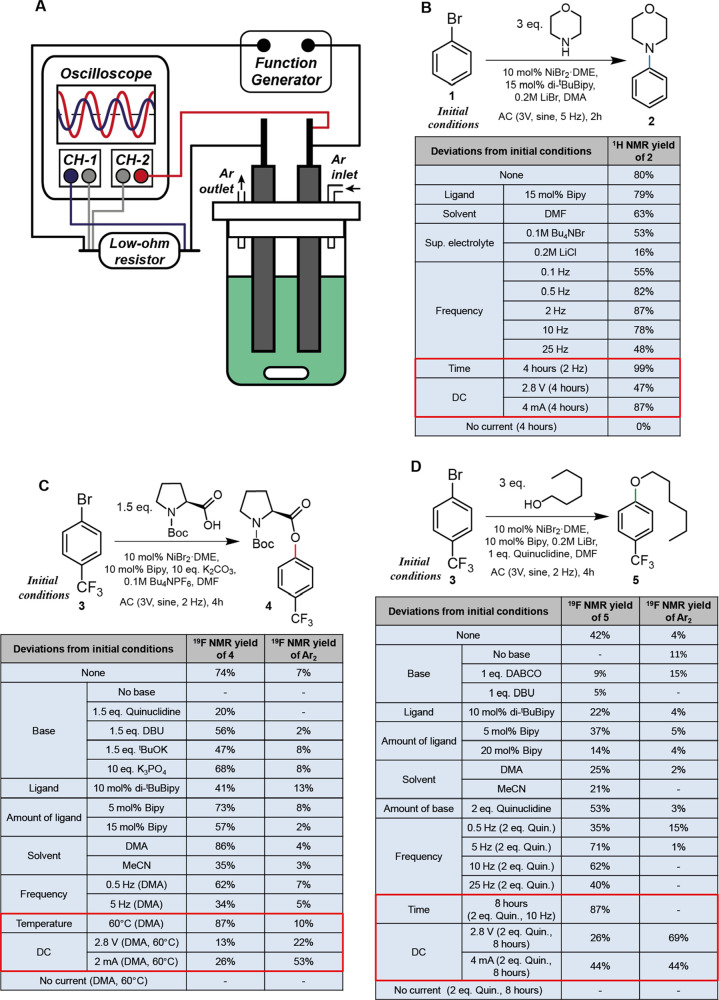
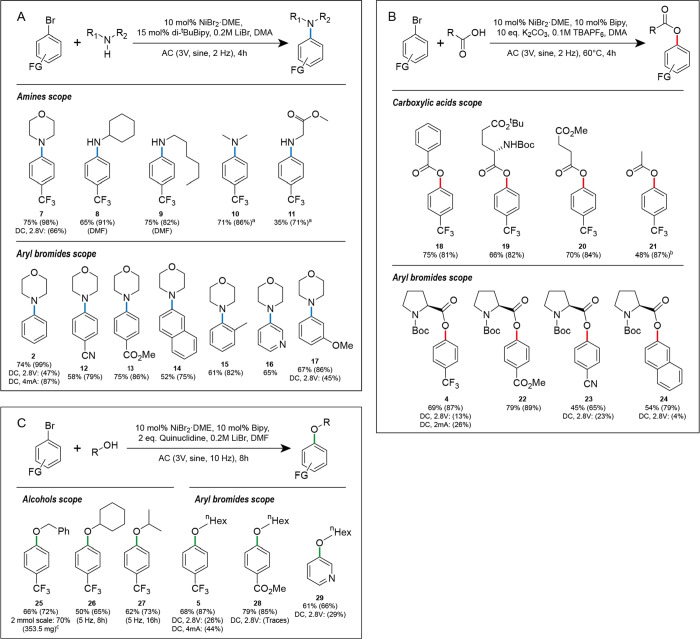
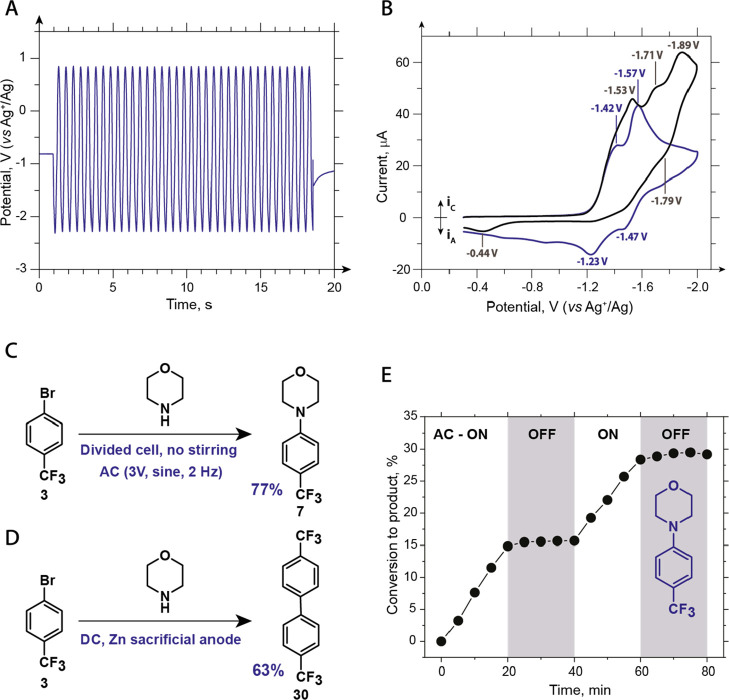
The coupling of transition-metal to photoredox catalytic cycles through single-electron transfer steps has become a powerful tool in the development of catalytic processes. In this work, we demonstrated that transition-metal catalysis can be coupled to alternating current (AC) through electron transfer steps that occur periodically at the same electrode. AC-assisted Ni-catalyzed amination, etherification, and esterification of aromatic bromides showed higher yields and selectivity compared to that observed in the control experiments with direct current. Our mechanistic studies suggested the importance of both reduction and oxidation processes in the maintenance of the AC-assisted catalytic reactions. As described in presented examples, the AC assistance should be well-suited for catalytic cycles involving reductive elimination or oxidative addition as a limiting step.
通过单电子转移步骤将过渡金属与光氧化还原催化循环耦合,已成为催化过程发展中的一种强大工具。在这项工作中,我们证明了过渡金属催化可以通过在同一电极上周期性发生的电子转移步骤与交流电(AC)耦合。与直流对照实验相比,交流电辅助的镍催化芳基溴的胺化、醚化和酯化反应表现出更高的产率和选择性。我们的机理研究表明,还原和氧化过程对于维持交流电辅助催化反应都很重要。如所举示例所述,交流电辅助应非常适合以还原消除或氧化加成作为限速步骤的催化循环。