Zhang Weiwei, Zhu Baoling, Ding Suling, Wang Xiangfei, Wu Jian, Zhu Xiaowei, Zou Yunzeng, Ge Junbo, Tong Minghong, Yang Xiangdong
Shanghai Institute of Cardiovascular Diseases, Zhongshan Hospital, Fudan University, Shanghai, China.
Department of Cardiology, Zhongshan Hospital, Fudan University, Shanghai, China.
Front Physiol. 2020 Oct 22;11:579712. doi: 10.3389/fphys.2020.579712. eCollection 2020.
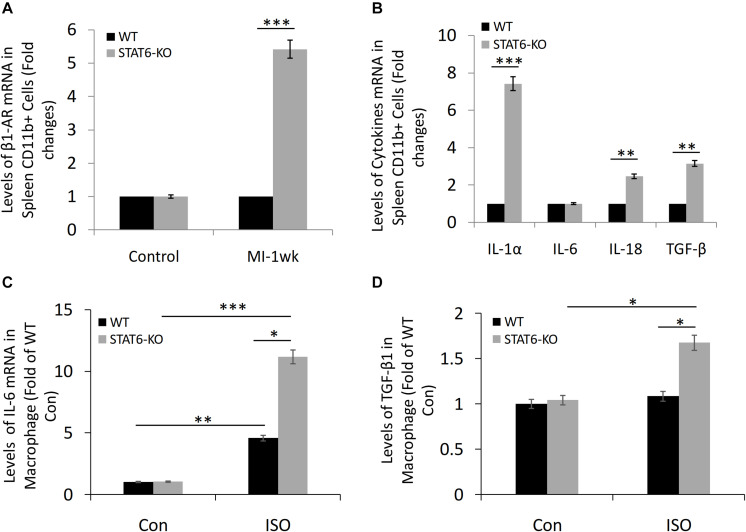
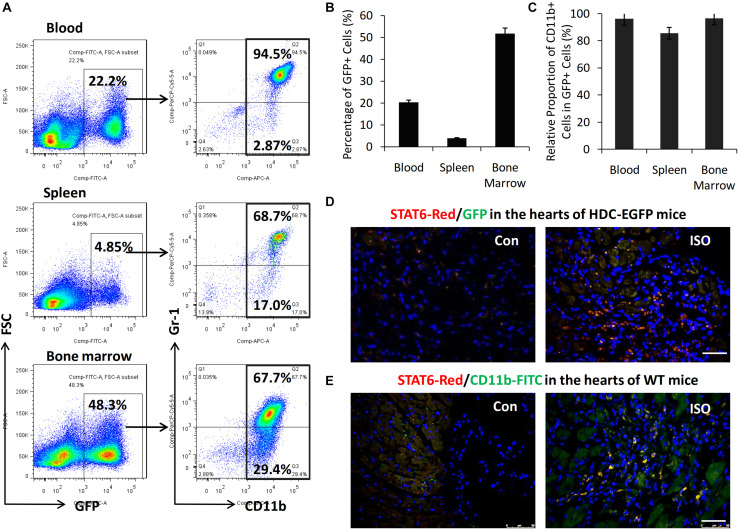
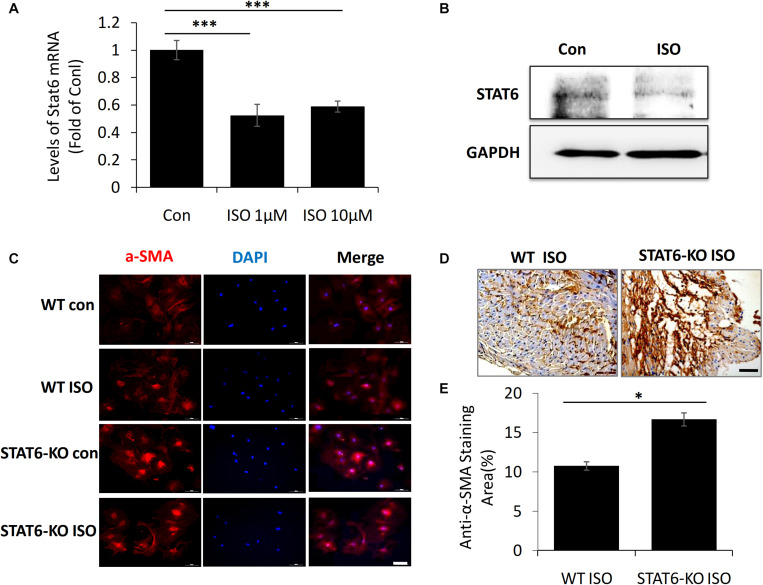
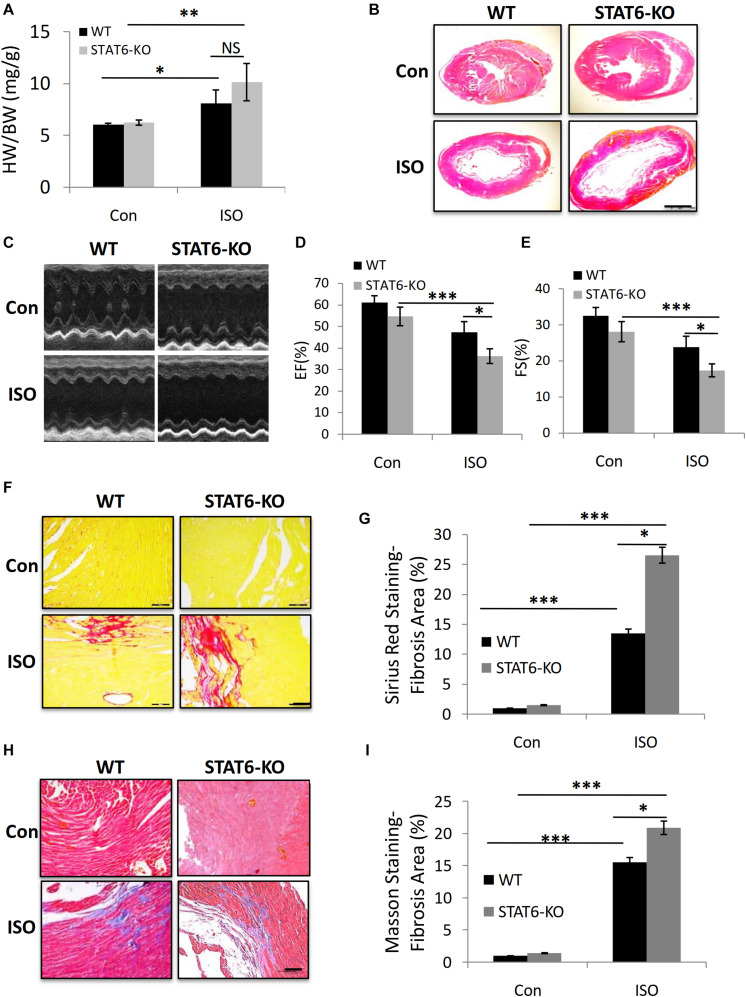
Cardiac fibrosis is an important pathological basis of various cardiovascular diseases. The roles of STAT6 signal in allergy, immune regulation, tumorigenesis, and renal fibrosis have been documented. However, the function and mechanism of STAT6 signal in sympathetic overactivation-induced cardiac fibrosis have not been fully elucidated. This study explores the novel role of STAT6 signal in isoproterenol (ISO)-induced cardiac fibrosis through the regulation of inflammatory response and the differentiation of macrophages from immature myeloid cells. The expression levels of STAT6, β1-adrenergic receptor (β1-AR), and inflammatory factors [interleukin α (IL-1α), IL-6, IL-18, and transforming growth factor β (TGF-β)] in CD11b myeloid cells were analyzed with a microarray study. The levels of IL-6 and TGF-β1 in the CD11b myeloid cells-derived macrophages were detected with reverse transcriptase-polymerase chain reaction (RT-PCR). STAT6-knockout (KO) and WT mice were used to establish a murine cardiac fibrosis model by ISO injection. Cardiac fibroblasts were isolated from the hearts of newborn STAT6-KO and WT mice, and STAT6 expression was measured by Western blotting and RT-PCR after ISO stimulation, while α-smooth muscle actin (α-SMA) expression was detected by immunofluorescence and immunohistochemistry staining. Cardiac function and pathological characteristics were examined by echocardiography and immunohistochemistry staining, respectively. Immunohistochemistry staining with anti-CD11b was performed to detect the infiltration of CD11b myeloid cells in heart tissue. Flow cytometry analysis was used to measure the percentages of CD11b myeloid cells and CD11bLy6C macrophages in the peripheral blood. The results showed that STAT6 was highly expressed in CD11b myeloid cells located in injured hearts, and STAT6 expression in cardiac fibroblasts was down-regulated after ISO treatment. STAT6 deficiency further aggravated ISO-induced increased expression of α-SMA in cardiac fibroblasts, myocardial fibrosis, and cardiac dysfunction. The activation of ISO/β1-AR signal aggravated cardiac inflammatory infiltration, promoted CD11b myeloid cell mobilization, and enhanced CD11bLy6C macrophage differentiation, which was further exacerbated by STAT6 deficiency. Furthermore, β1-AR mRNA expression significantly increased in splenic CD11b myeloid cells compared to their bone marrow-derived controls, and STAT6 deficiency promoted β1-AR expression in an MI-induced sensitive cardiac fibrosis mouse model. The spleen-derived CD11b myeloid cells of STAT6-KO mice produced more IL-1α, IL-18, and TGF-β than their WT counterparts. Taken together, these results suggest that STAT6 signal plays a critical role in ISO-induced β1-AR overactivation and systemic inflammatory cascades, contributing to cardiac fibrogenesis. STAT6 should be a promising cardioprotective target against myocardial fibrosis and heart failure after β1-AR overactivation-induced myocardial injury.
心脏纤维化是各种心血管疾病的重要病理基础。STAT6信号在过敏、免疫调节、肿瘤发生和肾纤维化中的作用已有文献记载。然而,STAT6信号在交感神经过度激活诱导的心脏纤维化中的功能和机制尚未完全阐明。本研究通过调节炎症反应和未成熟髓样细胞向巨噬细胞的分化,探讨STAT6信号在异丙肾上腺素(ISO)诱导的心脏纤维化中的新作用。通过微阵列研究分析CD11b髓样细胞中STAT6、β1-肾上腺素能受体(β1-AR)和炎症因子[白细胞介素α(IL-1α)、IL-6、IL-18和转化生长因子β(TGF-β)]的表达水平。用逆转录聚合酶链反应(RT-PCR)检测CD11b髓样细胞来源的巨噬细胞中IL-6和TGF-β1的水平。采用STAT6基因敲除(KO)和野生型(WT)小鼠,通过注射ISO建立小鼠心脏纤维化模型。从新生STAT6-KO和WT小鼠心脏中分离心脏成纤维细胞,ISO刺激后通过蛋白质免疫印迹法和RT-PCR检测STAT6表达,同时通过免疫荧光和免疫组织化学染色检测α-平滑肌肌动蛋白(α-SMA)表达。分别通过超声心动图和免疫组织化学染色检查心脏功能和病理特征。用抗CD11b免疫组织化学染色检测心脏组织中CD11b髓样细胞的浸润情况。采用流式细胞术分析测量外周血中CD11b髓样细胞和CD11bLy6C巨噬细胞的百分比。结果显示,STAT6在受损心脏中的CD11b髓样细胞中高表达,ISO处理后心脏成纤维细胞中STAT6表达下调。STAT6缺乏进一步加重了ISO诱导的心脏成纤维细胞中α-SMA表达增加、心肌纤维化和心脏功能障碍。ISO/β1-AR信号的激活加剧了心脏炎症浸润,促进了CD11b髓样细胞的动员,并增强了CD11bLy6C巨噬细胞的分化,而STAT6缺乏进一步加剧了这种情况。此外,与骨髓来源的对照相比,脾脏CD11b髓样细胞中β1-AR mRNA表达显著增加,并且在心肌梗死诱导的敏感心脏纤维化小鼠模型中,STAT6缺乏促进了β1-AR表达。STAT6-KO小鼠脾脏来源的CD11b髓样细胞比野生型小鼠产生更多的IL-1α、IL-18和TGF-β。综上所述,这些结果表明STAT6信号在ISO诱导的β1-AR过度激活和全身炎症级联反应中起关键作用,促进心脏纤维化的发生。STAT6应该是β1-AR过度激活诱导心肌损伤后对抗心肌纤维化和心力衰竭的一个有前景的心脏保护靶点。