
脂质体负载组蛋白去乙酰化酶抑制剂玻璃体内注射促进视神经钳夹损伤小鼠模型中视网膜神经节细胞存活。
Intravitreal Injection of Liposomes Loaded with a Histone Deacetylase Inhibitor Promotes Retinal Ganglion Cell Survival in a Mouse Model of Optic Nerve Crush.
机构信息
Department of Ophthalmology, Chonnam National University Medical School and Hospital, Gwangju 61469, Korea.
Department of Radiology, Biomolecular Theranostics (BiT) Lab, Chonnam National University Medical School, Gwangju 61469, Korea.
出版信息
Int J Mol Sci. 2020 Dec 6;21(23):9297. doi: 10.3390/ijms21239297.
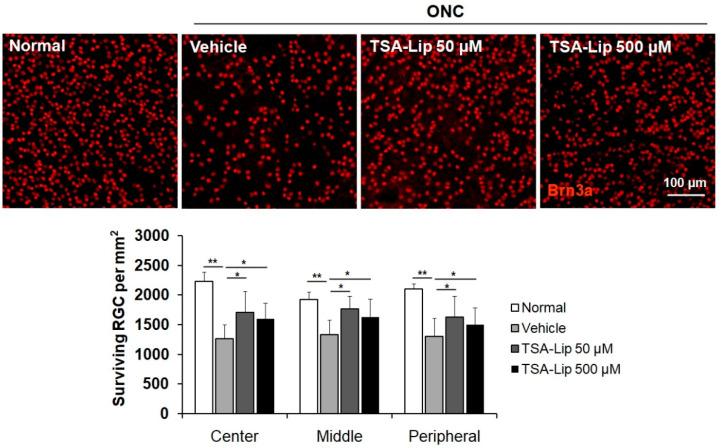
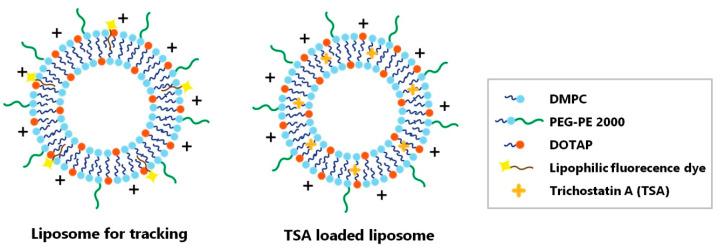
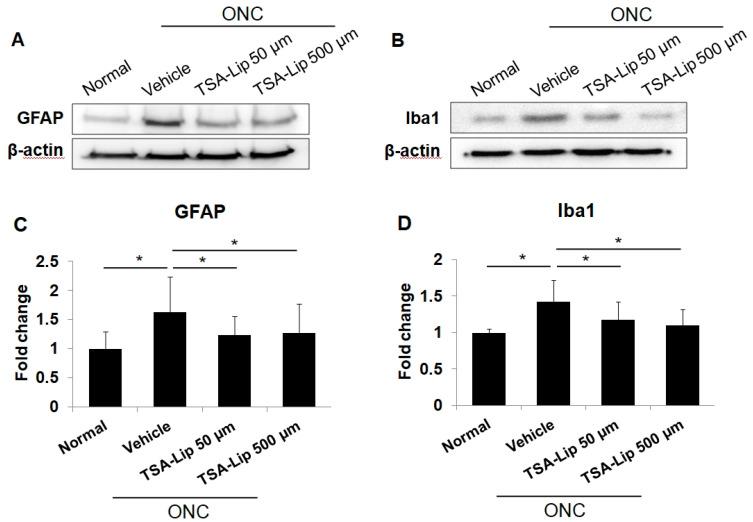
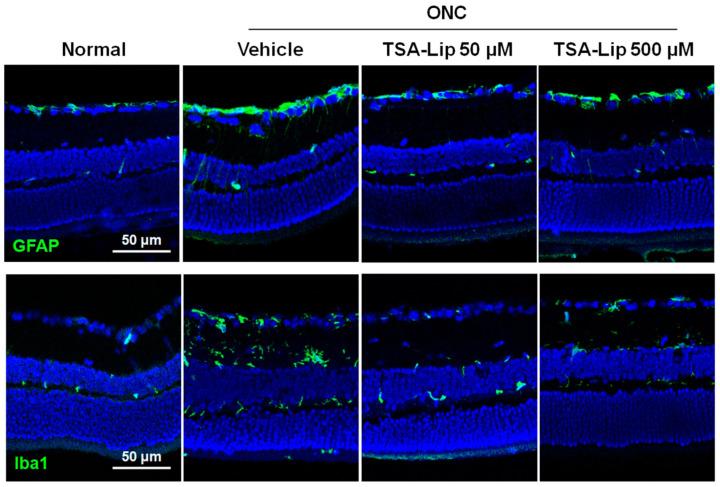
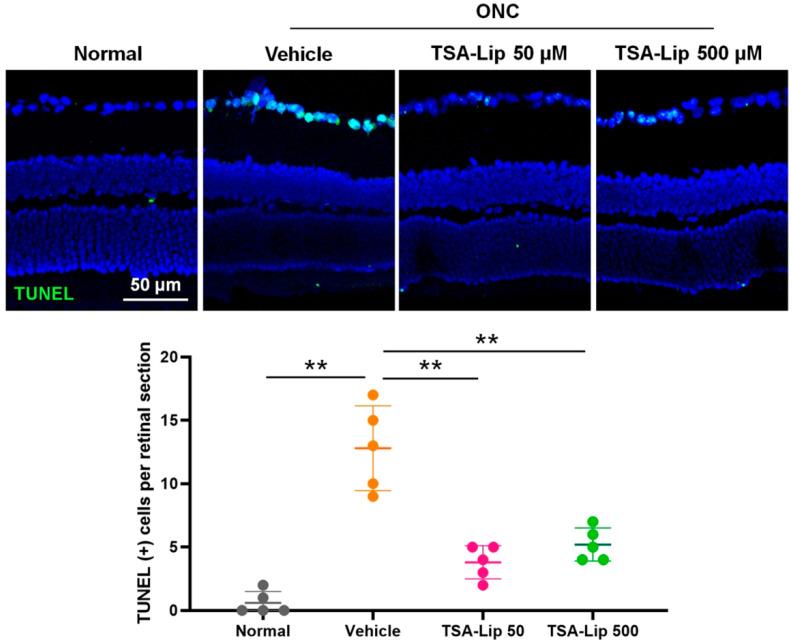
Various neuroprotective agents have been studied for the treatment of retinal ganglion cell (RGC) diseases, but issues concerning the side effects of systemically administered drugs and the short retention time of intravitreally injected drugs limit their clinical applications. The current study aimed to evaluate the neuroprotective effects of intravitreally injected trichostatin A (TSA)-loaded liposomes in a mouse model of optic nerve crush (ONC) and determine whether TSA-loaded liposomes have therapeutic potential in RGC diseases. The histone deacetylase inhibitor, TSA, was incorporated into polyethylene glycolylated liposomes. C57BL/6J mice were treated with an intravitreal injection of TSA-loaded liposomes and liposomes loaded with a lipophilic fluorescent dye for tracking, immediately after ONC injury. The expression of macroglial and microglial cell markers (glial fibrillary acidic protein and ionized calcium binding adaptor molecule-1), RGC survival, and apoptosis were assessed. We found that the liposomes reached the inner retina. Their fluorescence was detected for up to 10 days after the intravitreal injection, with peak intensity at 3 days postinjection. Intravitreally administered TSA-loaded liposomes significantly decreased reactive gliosis and RGC apoptosis and increased RGC survival in a mouse model of ONC. Our results suggest that TSA-loaded liposomes may help in the treatment of various RGC diseases.
各种神经保护剂已被研究用于治疗视网膜神经节细胞 (RGC) 疾病,但由于全身给予药物的副作用问题和玻璃体内注射药物的保留时间短,限制了它们的临床应用。本研究旨在评估玻璃体内注射负载三氮唑酮 A (TSA) 的脂质体在视神经挤压 (ONC) 小鼠模型中的神经保护作用,并确定负载 TSA 的脂质体在 RGC 疾病中的治疗潜力。组蛋白去乙酰化酶抑制剂 TSA 被包载于聚乙二醇化脂质体中。C57BL/6J 小鼠在 ONC 损伤后立即接受负载 TSA 的脂质体和负载亲脂性荧光染料的脂质体的玻璃体内注射治疗。评估了大胶质细胞和小胶质细胞标志物 (胶质纤维酸性蛋白和钙结合衔接蛋白 1) 的表达、RGC 存活和细胞凋亡情况。结果发现脂质体到达了内视网膜。玻璃体内注射后,其荧光可检测长达 10 天,注射后 3 天达到峰值。在 ONC 小鼠模型中,玻璃体内给予负载 TSA 的脂质体可显著减少反应性神经胶质增生和 RGC 凋亡,并增加 RGC 存活。我们的结果表明,负载 TSA 的脂质体可能有助于治疗各种 RGC 疾病。


 Zotero 插件